 2-4 dagars leverans
 100 000+ nöjda kunder
 Fri frakt över 449 kr











Protective routines and habits
Achieving softer hair isn't just about what you apply; it's also about how you care for it daily. Protective routines play a pivotal role in maintaining the softness and health of your hair, especially if you're dealing with stiffness due to heat or environmental factors.
Heat and environmental protection
Minimizing heat damage is essential for softening stiff hair. When styling, always use a heat protectant spray to shield your hair from the high temperatures of styling tools. Opt for lower heat settings and limit the frequency of heat styling to prevent further damage. Additionally, consider using UV-protective sprays to guard your hair against sun damage, and incorporate swimmer's shampoos if you frequently swim in chlorinated pools.
Our heat protectant spray is designed to create a barrier between your hair and heat styling tools, helping to maintain moisture and prevent damage.

Brushing and detangling methods
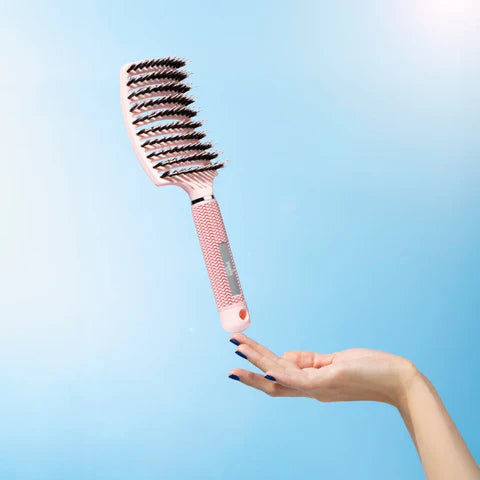
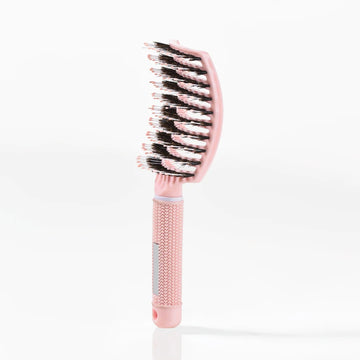
Proper brushing techniques can significantly impact the softness of your hair. Using a brush with boar bristles, like the Curvy Brush, helps distribute natural oils from the scalp throughout the hair, enhancing shine and softness. When detangling, be gentle to avoid breakage; start from the ends and work your way up to the roots.

Sleep and lifestyle adjustments
How you care for your hair while you sleep can also affect its texture. Switching to a bamboo pillowcase can reduce friction, preventing breakage and maintaining the smoothness of your hair. Regularly trimming split ends is another simple yet effective way to keep your hair looking and feeling soft.

Incorporating these protective habits into your routine can make a noticeable difference in the softness and manageability of your hair. By combining these practices with moisture restoration techniques, you can transform stiff hair into the silky, smooth hair you've always desired.
DIY remedies and quick tips
For those looking for natural solutions to soften stiff hair, DIY remedies can be both effective and economical. Homemade hair masks and natural rinses can provide the moisture and care your hair needs.
Homemade hair masks
Creating your own hair masks at home allows you to tailor the ingredients to your specific needs. One popular option is a mask made with avocado and honey. Avocado is rich in oils that help to moisturize and soften hair, while honey is a natural humectant, drawing moisture into the hair shaft. Simply mash one ripe avocado and mix it with two tablespoons of honey. Apply the mixture to damp hair, focusing on the ends, and leave it on for 20-30 minutes before rinsing thoroughly.

Apple cider vinegar rinses
Apple cider vinegar (ACV) is another natural remedy that can help soften stiff hair. ACV works by balancing the pH of your hair, which can lead to increased shine and manageability. To use, mix one part apple cider vinegar with two parts water and pour it over your hair after shampooing. Leave it on for a few minutes before rinsing with cool water. This rinse can be used once a week to maintain softness and shine.
Frequently asked questions
What causes hair to become stiff and coarse?
Hair can become stiff and coarse due to a variety of factors, including heat damage from styling tools, product buildup, and natural hair texture. Environmental factors such as sun exposure and chlorine from swimming pools can also contribute to stiffness.
How often should I apply oil treatments?
The frequency of oil treatments depends on your hair type. For those with dry or coarse hair, applying oil treatments once or twice a week can help maintain softness without causing greasiness. If you have finer hair, using oils sparingly or focusing on the ends may be more suitable.
Can lifestyle changes impact hair softness?
Yes, lifestyle changes can influence hair texture and health. Factors such as hydration and stress management can play a role in maintaining soft, manageable hair. Ensuring adequate hydration and reducing stress can help support overall hair health.


