 2-5 day delivery
 100.000+ satisfied customers
 Satisfaction Guarantee












Choose a mask for your hair type and needs
Fine hair that gets weighed down easily often needs a smaller amount, concentrated on the ends. Dry, coarse or curly lengths may suit a richer formula spread evenly through the lengths. Coloured or bleached hair may need particularly gentle handling. Adjust the amount and frequency before adding more layers of products.
Moisture and protein are not opposites. A mask can contain conditioning agents, oils and hydrolysed proteins in the same formula. An ingredient list alone does not tell you how the finished product will work in your hair. Being silicone-free is not, by itself, a measure of quality.

Hair masks for your conditioning routine
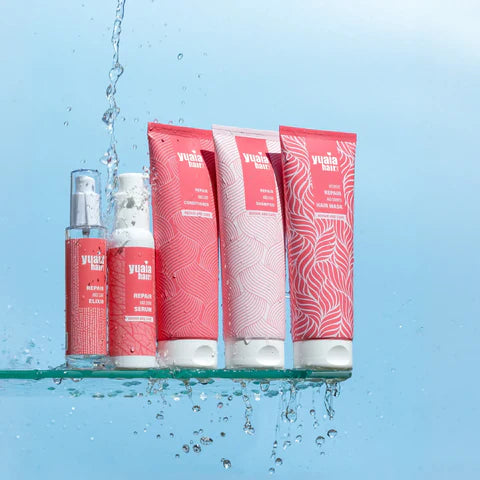
Intensive Repair and Care Hair Mask and Grow and Glow Hair Mask are two hair masks in the Yuaia range. Compare their current product descriptions and instructions and choose according to your lengths' needs. Use one mask at a time to assess the result rather than layering treatments automatically.


How to apply a hair mask step by step
Always follow your specific mask's instructions. A typical routine for a rinse-out mask looks like this:
- Shampoo your hair and rinse.
- Gently squeeze out excess water for even application.
- Distribute the recommended amount in the intended areas, usually the lengths and ends.
- Leave on for the stated time, then rinse thoroughly.
- Follow with conditioner if recommended by the product instructions. Dry and detangle gently.
How often and how long should you use a mask?
There is no single frequency or processing time for every formula and hair type. Start with the packaging instructions and adapt frequency to how your hair feels. If the lengths feel heavy or coated, try a smaller amount, more thorough rinsing or longer gaps between treatments. More product and more time do not automatically improve the result.
Only leave a mask on overnight if it is explicitly designed for that use. A regular rinse-out mask should not be treated as a leave-in. Rinse it out and stop using it if irritation occurs.
Avoid common application mistakes
A mask for the lengths is not automatically intended for the scalp. Avoid rubbing hard with a towel or dragging a comb through knots. A microfibre towel can be used to gently squeeze out excess water. A wide-toothed comb can help with gentle distribution if suitable for your hair. Start at the ends and stop if you meet resistance.


Hair masks, conditioner and leave-in have different roles
A rinse-out mask is part of your wash routine; a leave-in stays in the hair after application. Whether to use conditioner after a mask depends on the product instructions and your hair. You do not need every type of conditioning product at every wash.
Frequently asked questions about hair masks
Is a hair mask different from an intensive conditioner?
The terms often describe similar conditioning care. Check the individual formula and instructions rather than relying on the name.
Can a hair mask repair split ends?
Conditioning can temporarily improve their appearance and feel, but a mask cannot permanently rejoin split ends.
Should I apply a mask to wet or dry hair?
It depends on the product. Many rinse-out masks are used after shampoo on damp hair. Follow the specific directions.
Read more about your routine
Read our guide to hair masks before or after conditioner for help with the order.
Explore choosing and using leave-in conditioner for care after washing.


