 2-5 day delivery
 100.000+ satisfied customers
 Satisfaction Guarantee











DIY hair porosity tests you can try at home
Understanding your hair's porosity can significantly influence your hair care routine, helping you select products that enhance moisture retention and overall hair health. Conducting a hair porosity test at home is both simple and effective, using items you likely already have.
Float test
The float test is a straightforward method to determine your hair's porosity. Start by ensuring your hair is clean and free from any products. Take a few strands and place them in a glass of room-temperature water. Observe the behavior of the hair over 2-4 minutes:
- If the hair floats on the surface, it indicates low porosity.
- If it sinks slowly or remains suspended in the middle, your hair has medium porosity.
- If it sinks quickly, it suggests high porosity.
This test is popular for its simplicity and quick results, offering a clear indication of how your hair interacts with moisture.
Slip test
The slip test involves sliding your fingers along a single hair from root to tip. This tactile method provides insights into the texture and resistance of your hair:
- Smooth and resistant hair typically indicates low porosity.
- A smooth glide suggests medium porosity.
- A rough or bumpy texture often points to high porosity.
This test helps you physically feel the condition of your hair cuticles, offering a hands-on approach to understanding porosity.
Spray bottle test
Using a spray bottle filled with water, mist a section of dry hair. Observe how the water interacts with your hair:
- If water beads up on the surface, your hair likely has low porosity.
- If droplets form and then sink in, it indicates medium porosity.
- If the hair absorbs the water instantly, it suggests high porosity.
This test is beneficial for visual learners, providing a clear visual representation of how your hair absorbs moisture.
Drying time test
After washing your hair, allow it to air dry without using a hair dryer. Note the time it takes to dry:
- Long drying times suggest low porosity.
- Moderate drying times indicate medium porosity.
- Quick drying times often mean high porosity.
This method gives you an idea of how quickly your hair loses moisture, which is crucial for tailoring your hair care routine.
While these tests provide valuable insights, it's important to ensure your hair is free from product buildup for accurate results. Combining multiple tests can offer a more comprehensive understanding of your hair's porosity.
Brushing and detangling
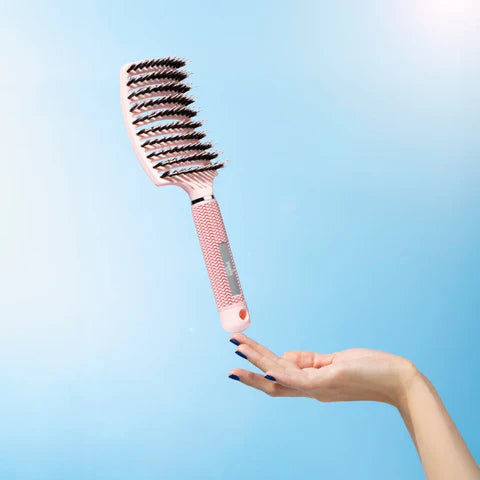
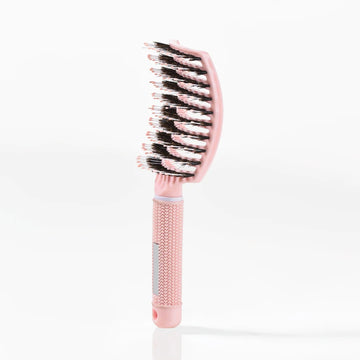
For those with curly hair, using the right tools can enhance the effectiveness of your hair care routine. Our Curvy Brush is designed to help distribute natural oils throughout your hair, aiding in moisture retention and reducing frizz.

£21.99
By understanding your hair's porosity, you can better select products and treatments that will enhance your hair's health and appearance.
Next steps after discovering your hair porosity
Once you've determined your hair's porosity, it's time to adjust your hair care routine to better suit your hair's specific needs. Each porosity type benefits from different care strategies, ensuring that your hair remains healthy and vibrant.
Low porosity hair
Low porosity hair often struggles with product absorption due to tightly packed cuticles. To enhance moisture retention and avoid buildup, opt for lightweight, penetrating products. At Yuaia Haircare, we offer the Rosemary oil, which is excellent for nourishing low porosity hair without weighing it down.

Medium porosity hair
With medium porosity, your hair enjoys a balance in moisture absorption and retention. This flexibility allows you to experiment with a variety of products. Regular hydration and occasional protein treatments can help maintain this balance, keeping your hair healthy and resilient.
High porosity hair
High porosity hair often requires more intensive care to lock in moisture and prevent damage. Focus on using moisture-retaining products and protective hairstyles. Deep conditioning treatments are particularly beneficial. Consider our microfiber towel to gently dry your hair, reducing frizz and breakage.

Frequently asked questions
How often should I test my hair's porosity?
It's advisable to test your hair's porosity periodically, especially after significant changes in your hair care routine or following chemical treatments. This can help you adjust your routine as needed to maintain optimal hair health.
Can hair porosity change over time?
Yes, hair porosity can change due to factors like chemical treatments, heat styling, and environmental exposure. Regularly assessing your hair's porosity can help you adapt your hair care routine as your hair's needs change.r care routine.e routine to these changes.
What are the best Yuaia products for high porosity hair?
For high porosity hair, it's important to use products that enhance moisture retention and minimize damage. Consider using deep conditioning treatments and our microfiber towel to help maintain your hair's moisture balance.


