 2-5 day delivery
 100.000+ satisfied customers
 Free delivery over £49










How to repair damaged hair follicles naturally: Discover effective home remedies

by Nanna Bundgaard | 30. January 2026 | Reading time: 6 minutes
Read more about the authorDamage to hair follicles is a common concern for many people who want to maintain healthy, vibrant hair. Whether caused by environmental factors, styling methods or other reasons, damaged hair follicles can lead to thinning hair and slow growth. The good news is that you don’t need to rely on pharmaceutical solutions to tackle this problem. Natural remedies can be a way to support your scalp and hair as part of your hair care routine.
Why choose natural remedies?
Natural remedies for hair and scalp care are becoming increasingly popular for several reasons:
- Gentle care: Many people prefer natural ingredients as part of a simple and gentle hair care routine.
- Availability: Many natural ingredients are readily available and can be purchased at affordable prices.
- Versatility: Natural ingredients can often be used in a variety of ways depending on hair type and needs.
These qualities make natural remedies an attractive choice for those who wish to supplement their regular hair care routine with simple ingredients.
Discover the benefits of coconut oil
Coconut oil is a well-known choice in hair care and is often used to nourish the lengths and ends. It contains lauric acid, which can penetrate the hair shaft and help reduce protein loss. Regular use can help make hair softer and more lustrous, as well as reducing the risk of breakage.

Rosemary oil for scalp care
Rosemary oil is another popular ingredient in hair care and is often used as part of a scalp care routine. It can be combined with carrier oils such as argan oil or jojoba oil, which also nourish and moisturise the scalp.

The nourishing properties of aloe vera and onion juice
Aloe vera and onion juice are two other ingredients frequently used in homemade hair care treatments. Aloe vera is known for its cooling and nourishing properties and can be applied to both the hair and scalp.
Onion juice is also used by some as part of a scalp care routine. If you wish to try these ingredients, they should be used with care, and the scalp should be rinsed thoroughly after use.
By incorporating natural ingredients into your hair care routine, you can create a more varied routine that focuses on both your hair and scalp.
Try our hair test
The hair test gives you precise answers about which products are best for your hair type. Try it now 👇🏼
Try it now!Scalp health and circulation
A well-cared-for scalp is an important part of a good hair care routine. Regular scalp massages can be a pleasant way to stimulate the scalp whilst making your hair care routine more relaxing.
Effective massage techniques
Use your fingertips to massage the scalp with light, circular movements. For example, you can massage your scalp for 3 to 5 minutes at a time.
You can also combine the massage with a nourishing oil, such as our rosemary hair oil, which is ideal for use as part of your scalp care routine.
Nutrition and lifestyle
The overall condition of your hair is also affected by your body’s general well-being. A varied and balanced diet containing sufficient protein, fat, vitamins and minerals is important for the body’s normal functions.
At the same time, good habits such as regular exercise, sufficient sleep and taking breaks from a busy daily routine can form part of a balanced lifestyle.
Hydration and gentle hair care
It is important to drink enough fluids throughout the day as part of a normal and varied lifestyle.
When it comes to hair care, it can also be beneficial to choose products that suit your hair type and scalp. Mild, sulphate-free formulas can be a good choice if you want a gentle wash.
Our snag-free hair ties are also a good choice if you want to tie your hair back without unnecessary tugging or tension.

Brushing and detangling
Correct brushing and detangling techniques are important for looking after your hair properly and minimising unnecessary tugging.
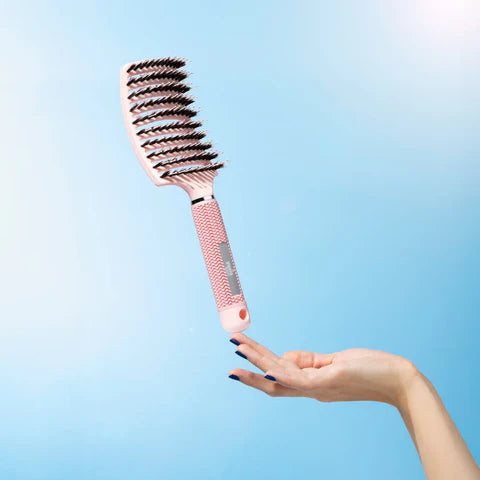
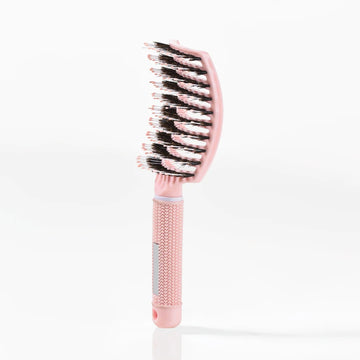
Using the right brush can make a significant difference. Our Curvy Brush is designed with boar bristles that help distribute the scalp’s natural oils throughout the hair whilst making detangling gentler.

£21.99
By combining scalp care, good hair care habits and gentle styling, you can create a routine that looks after both your hair and scalp.
Get a 10% discount code sent to you
Receive the best tips and tricks for your hair from Lotte and Nanna 🥰
Combining natural ingredients
Natural ingredients can be combined in various ways within your hair care routine. For example, coconut oil can be used alongside rosemary oil to combine care for the lengths with a focus on the scalp.
Coconut oil can help make your hair softer and more lustrous, whilst rosemary oil is often used as part of a scalp care routine.
Aloe vera can also be combined with other nourishing ingredients, depending on what suits your hair and scalp. If you use essential oils, they should always be diluted correctly before application.
Sulphate-free and silicone-free hair care
Your choice of hair care products can affect how both your hair and scalp feel on a day-to-day basis.
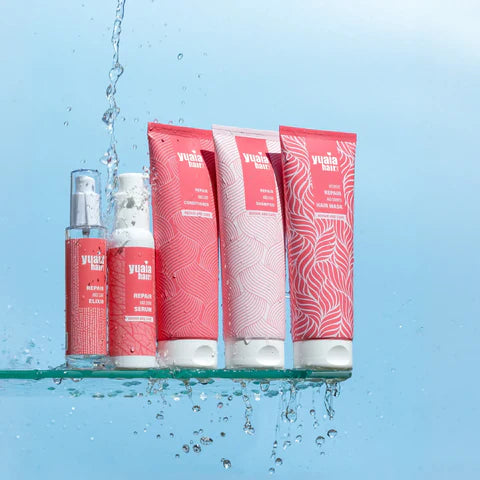
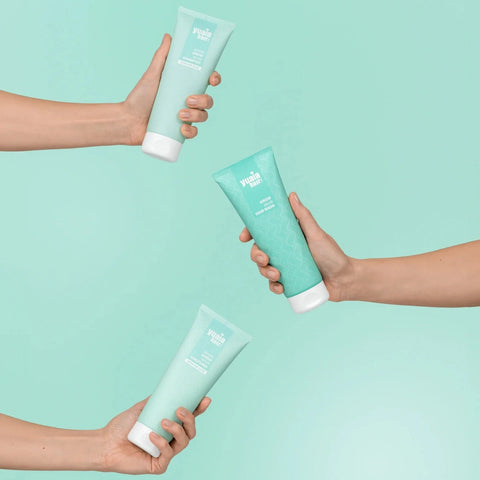
Sulphate-free shampoos, such as our Grow and Glow Shampoo, provide a gentle cleanse and can be a good choice for those who want a gentle hair wash.
Silicone-free products can also be an option for those who prefer a silicone-free hair care routine. The most important thing is to choose products that suit your hair type, scalp and personal preferences.
Frequently asked questions
What natural remedies can be used for hair and scalp?
Ingredients such as coconut oil, rosemary oil and aloe vera are often used in natural hair care routines. They can be applied in different ways depending on whether you want to focus on the scalp, the lengths or the ends.
How often should I massage my scalp?
You can massage your scalp regularly if it feels comfortable. A short massage of around 3 to 5 minutes can easily be incorporated into your hair care routine.
Are there specific dietary habits that support hair health?
A varied and balanced diet is important for the body’s general functioning. If you experience significant changes in hair growth or hair loss, it may be a good idea to speak to a doctor or other healthcare professional for personalised advice.


