 2-4 day UK delivery
 100.000+ satisfied customers
 Satisfaction Guarantee












Is it better to brush hair when wet or dry? Find out what suits your hair type

by Nanna Bundgaard | 28. January 2026 | Reading time: 6 minutes
Read more about the authorWhen it comes to hair care, one question that often arises is whether it's better to brush hair when wet or dry. This seemingly simple query is more complex than it appears, as the answer largely depends on your hair type. Understanding the nuances of your hair's texture, structure, and needs is important for making an informed decision that promotes health and vitality.
What is the dilemma?
The debate over whether to brush hair when wet or dry is a common one, and there's no one-size-fits-all answer. The key lies in understanding your hair type and its specific requirements. Many people mistakenly believe that there is a universal rule applicable to everyone, but in reality, the approach should be tailored to suit individual hair characteristics. This personalized method not only helps in maintaining hair health but also enhances its natural beauty.
The role of hair type
Hair type plays a significant role in determining the best time to brush your hair. For instance:
- Straight and wavy hair: These hair types often benefit from brushing when damp, especially with a conditioner applied. This method helps in easing detangling while preventing flyaways.
- Curly and coily hair: Dry brushing with the aid of oil or cream can help preserve curl patterns and avoid overstretching the hair. This approach minimizes damage and maintains the integrity of the curls.
It's important to note that each hair type has its own set of challenges and benefits, which should guide your brushing technique and timing.
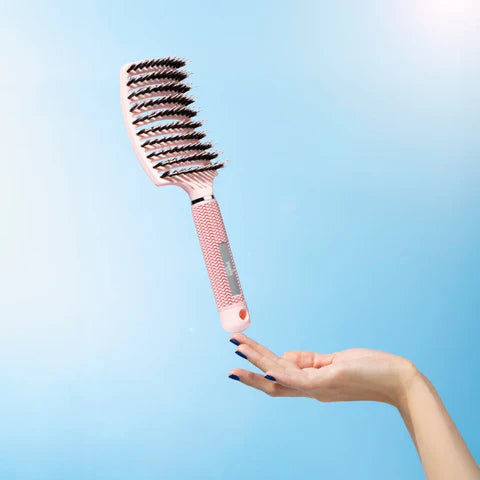
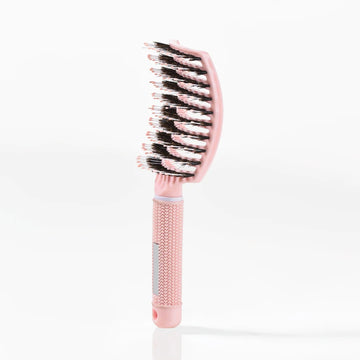
For those seeking to optimize their hair care routine, selecting the right products and techniques is key. Using a brush made for your specific hair type, such as a wide-tooth comb for wet hair or a soft-bristle brush for dry hair, can make a significant difference. Our Curvy Brush is an excellent choice for minimizing breakage when brushing dry hair, offering gentle detangling that aligns with your hair's needs.

£21.99
Wet hair: Fragility and care
Brushing hair when wet poses unique challenges due to its increased fragility. When hair absorbs water, the fibers swell, causing the cuticles to lift and weakening the hair's structure. This makes wet hair more prone to breakage. However, with the right approach, you can mitigate these risks.
To protect wet hair, consider using a wide-toothed comb for gentle detangling. This tool helps reduce tension and friction, minimizing the chances of snapping or breaking. Additionally, applying a conditioner during or after washing can provide the necessary slip, making it easier to detangle without causing damage.

Moreover, gentle brushing on wet hair can improve scalp circulation, which may support the hair growth phase. This practice should be done cautiously, ensuring that the hair is not overly pulled or stressed.
Dry hair: Strength and challenges
Dry hair offers a different set of advantages and challenges. With its closed cuticles and intact bonds, dry hair is generally stronger and more resistant to breakage. However, it can also be susceptible to static and frizz, especially in dry or humid conditions.
To effectively brush dry hair while minimizing damage, start from the ends and work your way up to the roots. This technique helps to gently work through any tangles without causing unnecessary stress. Using a Curvy Brush can further enhance this process. The boar bristles help distribute natural oils throughout the hair, reducing frizz and adding shine.

For those dealing with static, consider lightly misting the hair with a heat protectant spray before brushing. This can help tame flyaways and create a smoother finish.
Tailored approaches by hair type
Each hair type benefits from a specific brushing approach. For straight and wavy hair, brushing when damp with a conditioner can ease detangling and prevent flyaways. This method helps maintain the hair's smoothness and reduces the risk of breakage.
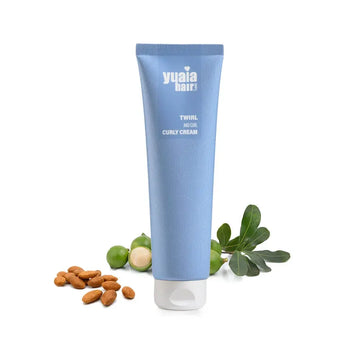
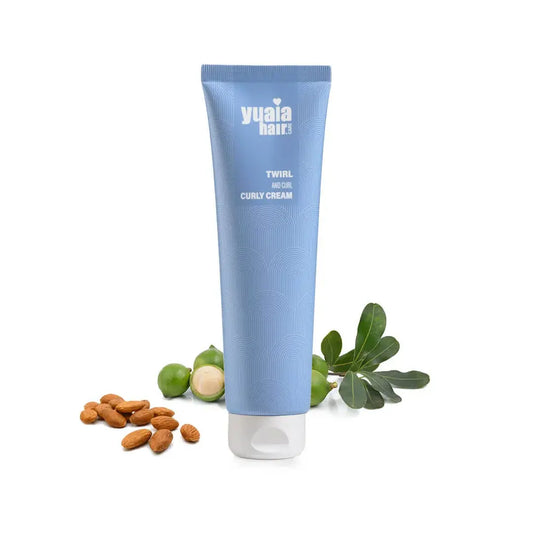
On the other hand, curly and coily hair types are best managed by dry brushing with an oil or cream, such as our Twirl and Curl curly cream. This approach preserves curl patterns and prevents overstretching, maintaining the integrity of the curls. Using fingers or a wide-tooth comb is recommended to gently work through the hair.
For those with extensions or chemically treated hair, brushing damp sections from the bottom up can help reduce tangles without damaging the cuticles. This method ensures that the hair remains strong and healthy, even with additional styling or treatments.
Get a 10% discount code sent to you
Receive the best tips and tricks for your hair from Lotte and Nanna 🥰
Exploring the best practices for brushing
When it comes to brushing your hair, the choice between wet and dry is more than just a matter of preference; it hinges on understanding your hair's unique characteristics. Each hair type has its specific needs, and recognizing these can lead to healthier hair and more effective styling. Let's delve into some practices that can enhance your hair care routine.
Effective tools for brushing
Choosing the right tools can make a significant difference in how you manage your hair. For those dealing with dry hair, our Curvy Brush is an excellent option. Its boar bristles help distribute natural oils, which can reduce frizz and add shine. This brush is particularly beneficial for those with straight or wavy hair types.

For wet hair, a wide-tooth comb is recommended. This tool is gentle on hair and helps prevent breakage by reducing tension and friction. When combined with a good conditioner, it can make detangling a smoother process.
Understanding the role of products
Products play a crucial role in maintaining hair health. Applying a conditioner when your hair is wet can provide the necessary slip to detangle without causing damage. This is especially important for those with straight or wavy hair who prefer to brush when damp.
For curly or coily hair, using products like our Twirl and Curl curly cream can help preserve curl patterns and prevent overstretching. Applying the cream before dry brushing can enhance the natural texture and keep curls intact.
FAQs
Is it okay to brush wet hair if I'm in a rush?
Brushing wet hair can lead to breakage due to its fragility. If you're in a rush, try using a wide-tooth comb and a leave-in conditioner to gently detangle without pulling.
How can I reduce frizz when brushing dry hair?
To minimize frizz, use a boar bristle brush and apply a heat protectant spray before brushing. This can help smooth the hair cuticle and reduce static.
What if my hair is both curly and chemically treated?
For hair that is both curly and chemically treated, consider using a combination of methods. Apply a nourishing oil or cream before gently detangling with your fingers or a wide-tooth comb. This approach helps maintain the health and pattern of your curls.
Get a 10% discount code sent to you
Receive the best tips and tricks for your hair from Lotte and Nanna 🥰


