 2-5 day delivery
 25.000+ satisfied customers
 Satisfaction Guarantee











Why curly hair needs a special detangling brush
Curly hair tangles easily because of its shape.
This means:
Curly hair requires much more care during detangling. A regular brush is not made for this level of sensitivity or texture. Instead, curly hair needs a detangling brush that minimizes tension, reduces pulling on the strands, and glides through knots gently.
What makes the best detangling brush for curly hair?
When choosing a brush, consider how it affects curl definition and how easily it glides through tangles on wash day. Curly hair needs gentle tools. The right combination of design and materials can help maintain healthy curls, improve manageability and reduce overall detangling time.
1. Flexible bristles
Flexible bristles bend instead of pulling on the hair. This helps reduce breakage.
2. Wide spacing between bristles
Wide spacing between the bristles helps the brush glide through tangles instead of pulling them apart. This reduces breakage and makes detangling gentler and more effective, especially for curly or fragile hair.
3. Scalp-friendly design
A good brush should massage the scalp without scratching or causing irritation, while still being gentle enough for sensitive scalps and curly hair prone to dryness and breakage. A well-designed detangling brush distributes pressure evenly, helps stimulate blood circulation in the scalp, and reduces the risk of mechanical damage when working through knots.
4. Reduces frizz and preserves curl pattern
The best brushes help maintain curl definition instead of disrupting it by reducing friction, gently separating strands, and helping the hair retain its natural shape during detangling, especially when used on wet, conditioned hair.
Best detangling brushes for curly hair
Here are the detangling brushes from Yuaia Haircare we recommend for healthy, defined, and tangle-free curls. Designed for curly and wavy hair, they reduce breakage, improve manageability, and make wash day easier. Use on wet or damp hair with conditioner for gentle, section-by-section detangling without pulling.
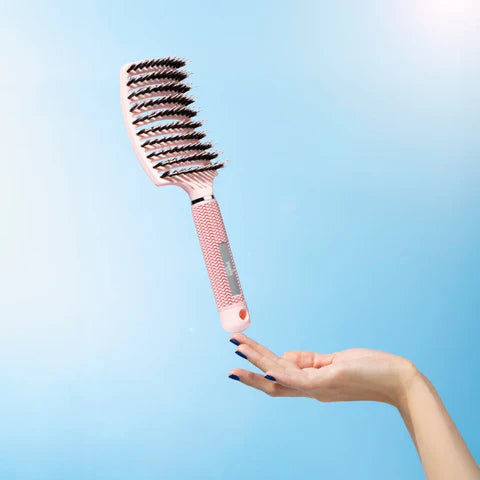
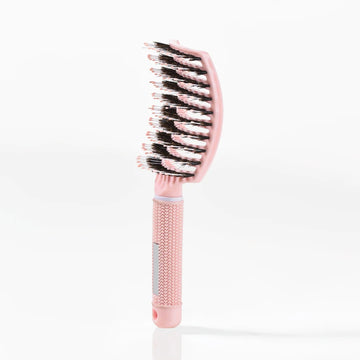
1. Detangling Brush
Our detangling brush is made specifically for curly and wavy hair types. It is created to gently loosen knots with minimal pulling, making wash day easier and reducing the risk of breakage. The flexible structure of the brush helps it glide through tangles more smoothly, especially when used on wet hair with conditioner for added slip.
This brush is suitable for a wide range of curl patterns and hair densities, making it a versatile choice for everyday detangling. Whether your hair is fine, medium or thick, it is made to work section by section without disrupting the natural curl pattern.

2. Wide-toothed comb
A wide-tooth comb is a simple but effective addition to any curly hair routine. While a detangling brush handles knots, the comb helps refine and maintain curl structure with minimal disruption.
The Yuaia Haircare wide-tooth comb glides through the hair without breaking up curl clumps, making it ideal after initial detangling or for distributing products evenly.
Used together, the brush and comb create a balanced routine for gentle detangling and smooth results.

Detangling curly hair
Even the best brush won’t help if the technique is wrong. Follow these steps:
- Step 1: Start with wet hair and conditioner for slip. Work in small sections and let tangles soften before brushing.
- Step 2: Divide hair into sections to improve control and reduce stress on strands.
- Step 3: Begin at the ends and work upward slowly to avoid tightening knots and pulling.
- Step 4: Take your time and use slow, controlled movements so the brush can glide through the hair instead of forcing its way through tangles.
Patience during detangling is one of the most important ways to prevent long-term breakage and maintain healthy curls.
Common mistakes to avoid
Curly hair is sensitive during detangling, and small mistakes can cause breakage, frizz and loss of curl definition. Because of its structure, even light tension or wrong tools can affect hair health. Below are the most common errors to avoid.
Brushing dry curly hair
Brushing curly hair when it is dry is one of the most damaging mistakes. Dry hair creates increased friction, which can lead to breakage, frizz, and loss of curl definition. When hair is dry, the outer cuticle layer is more raised, making it easier to damage during brushing. Dry hair also has less elasticity and is more likely to snap instead of gently stretching around tangles.
Always detangle curly hair when wet or damp with conditioner, as it provides slip, reduces friction, and allows a detangling brush to glide through knots more gently.
Using the wrong type of brush
Not all brushes are suitable for curly hair. Using a standard brush or one without flexible bristles can cause pulling and snapping of the hair. This often leads to frizz and disrupts the natural curl pattern, especially on wet hair. Choosing a brush made specifically for detangling curls helps reduce tension, minimize mechanical stress on the strands, and make the detangling process significantly gentler, faster and more effective while better preserving curl definition and long-term hair health.
Skipping conditioner during detangling
Conditioner is essential because it adds slip, making it easier for the brush to move through tangles.

Starting from the roots instead of the ends
Starting at the roots creates larger knots. Always begin detangling at the ends and slowly work your way up toward the roots. This method minimizes harm and makes the process much easier.
Frequently asked questions
Can I detangle curly hair when it's dry?
It’s not recommended, as dry detangling increases damage and frizz.
Is a wide-tooth comb better than a brush?
Combs are gentler but slower. Detangling brushes are more efficient.
What’s the safest way to reduce damage?
Use conditioner, detangle in sections and choose a flexible-bristle brush.


