 2-5 day delivery
 100.000+ satisfied customers
 Satisfaction Guarantee











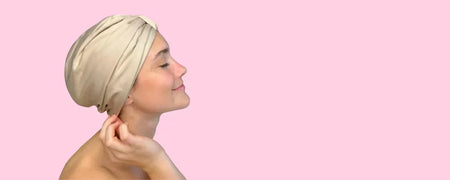


Can I also wear a bonnet with straight hair?
Yes, you can use a bonnet on straight hair too. It keeps the lengths gathered, but whether you prefer it to a smooth pillowcase depends on your hair and comfort.
Straight hair is not automatically more prone to friction than curly hair. Avoid tightly twisting or folding the lengths if you want to limit creases in your style.
Whether your hair is naturally straight or styled that way, using a bonnet can help extend the lifespan of your look and reduce the need for heat styling.
Using a hair bonnet: the basics
Let your hair dry, gather it loosely and check that the bonnet edge sits comfortably. There should be enough space without tightly twisting or packing the hair. Follow the instructions for your bonnet.
For the pineapple method and a more detailed routine, see our guide to using a bonnet for curly hair.

How to use a hair bonnet for straight hair: A step-by-step guide
For straight hair, keep the lengths loosely arranged inside the bonnet. Avoid tight folds if you want to reduce creasing.
1. Prepare your hair
Before you put on your bonnet, prepare your hair to keep it smooth and manageable.
- Detangle gently: remove knots as needed with a tool that suits your hair. Start at the ends and avoid pulling.
-
Apply a light serum (optional): Use a small amount of lightweight hair serum or oil to reduce frizz and enhance shine. Avoid heavy products that could weigh the hair down.

2. Style your hair
Securing your hair before wearing a bonnet helps prevent creasing, tangling, and frizz overnight.
-
Lightly Braid or Twist: A loose braid or twist keeps hair contained and minimizes friction inside the bonnet, reducing the risk of frizz and breakage.
-
Avoid Tight Styles: Tight braids or twists can leave dents or kinks in straight hair, making it harder to maintain a smooth look in the morning.
Keeping your hair loosely secured ensures it stays protected while maintaining its natural shape and volume overnight.
3. Put on the Bonnet
-
Positioning: First, gather your hair up on top of your head. Then, hold the bonnet open with both hands, place it at your forehead, and gently pull it back over your head.
-
Securing: Make sure all your hair is properly covered without being compressed, allowing the bonnet to sit comfortably and securely.
4. Ensure a Comfortable Fit
-
Adjust: The bonnet should fit snugly but not too tightly to avoid flattening volume. If your bonnet has adjustable straps or ties, use them to achieve a comfortable fit.
Check how your hair looks in the morning and adjust the arrangement if necessary. A bonnet does not guarantee a completely smooth finish.
Can you put wet hair in a bonnet?
For sleeping, let your hair dry before putting on a bonnet. Avoid enclosing soaking-wet hair, and let the bonnet itself dry completely after washing. A bonnet is not a drying cap; follow its instructions.
How to choose a hair bonnet: silk, satin or bamboo?
Choosing the right hair bonnet depends on material, fit, and overall comfort to ensure the best protection for your hair.
Silk bonnet, satin bonnet or bamboo bonnet?
- Satin bonnet: satin describes the weave, not the fibre. Check the composition and whether the inner surface feels smooth.
- Silk bonnet: silk is a fibre that can also be woven as satin. Check the silk percentage and the care label.
- Bamboo bonnet: check the stated fibre composition and fabric finish. The Yuaia Bamboo Bonnet is offered as a bamboo sleep cap, not a silk bonnet.
Size and fit
-
Adjustable bands: Offer a customizable fit to keep the bonnet secure without being too tight.
-
Elastic bands: Provide a snug hold but should not be too tight, as this may cause discomfort or leave marks on the hairline.
A bamboo bonnet for your night-time routine
Our Bamboo Bonnet is an option if you want a sleep cap for your evening routine. Check the product page for the current sizes, colours and material details.
Choose a bonnet with room for your hair and an edge that does not pull. Follow the care label for washing; do not assume all silk, satin and bamboo bonnets need the same treatment.
Caring for your hair bonnet
Wash your bonnet according to its care label to remove sweat, oils and styling residue. Let it dry completely before wearing it again.aring or storing it.
How often to wash your bonnet
Keeping your bonnet clean is essential for maintaining its effectiveness and preventing product buildup.
- Nightly use: check regularly for sweat and product residue. Washing about once a week can be a starting point, but wash sooner if needed and follow the care label.
- Occasional use: wash according to how much you wear it and when it feels dirty. A fixed fortnightly interval will not suit every routine.
How to wash your bonnet: check the care label first
Hand washing:
-
Fill a basin with lukewarm water and add a small amount of mild detergent.
-
Gently swirl the bonnet in the water, focusing on areas with product buildup or sweat.
-
Rinse thoroughly with cool water to ensure all soap is removed.
-
Press out excess water gently without wringing, as twisting can damage the fabric.
-
Lay the bonnet flat on a clean towel and allow it to air dry completely.
Machine washing:
-
Place the bonnet inside a mesh laundry bag to protect it during the wash cycle.
- Use the temperature and programme specified on the care label, with a suitable detergent.
-
Remove promptly after washing and lay flat to air dry to maintain its elasticity and shape.
Proper storage to maintain longevity
-
Cool, dry place: Store your bonnet in a well-ventilated, dry area away from direct sunlight to prevent fabric wear.
-
Avoid Tight Spaces: Keeping the bonnet in cramped storage can cause creases or deformities that affect its fit.
-
Neat Folding or Hanging: Fold your bonnet carefully or hang it on a hook to maintain its shape and avoid wrinkles.
Choose a bonnet that fits your routine
A bonnet can keep your hair loosely gathered while you sleep. Material, fit and comfort all matter. Start with a simple routine and keep the steps that work for you; there is no need to layer several sleep accessories.


