2-5 day delivery
 25.000+ satisfied customers
 Satisfaction Guarantee










Volumizing ingredients to look for
When selecting a fine hair conditioner, it's important to focus on ingredients that enhance volume and thickness. These components work to lift and nourish fine hair, offering a fuller appearance without leaving any unwanted residue.
Key volumizing ingredients to consider include:
- Proteins: Proteins are essential for strengthening hair and adding body. They help to fortify the hair, making it appear fuller and more resilient.
- Biotin: Known for its ability to support hair health, biotin can improve the texture and strength of fine hair, contributing to a more voluminous look.
By incorporating these ingredients, a fine hair conditioner can effectively boost volume while maintaining a lightweight feel.
Hydration without the heaviness
Fine hair requires hydration to maintain its health and shine, but heavy conditioners can leave it feeling greasy and limp. A well-formulated conditioner should provide moisture without weighing the hair down.
Natural botanicals are often included in conditioners for fine hair due to their lightweight yet effective hydrating properties. Ingredients such as aloe vera and chamomile can soothe and moisturize the hair, ensuring it stays soft and manageable without excess weight.
The importance of a sulfate-free routine
For those with fine hair, maintaining a sulfate-free routine can be beneficial. Sulfates are harsh cleansing agents that can strip the hair of its natural oils, leading to dryness and potential damage. Using a sulfate-free conditioner helps to gently cleanse the hair while preserving its natural moisture balance.
Pairing a sulfate-free conditioner with a complementary shampoo can enhance the benefits. Our Grow and Glow shampoo offers a gentle cleansing experience that supports the overall health of fine hair.

Tips for applying conditioner to fine hair
Applying conditioner correctly can make a significant difference in how fine hair looks and feels. Here are some practical tips:
- Focus on the ends: Apply conditioner primarily to the ends of your hair, where it needs the most moisture. This technique helps prevent the scalp from becoming oily.
- Avoid the scalp: By keeping conditioner away from the scalp, you can reduce the risk of your hair appearing greasy and flat.
These application tips can help you achieve a balanced, voluminous look without compromising on hydration.
How often should you condition fine hair?
Determining the right frequency for conditioning fine hair can depend on your hair's specific needs and lifestyle. Generally, conditioning every other wash is a good starting point for most people with fine hair. This approach helps maintain hydration without overwhelming the strands. However, if your hair tends to be on the oilier side, you might find that conditioning less frequently works better for you. Listen to your hair's needs and adjust accordingly to find the perfect balance.
Brushing techniques for fine hair
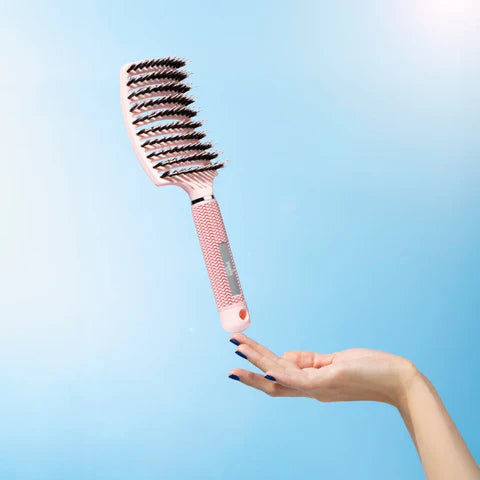
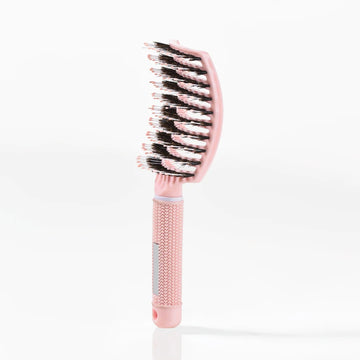
Using the right brush and technique is essential for maintaining the health and volume of fine hair. Gentle brushing helps prevent breakage and distributes natural oils from the scalp to the ends, promoting shine and smoothness. Consider using a brush with boar bristles, such as our Curvy Brush, which is excellent for fine hair. It detangles without causing damage, helping to keep your hair looking full and vibrant.

191,00 kr
FAQs: Common concerns about fine hair conditioners
What are the best practices for conditioning fine hair?
To condition fine hair effectively, focus on applying the product to the ends rather than the roots. This method provides the necessary moisture where it's needed most, without making the scalp oily. Additionally, choose a lightweight conditioner made for fine hair to avoid weighing down your strands.
How can I avoid weighing down my fine hair with conditioner?
To prevent your fine hair from becoming weighed down, opt for conditioners that are specifically labeled as lightweight or volumizing. Avoid products with heavy silicones and oils, which can lead to buildup and make your hair appear flat. Applying conditioner only to the ends can also help maintain volume and prevent oiliness at the roots.
Are there specific conditioners recommended for oily-prone fine hair?
For oily-prone fine hair, look for conditioners that offer lightweight hydration and include ingredients like proteins and botanicals. These conditioners help maintain volume and manage oiliness without adding unnecessary weight. Always ensure that the conditioner is sulfate-free to preserve the hair's natural moisture balance.