 2-5 day delivery
 100.000+ satisfied customers
 Satisfaction Guarantee










Can oils work as a natural heat protectant for hair? What to know

by Nanna Bundgaard | 11. August 2025 | Reading time: 3 minutes
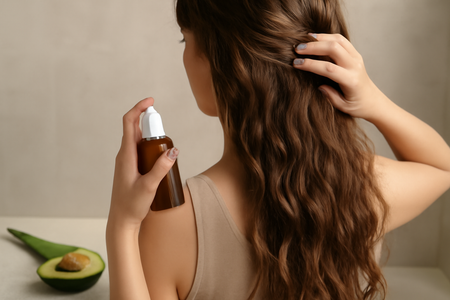
Read more about the authorCan natural oils work as a natural heat protectant for hair? In short: not automatically. Oils such as argan, coconut, almond or jojoba oil can add shine, softness and conditioning, but that does not mean they are formulated or tested to protect hair from the temperatures created by blow-dryers, flat irons or curling irons.
If you use heat styling regularly, the safest approach is to use a product whose label explicitly states that it provides heat protection and follow its directions. Oils can still be useful as part of your routine — especially after styling as a finishing product.
Are natural oils heat protectants?
Not by default. A natural oil can coat the hair and change how it feels, but smoke point, richness or shine are not proof that the oil protects hair from styling-tool temperatures. A product should only be treated as heat protectant when the specific formula is designed and intended for that use.
What can argan, coconut and jojoba oil do?
Hair oils can help smooth the surface, reduce friction, add shine and make dry ends feel more manageable. Those are useful conditioning benefits, but they are different from tested heat protection.
- Argan oil: useful for shine and smoothing.
- Coconut oil: can be used as a conditioning oil depending on hair type and routine.
- Jojoba oil: a lightweight option for adding softness and shine.
Use only small amounts where appropriate for your hair, and do not assume that a pure oil can replace a dedicated heat protectant before high-temperature styling.
When can an oil or serum count as heat protection?
If a specific oil, serum or leave-in product explicitly states that it provides heat protection, follow that product's directions. The key difference is the finished formulation — not the fact that it contains an oil.
How to protect hair before heat styling
- Use a product specifically intended for heat styling.
- Apply it evenly to the sections that will be exposed to heat.
- Follow the product directions for use on damp or dry hair.
- Make sure hair is completely dry before using a flat iron or curling iron.
- Use the lowest effective temperature and avoid repeated passes over the same section.
For product options, see our heat protectant for hair collection. For technique, amounts and styling tips, read our complete heat protectant guide.
Should you use oil before or after heat styling?
Unless the specific oil product is designed for use before heat styling, a simple approach is to apply a dedicated heat protectant before using a heated styling tool and a small amount of oil afterwards for shine and softness.
Frequently asked questions
Is oil a good heat protectant?
Not automatically. Treat an oil as heat protectant only when the specific product is formulated and labelled for that purpose.
Which natural oil protects up to 450°F?
Do not use an oil's smoke point as proof of hair protection. Heat protection depends on the complete formulation and how the product is intended to be used.
Is shea butter a heat protectant?
Shea butter can be conditioning, but it should not be treated as a substitute for a dedicated heat protectant unless the finished product is specifically formulated for heat styling.
Can I use argan or coconut oil before straightening?
Only if the specific product is intended for use before heat styling. Otherwise, use dedicated heat protectant before straightening and apply oil afterwards if desired.
Get a 10% discount code sent to you
Receive the best tips and tricks for your hair from Lotte and Nanna 🥰


