 2-5 day delivery
 100.000+ satisfied customers
 Satisfaction Guarantee











What’s the difference between hair breakage and hair loss?
Hair breakage and hair loss aren’t the same thing.
Hair breakage
Hair breakage occurs when the hair shaft itself snaps along its length.
This can be linked to, amongst other things:
- heat styling
- bleaching and colouring
- mechanical stress
- rough brushing
- very dry or damaged ends
With hair breakage, you can often see strands of hair of varying lengths.
Hair loss
In actual hair loss, the hair shaft is shed from the hair follicle.
Hair loss can have many different causes and may be temporary or long-term.
If you experience sudden, significant or patchy hair loss, you should contact your doctor.
Causes of thinning hair in women
There is no single explanation for thinning hair.
For some, it is genetically determined, whilst others experience changes throughout their lives.
Genetics and natural hair density
Genetics play a major role in all of the following:
- the number of hair follicles
- the diameter of the hair shaft
- the structure of the hair
- natural hair density
If several members of your family have fine or less dense hair, your own hair type may therefore be influenced by hereditary factors.
Low hair density is not necessarily the same as hair loss.
You can have perfectly normal and well-cared-for hair, even if you naturally have fewer or finer strands than others.
Hormonal changes
Your hair can change during periods when your body’s hormone levels fluctuate.
This can occur, for example, in connection with:
- pregnancy
- the period following childbirth
- the menopause
- other hormonal changes
If you experience a significant or persistent change in your hair, you should speak to your doctor.
Pregnancy and postnatal hair loss
Many women experience changes to their hair during or after pregnancy.
After giving birth, more hair than usual may enter the resting and shedding phases.
This can lead to a period of increased hair loss, often referred to as postpartum hair loss.
For many women, this change is temporary.
Read more in our guide on hair loss after pregnancy.
The menopause
Hormonal changes associated with the menopause can, in some women, be linked to changes in the density and texture of the hair.
For example, the hair may feel finer or less voluminous than before.
However, there can be many causes of hair loss and thinning, so significant changes should be assessed on an individual basis.
Stress and hair loss
Significant physical or psychological stress can, in some people, be followed by increased diffuse shedding.
One form of hair loss that can occur following a major stressor is known as telogen effluvium.
The hair loss may be delayed and only become apparent some time after the stressful period.
If the hair loss continues or seems unusual, you should contact your doctor.
Scalp and thinning hair
Keeping your scalp comfortable and well cared for can be a natural part of your hair care routine.
However, dryness, itching, dandruff and other scalp problems should not automatically be considered the cause of thinning hair.
If you have persistent irritation, sores, excessive dandruff or other scalp symptoms, it may be worth having this assessed.
Read more in our guide on dry scalp.
Thinning hair or fine hair?
Fine hair and thinning hair are two different things.
Fine hair describes the diameter of the individual hair strand.
Low hair density describes how many strands of hair there are in a specific area of the scalp.
You may therefore have:
- fine hair with high density
- thick strands of hair with low density
- fine hair with low density
It can be useful to know the difference when choosing products and styling techniques.
How to care for thin or fine hair
If your hair feels fine or less dense, a gentle hair care routine can help minimise unnecessary breakage and make your hair easier to style.
Choose products to suit your hair
Very heavy products can make fine hair look flat.
If you want more volume, you can therefore try lighter formulations and products designed to add body and movement.
Choose shampoo, conditioner and styling products based on:
- hair type
- scalp
- care needs
- desired styling result

Limit very high heat
Frequent heat styling at high temperatures can put strain on the hair shaft and increase the risk of breakage.
If you use straighteners, curling tongs or a hairdryer, you can:
- use an appropriate temperature
- apply heat protection
- avoid an unnecessary number of passes over the same section
- let your hair air-dry completely or partially, when convenient
Read more in our guide to heat protection.

Take care with wet hair
Wet hair can be more sensitive to mechanical stress.
Therefore, detangle your hair gently.
For example, you can start at the ends and gradually work your way up through the lengths.
A microfibre towel can be used to gently absorb excess water without rubbing the hair too hard.
Find our microfibre hair towel here.
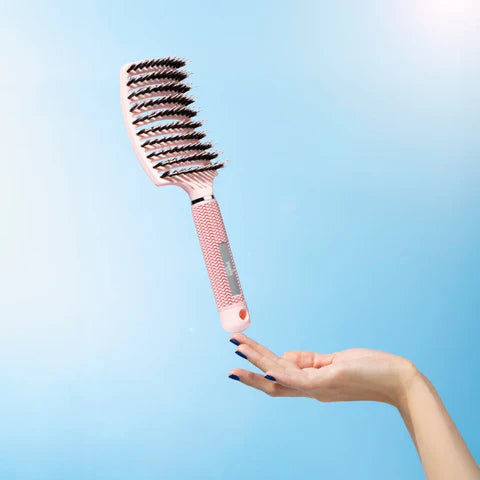
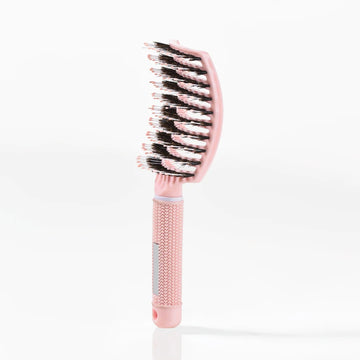
A gentle hairbrush can also be useful for careful detangling.
Should you only wash your hair a few times a week?
Not necessarily.
There isn’t one correct hair-washing frequency that suits everyone.
Some people need to wash their hair daily, whilst others are better off with longer intervals between washes.
This depends, amongst other things, on:
- scalp
- hair type
- activity level
- styling products
- personal preferences
Wash your hair as and when needed rather than following a specific rule.
Hairstyles that can create more visible volume
A haircut can make a big difference to how fine or less dense hair looks.
A hairdresser can help you choose a hairstyle that suits your hair type and face shape.
Options could include, for example:
- a page or bob
- shoulder-length hair
- shorter hairstyles
- soft layers
- light waves
Volume-boosting styling products can also give your hair a fuller look.
Read more in our guide to hairstyles for fine hair.
What about a scalp massage?
A scalp massage can be a pleasant part of your hair care routine.
You can use your fingertips or a Deep Scalp Brush.
A scalp brush can, for example, be used whilst washing your hair to massage the scalp and distribute the shampoo.
However, scalp massage should not be regarded as a proven treatment for thinning hair or a method for activating ‘dormant’ hair follicles.
Diet and thinning hair
A varied and balanced diet is part of a healthy lifestyle.
Your diet provides a range of vitamins, minerals, proteins, fats and other nutrients.
When specific nutrients are mentioned in relation to hair, it is important to stick to the specific, approved health claims.
For example:
Biotin helps maintain normal hair.
Zinc helps maintain normal hair.
Selenium helps maintain normal hair.
This does not mean that these nutrients can be described as something that makes thin hair thicker or treats hair loss.
What about Hair Vitamins?
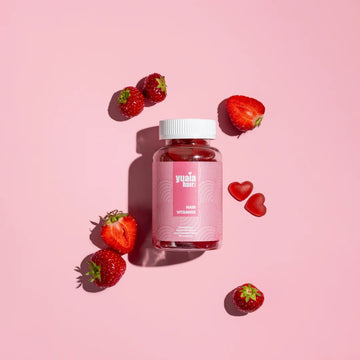
Yuaia Hair Vitamins is a dietary supplement containing, amongst other things, biotin and zinc.
Biotin and zinc help maintain normal hair.
Hair Vitamins should not be regarded as a treatment for thin hair, hormonal hair loss or other forms of hair loss.
Nor should it be described as a product that:
- increases hair growth
- creates new hair follicles
- makes hair thicker
- stops hair loss
- increases hair density
Dietary supplements should not be used as a substitute for a varied and balanced diet and a healthy lifestyle.
Always follow the recommended daily dose.

What about biotin?
Biotin is a B vitamin.
The relevant authorised health claim regarding hair is:
Biotin contributes to the maintenance of normal hair.
This should not be rephrased to suggest that biotin stimulates hair growth, strengthens hair through keratin production or treats thinning hair.
Read more in our guide to biotin.
Natural oils and thinning hair
Oils can form part of regular cosmetic hair care.
Rosemary oil, for example, can be used as part of a scalp routine in accordance with the product’s instructions for use.
However, it should not automatically be described as a treatment that stimulates hair follicles or causes thinning hair to grow back.
The same applies to other plant-based ingredients.

Coconut oil for the lengths
Coconut oil is often used as an ingredient or oil treatment in hair care.
It may be suitable for caring for the lengths, depending on hair type.
Use oils according to your hair’s needs, as very fine hair can easily be weighed down by heavy products.
Aloe vera and other plant-based ingredients
Aloe vera and various plant extracts are used in many cosmetic hair products.
Their function depends on the specific formulation.
You should therefore not automatically attribute effects such as increased hair growth or the treatment of hair loss to them solely on the basis of the ingredient’s name.
Grow & Glow and fine hair
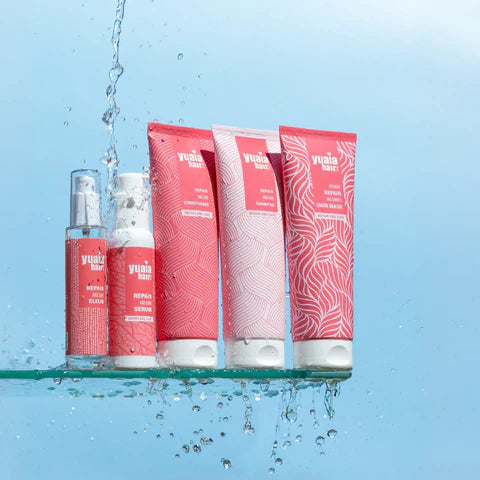
The Grow & Glow range can be used as part of your regular hair and scalp care routine.
However, the products should not be regarded as a medical treatment for fine hair or hair loss.
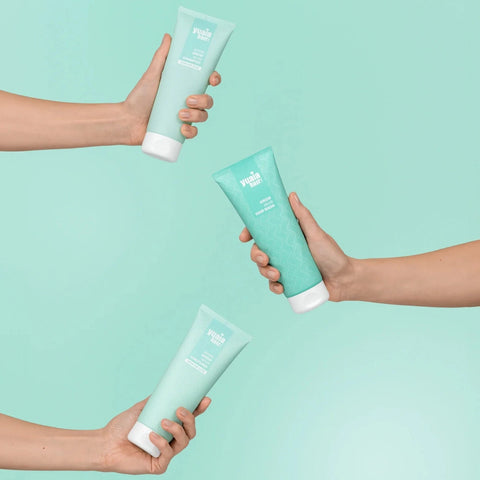
Grow & Glow Shampoo
Grow & Glow Shampoo is used for regular cleansing of the hair and scalp.
It can form part of a hair care routine if you’d like to use a shampoo from the Grow & Glow range.
Which shampoo suits you best depends on your hair and scalp.
Grow & Glow Conditioner
Grow & Glow Conditioner is used after washing your hair to condition the lengths.
It can help make your hair softer and more manageable.
If you have fine hair, you can apply the conditioner mainly to the lengths and ends if you find that products applied close to the roots weigh your hair down.
Grow & Glow Serum Formula+
Grow & Glow Serum Formula+ is a cosmetic serum developed for application directly to the scalp.
The serum can be incorporated into your scalp care routine in accordance with the product’s instructions for use.
It should not be regarded as a treatment for hormonal or medical hair loss.
Grow & Glow Hair Mask
Grow & Glow Hair Mask is designed to care for the lengths of the hair.
It can be used as and when needed, if the hair feels dry or requires extra care.
A hair mask can help give your hair a softer and more well-groomed appearance, but should not be described as a product that increases the hair’s biological growth rate.
When should you contact your doctor?
Thin or fine hair does not necessarily require treatment.
However, if you notice a noticeable change from your normal hair, you should be aware of this.
You may wish to contact your doctor if you experience:
- sudden thinning
- very heavy shedding
- patches of baldness
- a noticeably wider parting
- a rapidly changing hairline
- pain, sores or severe irritation on the scalp
- other symptoms occurring alongside the changes in your hair
There are many different causes of hair loss, and it is not possible to make a definitive diagnosis based on the appearance of the hair alone.
FAQ on thin hair in women
How can I make thin hair look fuller?
You can use haircuts, volumising styling techniques and lightweight products.
Mousse, root-lift products, blow-drying and the right hairstyle can, for example, create a fuller visual appearance.
Is thin hair the same as hair loss?
No.
You may naturally have low hair density or fine hair strands without experiencing hair loss.
Hair loss describes a change where you lose more hair or experience lower density than before.
Can vitamins help with thin hair?
Biotin, zinc and selenium have approved health claims regarding the maintenance of normal hair.
This is not the same as treating thinning hair or increasing hair density.
Can Hair Vitamins make my hair thicker?
Hair Vitamins should not be marketed as a product that makes hair thicker.
Biotin and zinc help to maintain normal hair.
Can stress cause hair to thin?
Significant physical or mental stress may, in some people, be associated with telogen effluvium and increased diffuse hair loss.
If hair loss persists, it should be assessed by a doctor.
Can hormonal changes affect the hair?
Yes, some people experience changes in their hair around times such as pregnancy, the postnatal period or the menopause.
Significant or persistent changes should be assessed on a case-by-case basis.
Can scalp massage make hair thicker?
Scalp massage can be a pleasant part of a hair care routine, but should not be regarded as a proven treatment for thinning hair.
Can shampoo make hair thicker?
Cosmetic shampoos can, amongst other things, cleanse the hair and, in some cases, create a visual volumising effect.
However, this is different from altering the number of hair follicles or treating hair loss.
Best products for a thin hair routine
When choosing products for fine or less dense hair, you can focus on what your hair specifically needs.
This could include, for example:
- volume
- gentle cleansing
- easy care
- less friction
- heat protection
- easier detangling
The most important thing is to distinguish between cosmetic care and the treatment of actual hair loss.
Hair Vitamins
Yuaia Hair Vitamins is a dietary supplement containing, amongst other things, biotin and zinc.
Biotin and zinc help to maintain healthy hair.
The product can form part of your daily routine.
Always follow the recommended daily dose.
Grow & Glow Shampoo
Grow & Glow Shampoo can be used for regular cleansing of the hair and scalp.
If you have fine hair, you can combine the shampoo with styling products to achieve the desired volume.
Grow & Glow Conditioner
Grow & Glow Conditioner is used to care for the lengths and ends of the hair.
Apply the product as required and rinse thoroughly.
Grow & Glow Serum Formula+
Grow & Glow Serum Formula+ has been developed for cosmetic use directly on the scalp.
Follow the product’s instructions for use.
Grow & Glow Hair Mask
Grow & Glow Hair Mask can be used when the lengths need extra care.
It can help make your hair feel softer and better cared for.
Brief summary
Fine hair can mean different things.
Some people have naturally fine hair or low hair density, whilst others experience a genuine change in their hair over time.
If your hair has always been fine, you can focus on the right care and styling to create more visible volume.
If, on the other hand, your hair suddenly or significantly thins out, you should consider having the cause assessed.
Cosmetic hair products can be used for cleansing, care, protection and styling, but should not be regarded as a treatment for medical hair loss.
When discussing Hair Vitamins, the relevant approved effects on hair include, amongst others:
Biotin helps maintain normal hair.
Zinc helps maintain normal hair.


