 2-5 day delivery
 100.000+ satisfied customers
 Satisfaction Guarantee











What about Hair Vitamins?
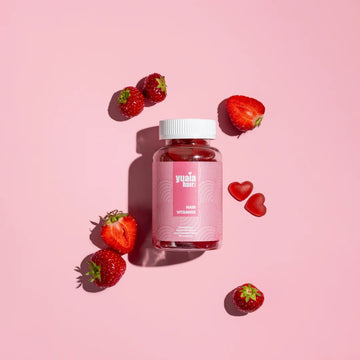
Yuaia Hair Vitamins is a dietary supplement containing, amongst other things, biotin and zinc.
Biotin and zinc help maintain normal hair.
Hair Vitamins should not be regarded as a product that:
- makes hair strands permanently thicker
- creates new hair follicles
- increases hair density
- makes hair grow faster
- treats hair loss
Dietary supplements should not replace a varied and balanced diet and a healthy lifestyle.
Always follow the recommended daily dose.

Can you have too many vitamins?
Yes. More is not necessarily better.
You should therefore always follow the recommended daily dose for a dietary supplement.
If you are taking several different dietary supplements at the same time or are unsure of your needs, it may be advisable to speak to your doctor or another healthcare professional.
You should not increase the dose in order to achieve a faster or more visible effect on your hair.
10 tips for hair that looks thicker and fuller
Here are our top tips for looking after your hair and creating more visible volume.
Tip 1: Use a hair mask and hair oil as needed
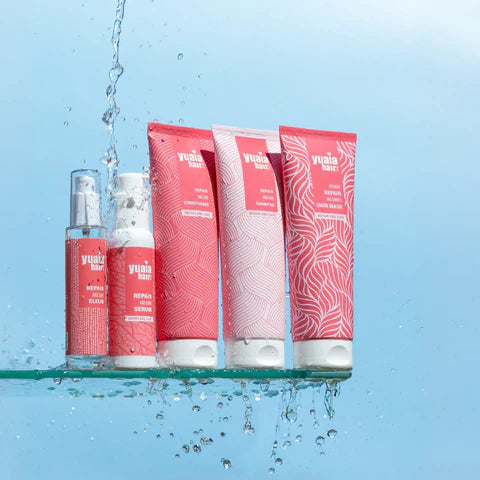
Hair masks and hair oils can be excellent products for caring for the lengths and ends of your hair.
If your hair feels dry or damaged, extra care can make it:
- softer
- more glossy
- easier to comb
- more manageable
When your hair is easier to manage, you can also reduce unnecessary mechanical stress and hair breakage.
This does not mean that a hair mask changes the number of hair follicles or makes new hair grow.


Hair mask for the lengths
A hair mask can be used as and when needed as a more intensive part of your hair care routine.
How often you should use it depends on:
- your hair type
- how dry your hair is
- how often you wash your hair
- how much you style or colour your hair
Fine hair types often benefit from lighter formulations, whilst drier or coarser hair may benefit from richer products.
Hair oil for ends and lengths
Hair oil can be used in small amounts to nourish the lengths and ends.
If you have very fine hair, it may be best to start with a small amount so that your hair isn’t weighed down.
There are products based on plant oils as well as products containing other cosmetic ingredients.
The most important thing is not whether the product is ‘natural’, but whether the formulation suits your hair and delivers the desired result.
Read also about coconut oil for hair.
Tip 2: Massage your scalp if you enjoy it
A scalp massage can be a pleasant part of your hair care routine.
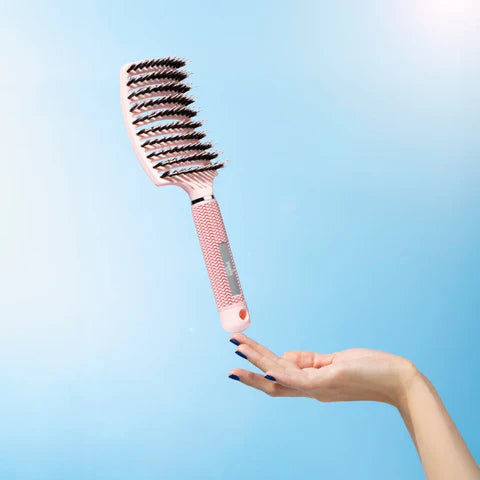
You can use your fingertips or a Deep Scalp Brush.
A scalp brush can, for example, be used to:
- massage the scalp
- distribute shampoo
- make washing your hair more comfortable
However, scalp massage should not be regarded as a proven method for thickening hair or increasing natural hair growth.

Tip 3: Wash your hair in a way that suits you
There is no single ‘perfect’ hair-washing routine.
How often you should wash your hair depends, amongst other things, on your scalp, hair type, activity level and how many styling products you use.
A simple routine could, for example, be:
- Gently comb out any large tangles before washing your hair, if this works for your hair type.
- Apply shampoo mainly to the scalp and massage gently.
- Rinse the shampoo out thoroughly.
- Use a hair mask if needed.
- Finish by applying conditioner to the lengths and ends.
- Gently pat or squeeze excess water out of your hair.
It isn’t necessary to wash your hair exactly 2–3 times a week, use shampoo twice with every wash, or finish with ice-cold water.
Adapt the routine to suit your own hair.

€32,99 €65,98

Tip 4: Choose a shampoo to suit your scalp and hair type
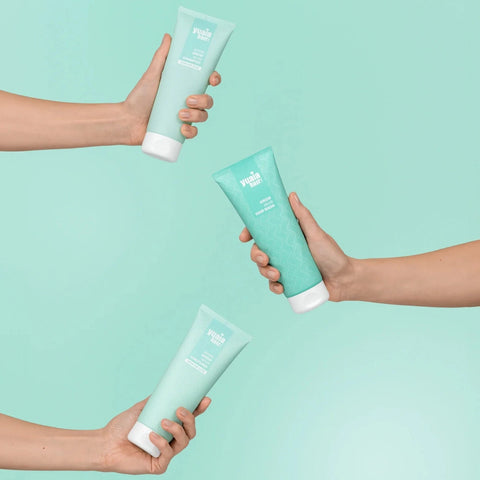
Shampoo is used first and foremost to cleanse the hair and scalp.
An expensive shampoo isn’t automatically better, and sulphates or silicones aren’t generally ‘harmful’ ingredients.
Some people prefer sulphate-free shampoo, whilst others need a more effective cleanse.
If you have fine hair and want volume, for example, you could look for a formula that doesn’t weigh the hair down unnecessarily.
If your scalp is sensitive or dry, other properties may be more important.
So choose according to your own needs.
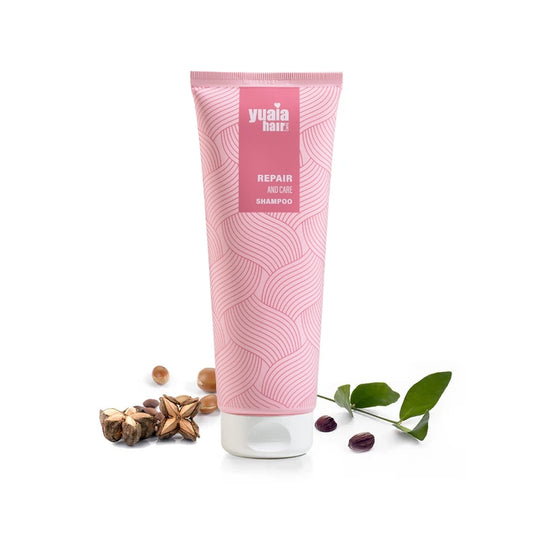
Our favourites

Tip 5: Protect your hair from the sun and UV rays
The sun can affect your hair, especially if it is already:
- dry
- bleached
- coloured
- chemically treated
A hat or a scarf can be a simple way to protect your hair in strong sunlight.
You can also use a hair care product with proven UV protection, provided the product is designed for this purpose.
Tip 6: Be mindful of heat styling
Straighteners, curling tongs and other heat styling tools can put strain on the hair strands, particularly at very high temperatures or with frequent use.
If your hair breaks, it may appear less voluminous over time.
You can therefore:
- choose the lowest temperature that gives the desired result
- use heat protection
- avoid running the tool repeatedly over the same section of hair
- vary your styling with heat-free methods
You don’t necessarily need to avoid blow-drying altogether. Use a suitable temperature and keep the dryer at a safe distance from your hair.
Tip 7: Avoid very tight hairstyles
If your hair is frequently tied up very tightly, this can put mechanical strain on the hair shafts and hair follicles.
Try varying your hairstyles and avoid constant tension on the same areas.
Soft scrunchies or other smooth hair accessories can also reduce friction compared to very hard elastic bands and clips.
Hairstyles that can make your hair look thicker
The right haircut can make a big difference to how full your hair appears.
If you have fine or less dense hair, you might consider, for example:
- a bob or page cut
- shoulder-length hair
- a straighter cut
- light waves
- volume at the roots
- a different parting
A hairdresser can help you find the solution that best suits your hair.
Tip 8: Protect your hair at night
Your hair is also exposed to friction whilst you sleep.
A smooth pillowcase or a bonnet may therefore be worth considering if your hair tangles easily or becomes frizzy.
A bamboo pillowcase or a bamboo bonnet can be incorporated into your routine.
However, they should not be described as products that biologically thicken the hair.
Their primary function is cosmetic styling and protection against friction.
Tip 9: Be mindful of colouring and bleaching
Colouring, and bleaching in particular, can affect the structure of the hair shaft.
The extent to which your hair is affected depends, amongst other things, on:
- the product
- the strength of the treatment
- the current condition of your hair
- how often your hair is treated
If you frequently colour or bleach your hair, it may therefore be particularly important to use gentle care products and focus on minimising hair breakage.
If you’re in any doubt, a hairdresser can help you choose the most suitable treatment.
Tip 10: Eat a varied and balanced diet
A varied diet is part of a healthy lifestyle.
For example, you can eat a variety of sources of:
- protein
- vegetables
- fruit
- wholemeal
- fish
- nuts and seeds
When vitamins and minerals are specifically linked to hair, you should stick to their approved health claims.
Biotin helps maintain normal hair.
Zinc helps maintain normal hair.
Selenium helps to maintain normal hair.
Other vitamins and minerals may have important functions in the body without necessarily having a specific approved claim relating to hair.
Does having your hair cut regularly make it thicker?
No. Having your hair cut does not change the diameter of new hair strands or the number of hair follicles.
However, a trim can remove worn and split ends.
If the ends are very thin or damaged, a fresh cut can also make the lengths appear fuller.
How often you should have a trim depends on your hair, your hairstyle and your preferred length.
Read more about split ends.
Which vitamins make hair thicker?
There is no approved health claim stating that any vitamin or mineral makes hair thicker.
Biotin and zinc, however, have approved claims regarding normal hair:
Biotin helps maintain normal hair.
Zinc helps to maintain normal hair.
Selenium also has an approved effect on hair:
Selenium helps to maintain normal hair.
This should not be rephrased to suggest that these nutrients increase hair density or make individual strands thicker.
When can thinner hair be a sign of hair loss?
If your hair has always been fine, this isn’t necessarily a sign of hair loss.
However, if your hair suddenly or gradually becomes noticeably less dense, this may indicate a change that warrants further investigation.
You may wish to contact your doctor if you experience:
- a marked increase in hair shedding
- sudden thinning
- patchy areas of hair loss
- a rapidly changing hairline
- a noticeably wider parting
- other symptoms at the same time
Read our guide on thin hair in women.
Product recommendations for a fuller look
When choosing products, it’s important to distinguish between cosmetic hair care and the treatment of actual hair loss.
Products can be used for, amongst other things:
- cleansing
- care
- protection
- styling
- moisture
- volume
They should not automatically be described as products that create new hair follicles or increase biological hair density.
Hair Vitamins
Yuaia Hair Vitamins is a dietary supplement containing, amongst other things, biotin and zinc.
Biotin and zinc help to maintain normal hair.
Hair Vitamins should not be regarded as a product that makes hair thicker or increases hair density.
The product can form part of your daily routine as a dietary supplement.
Dietary supplements should not replace a varied and balanced diet and a healthy lifestyle.
Always follow the recommended daily dose.
Grow & Glow Serum Formula+
Grow & Glow Serum Formula+ is a cosmetic serum developed for application directly to the scalp.
The serum can be used as part of your regular scalp care routine in accordance with the product’s instructions for use.
It should not be regarded as a treatment for medical hair loss.
€32,99 €65,98
Heat protection
If you use a hairdryer, straighteners or curling tongs, a heat protection product can help reduce the strain your hair is subjected to during heat styling.
Our Style & Shine Heat Protection is designed to protect your hair during heat styling.
Always follow the product’s instructions for use and the specified maximum heat protection level.
Brief summary
How thick and dense your hair naturally is depends largely on genetics.
You cannot necessarily change the number of hair follicles through hair care or dietary supplements.
However, there is a lot you can do to:
- reduce hair breakage
- protect the lengths
- choose a suitable hair care routine
- use heat protection
- choose a haircut that creates more visible volume
- use volumising styling products
When it comes to Hair Vitamins, the relevant approved hair benefits include:
Biotin helps maintain normal hair.
Zinc helps maintain normal hair.
This is different from making the hair thicker or increasing its biological density.


