 2-5 day delivery
 25.000+ satisfied customers
 Satisfaction Guarantee





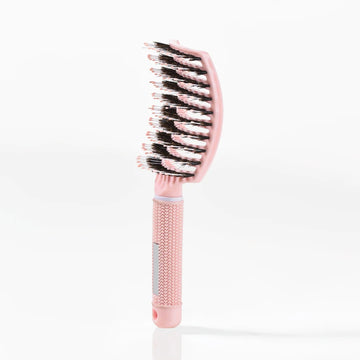





How to use a heatless curling tool step by step
- Start with slightly damp hair: Hair should be damp, not wet. After washing, towel dry and let it air dry until it is about 70-80 percent dry. It should feel cool to the touch so it can dry properly while wrapped.
- Detangle and prepare: Begin by brushing through the hair thoroughly to remove knots and tangles. Smooth, detangled hair will wrap more evenly around the rod and help create a more consistent result. If additional hold is needed, apply a small amount of lightweight styling product and distribute it evenly from mid lengths to ends. Avoid heavy creams or oils, as these can weigh the hair down and reduce movement in the finished curls.
- Position the rod: Place the heatless curling rod on top of the head, positioning it like a headband. Make sure it sits evenly on both sides, then secure it at the crown with the clip to prevent shifting while wrapping.
- Section the hair: Divide the hair into two equal sections, one on each side of the head. For thicker hair create smaller subsections to ensure even wrapping and proper drying.
- Wrap the hair: Starting at the front, take a small section and wrap it over and around the rod, directing it away from the face. Gradually add more hair as you move downward, maintaining even tension throughout. Repeat on the opposite side.
- Secure and remove: Fasten the ends with scrunchies or soft elastics and leave in for several hours or overnight. Carefully remove the elastics and unwrap slowly to maintain the curl shape and reduce frizz.
How to create different curl results
The appearance of curls made with a curling rod can vary significantly depending on section size, wrapping technique, and styling approach. Small adjustments in how the hair is wrapped can change the overall result from soft, relaxed waves to more defined and structured curls.
- Loose waves: Use a thicker rod and wrap larger sections of hair. Larger sections create a softer bend in the hair and a more relaxed finish that works well for everyday styling.
- Tighter curls: Use smaller sections and slightly tighter tension. Smaller sections allow the hair to wrap more closely around the rod, resulting in more definition and a more bouncy curl pattern.
- Wrapping direction: The direction of wrapping also plays an important role. Wrapping all sections away from the face creates a more open and lifted appearance, while alternating directions can give a more natural, textured look. If a more polished style is preferred, keeping the sections even and consistent in size will help create symmetry on both sides.
- Volume at the roots: For extra volume at the roots, position the rod slightly higher at the crown and wrap the hair upward before guiding it around the rod. Lifting the hair slightly as it is wrapped can prevent it from lying flat against the scalp.
- Face framing curls: To create face framing curls, ensure the front sections are wrapped away from the face and kept smooth during the wrapping process.
- Helping curls last longer: To help curls last longer, avoid brushing immediately after unwrapping. Instead, separate the curls gently with fingers and allow them to settle before styling further. Waiting a few minutes before touching the hair can help the shape stabilize. If additional hold is needed, a light mist of hairspray can be applied once the curls have been arranged.
Common mistakes to avoid
Even though heatless styling is simple, small mistakes can influence how the curls turn out. Being aware of the most common pitfalls can help achieve more consistent results and make the process smoother overall.
Wrapping hair that is too wet
Wrapping hair that is too wet can affect how well curls form and hold their shape. When hair is overly saturated, the outer sections may dry while the inner layers remain damp, leading to uneven drying. This can cause curls to look inconsistent or lose their definition soon after the rod is removed. Excess moisture may also weigh the hair down, making it harder for the curl pattern to properly set. For better and longer-lasting results, the hair should be slightly damp rather than soaking wet, allowing the curls to dry more evenly and maintain their shape.
Using too much product
Applying excessive amounts of styling product can quickly affect the result and cause the hair to look stiff or weighed down. Thick creams, oils, or dense mousses may coat the strands with a heavy layer, limiting natural movement and causing curls to form unevenly. This buildup can also make the hair appear greasy instead of soft and defined.
In many cases, only a small amount of a lightweight product is needed to create hold and structure without reducing flexibility. Beginning with a modest amount and adding more only when necessary helps maintain softness, bounce, and a more natural-looking finish while reducing the risk of residue.
Not securing the rod properly
If the rod is not secured firmly, especially overnight, it may shift and change the tension in the hair. This can cause uneven curl patterns and make the result look inconsistent from one section to another. Movement during sleep can loosen the wrap or create dents, particularly if the clip or scrunchies are not positioned correctly. To avoid this, make sure the rod sits close to the head and feels stable before going to bed. The clip and scrunchies should be tight enough to hold everything in place, yet comfortable enough that they do not pull or create unnecessary pressure.
Unwrapping too quickly
Removing the rod too fast can disrupt the curl formation and undo the shape that has developed while the hair was wrapped. When the hair is pulled out too quickly, the curls may stretch out, lose their structure, or become uneven. Instead, take your time and gently unwind each section in the same direction it was wrapped. This helps preserve definition and keeps the curl pattern consistent. Brushing aggressively right away may create frizz and reduce shape. Allow the curls to settle for a few minutes first, then softly separate them with your fingers for a more natural finish.
Using a heatless curling rod for different hair types
Fine hair
Fine hair may benefit from a light styling mousse before wrapping to improve hold. Using smaller sections can help curls last longer by reducing the weight on each curl. Avoid heavy conditioning before styling, as very smooth hair may struggle to hold texture. After unwrapping, gently separate curls to maintain definition.

Thick hair
Thick hair often needs more time to dry fully. Dividing the hair into smaller sections and ensuring it is only slightly damp before wrapping can improve results. Leaving the rod in longer and checking that the inner layers are dry helps prevent curls from dropping too quickly.
Long hair
For long hair, an extended rod can provide additional length for smoother and more even wrapping. This helps prevent overlapping sections that may create uneven bends. Dividing the hair into balanced sections on each side can help distribute volume more evenly and prevent one side from appearing fuller than the other.
Short hair
For shorter hair, working with smaller sections can help achieve more balanced curls and reduce slipping. Securing the ends carefully and keeping the sections controlled during wrapping can make it easier for shorter layers to stay in place.
Naturally straight hair
Naturally straight hair may benefit from slightly damp preparation and even tension while wrapping to help the curls hold their shape. Leaving the rod in overnight can support longer lasting results. Using smaller sections may also improve definition and help the curls maintain their structure throughout the day.
Naturally wavy hair
Hair with a natural wave often responds quickly to a heatless curling rod and may require less time to set. Even so, controlled sectioning helps create a more consistent curl pattern and more predictable results.
Pro tips for long lasting, damage-free curls
Creating curls with a heatless curling rod is simple, but a few small adjustments can help improve the results and keep the hair comfortable while styling. These tips can help maintain curl definition, reduce frizz, and ensure the rod stays in place overnight.
- Sleeping with the rod overnight: Sleeping on a bamboo pillowcase can help reduce friction while wearing the rod overnight, minimizing disruption and helping the curls maintain their shape. A smoother surface creates less resistance against the hair, which can reduce frizz and preserve definition.
- Ensuring comfort and stability: Before going to sleep, check that the rod feels evenly positioned on both sides of the head to improve comfort and prevent it from shifting during the night. If additional support is needed, a soft clip can add stability without creating tension.
- Avoid wrapping too tightly: Avoid wrapping the hair too tightly at the scalp, as comfort plays an important role in keeping the rod securely in place for several hours.
- Refreshing curls the next day: To refresh curls the next day, lightly mist the hair with water and reshape individual sections around your fingers rather than rewrapping everything. Twisting specific curls back into place for a few minutes can help restore definition and smoothness.
- Redefining with styling products: A small amount of lightweight styling product can be used to redefine the ends if needed. Since a heatless curling rod does not rely on heat, it can be used regularly without increasing the risk of heat related damage.
Frequently asked questions about heatless curling rods
How long do heatless curls last?
Longevity depends on hair type, preparation and environmental factors. Many find that curls last a full day, and sometimes even longer when supported with the right styling products.
Can it be used on dry hair?
It can be used on dry hair, but slightly damp hair usually produces more defined curls that last longer. Damp hair helps the curl shape set more effectively as it dries, which can improve hold and create a smoother, more structured result compared to styling completely dry hair.
Is it safe to use a heatless curling rod regularly?
Because no heat is involved, it can be used regularly without the same concerns linked to frequent use of hot styling tools.


