 2-5 day delivery
 25.000+ satisfied customers
 Satisfaction Guarantee










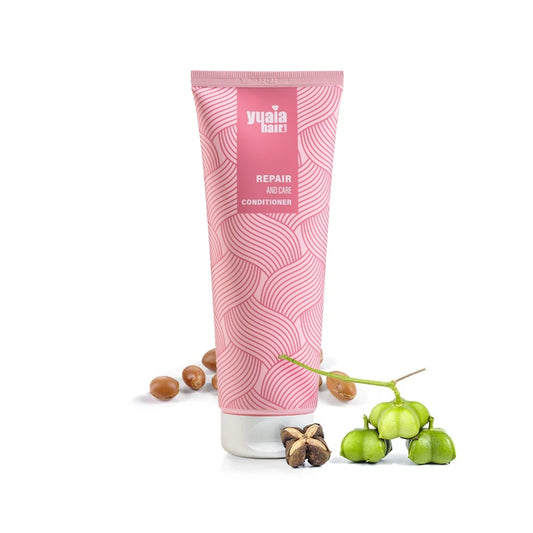
Shampoo can strip away natural oils, leaving your hair dry or rough. Conditioner helps replenish that lost moisture and seals the outer layer of the hair (the cuticle), making it softer and easier to detangle.
Key functions:
- Hydrates dry hair
- Reduces frizz
- Improves smoothness
- Repairs mild damage
When to use it:
- After every shampoo
- Especially important for dry or damaged hair
What is a leave-in conditioner?
Leave-in conditioner is a lightweight product applied after washing and left in the hair.

Key functions:
- Lock in moisture
- Reduce frizz caused by humidity
- Protect against heat styling
- Minimize friction from brushing and daily wear
Some formulas also include added heat protection or UV filters for extra defense.
Key benefits:
- On damp hair after washing
- Between washes for added moisture
It works best on damp hair after washing, but can also be used lightly on dry hair.
Which one is better?
Neither is inherently better - they simply serve different purposes.
If your hair is dry or damaged, you likely need both.
If your hair is fine or oily, you may prefer a lightweight conditioner and occasional leave-in use.
If your hair is curly or textured, leave-in conditioner can be essential for definition and moisture.
Think of conditioner as your foundation, and leave-in conditioner as your finishing product.
Do you need both?
In most cases, yes.
They work as a system:
- Restore moisture in the shower
- Maintain hydration throughout the day
- Protect your hair from damage
- Improved softness and shine
Full routine example:
- Shampoo
- Conditioner
- Gentle drying
- Leave-in conditioner
- Styling products (optional)
Common mistakes to avoid
Using too much leave-in conditioner
One of the most frequent issues is using too much leave-in conditioner. While it is made to stay in the hair, using too much can weigh hair down and make it look greasy or flat.

Start with a small amount and add more only if needed, especially for fine hair types that are more sensitive to product buildup.
Skipping conditioner
Skipping conditioner entirely often leads to dryness, tangling and increased breakage.

Without conditioner, the hair remains in a weakened post-shampoo state, making it harder to manage and style.
Applying conditioner to the scalp
A conditioner is made for only the mid-lengths and ends, and not for the scalp. If you apply it directly to the scalp, it can cause product buildup and give you a heavy, oily feeling.
You should focus on applying your conditioner from mid-length to ends only.
Not adjusting for hair type or season
Hair needs change depending on weather, humidity, styling habits and overall damage level. Using the same routine year-round can reduce effectiveness.

For example, hair may need more hydration in winter and lighter products in summer.
Adjusting your routine helps maintain balance throughout the year.
Can you use conditioner as a leave-in?
No. Regular conditioners are not formulated to stay in your hair. Leaving them in can cause buildup, make your hair greasy and weigh it down.
If you want a product made to stay in the hair, you should always choose a leave-in conditioner.
Hair type matters
Different hair types require different levels of care and product intensity, when it comes to conditioning. Therefore it is important that you take your hair type into consideration, when choosing a product. Below you will find recommendations for each hair type, so you will know what type of product is right for you.
Fine hair
Fine hair is easily weighed down by heavy products, so it benefits from a very lightweight routine focused on maintaining volume and movement:
- Lightweight conditioner
- Minimal leave-in (focus on ends)
Thick hair
Thick hair requires more moisture penetration and control.
Curly hair
Curly hair benefits from extra moisture and definition, so a balanced routine works best:
- Hydrating conditioner
- Leave-in for definition and moisture
Damaged hair
Damaged or chemically treated hair needs more intensive care. The cuticle is often raised or weakened, meaning moisture escapes more easily.
- Repair-focused conditioner to restore surface smoothness
- Leave-in to protect and reinforce hair between washes
Frequently asked questions
Is leave-in conditioner better than regular conditioner?
They each serve different roles, so it’s not about what product is better in general. Instead you should consider what product is best for your specific hair type. Most people will benefit from using both a conditioner and a leave-in conditioner in their routine.
Can I use both at the same time?
Yes, and it’s often recommended.
How often should I use leave-in conditioner?
After every wash, or whenever your hair needs extra moisture.
Does leave-in conditioner cause buildup?
Leave-in conditioner can be overused and cause buildup. This is especially the case if you have fine hair, that can get weighed down or flatten easily. So make sure to use the right amount for your specific hair type.


