 2-5 day delivery
 100.000+ satisfied customers
 Free delivery over £49












What is product buildup?
Residue can come from styling, dry shampoo, oil and conditioning formulations. A product leaving a conditioning film is not automatically a problem. The question is whether the amount and wash routine suit your hair and scalp.
What can product residue look and feel like?
Hair may look flat, dull, clumped, oily or waxy. The same signs can reflect natural sebum, added oil, insufficient rinsing or other factors. Shine alone does not prove product buildup. Mineral deposits from water and a flaky scalp are not the same as product residue either.
Product buildup is not the same as protein overload
A stiff strand or a home stretch test cannot establish protein excess or deficiency. If a new product gives an unwanted feel, try less or pause that specific product. You do not automatically need more protein treatments or a fixed rotation between protein and moisture.
Adjust cleansing step by step
- Note which products and amounts you use and where you apply them.
- Wet hair thoroughly and use shampoo as directed, focusing on the scalp.
- Massage with fingertips without scratching and rinse thoroughly, including the nape and hairline.
- Consider suitable clarifying cleansing for persistent product residue. Follow instructions; it is not automatically suitable for mineral deposits.
- Assess hair after washing and drying before changing more products.

Conditioner and detangling after washing
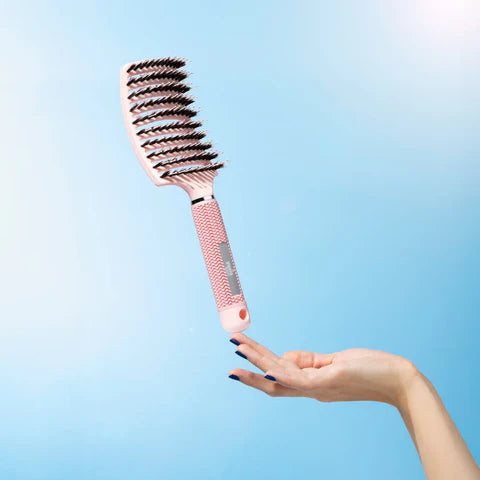
Use conditioner as directed where hair needs care. Adjust the quantity if lengths feel heavy. Detangle gently from the ends with a tool suited to your hair type; this does not replace cleansing.
Clean your brush and comb too
Remove hair and product residue from tools according to their cleaning instructions. Whether they can be washed depends on the material. A clean brush helps with detangling, but brushing alone does not remove residue like shampoo and water.

£21.99
Dry hair gently
Squeeze out excess water and use a soft towel without rough rubbing. A towel is a drying aid, not a treatment for buildup.

Avoid cleansing more harshly than necessary
You do not need to wash until hair feels squeaky clean. Lemon, baking soda and strong vinegar mixtures are unnecessary. Extra oil or dry shampoo does not cleanse hair; dry shampoo can change the appearance of roots between washes but does not replace shampoo and water.
Frequently asked questions
How often should I use clarifying shampoo?
This depends on the formulation, product use and scalp needs. Follow instructions rather than a fixed weekly schedule. Reduce or stop if skin becomes irritated or lengths very dry.
Can sulfate-free shampoo remove product residue?
Yes. Cleansing depends on the whole formulation and how it is used, not just whether the label says sulfate-free. Choose according to needs and instructions and rinse thoroughly.
Do flakes or hair loss indicate product buildup?
Those signs alone cannot establish the cause. Persistent itching, redness, sores or noticeable hair loss should be assessed by a doctor rather than addressed with more intensive cleansing.
More on washing and stiff hair
See our guide to washing hair properly and our stiff hair guide.


