 2-5 day delivery
 100.000+ satisfied customers
 Free delivery over £49












How to choose shampoo for colored hair
Choose a shampoo intended for color-treated hair that also suits its other needs. Look at the complete formula and directions rather than one ingredient. After washing, your scalp should feel clean and your lengths should be manageable. Use less product if your routine weighs down fine hair. Explore our products for colored hair.
Is sulfate-free shampoo good for colored hair?
Sulfate-free shampoo can be a suitable choice, but the label alone does not tell you how gentle it is or how long your color will last. Other cleansing agents, the full formula, your dye and washing routine also matter. Sulfates do not automatically make every shampoo unsuitable for colored hair. Sulfate-free does not mean fragrance-free. Assess the whole product and your own results.
Colored and bleached hair can need different care
Bleached lengths can feel dry, rough and more fragile. Choose cleansing and care for their condition, not just their color. Purple shampoo adjusts unwanted yellow tones in suitable blonde or grey shades; it does not automatically replace your regular shampoo or conditioner. Follow its directions for use and contact time, and ask your stylist if you are unsure about your shade.

Repair and Care as a specific option
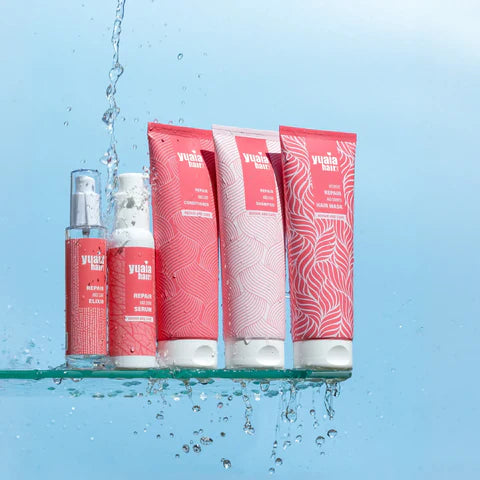
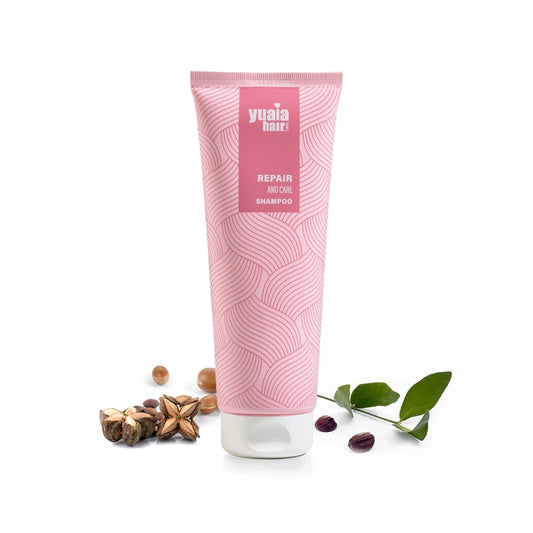
To compare a Yuaia Haircare product, read about Repair and Care Shampoo. It is sulfate-free and silicone-free. Check the ingredient list, intended hair types and directions against your own needs. Assess the result after washing and adjust length care accordingly. Shampoo cleans hair; choose separate conditioner or a mask when your lengths need extra care.
A simple washing routine for colored hair
Wet your hair and scalp fully, apply shampoo at the roots and massage gently with your fingertips. Rinse thoroughly without rubbing the lengths roughly. Use comfortably warm water rather than very hot water; ice-cold water is unnecessary. Follow the label for the amount and any contact time. Adjust washing to your scalp, sweat and residue rather than a fixed schedule for everyone.

Limit heat and use heat protection
Choose a suitable lower styling temperature and avoid repeated passes over the same area. Apply heat protection as directed when styling with heat. Protection complements careful styling; it is not a reason to increase the heat. Distribute spray according to its label as part of your normal routine.

Conditioner for lengths that need care
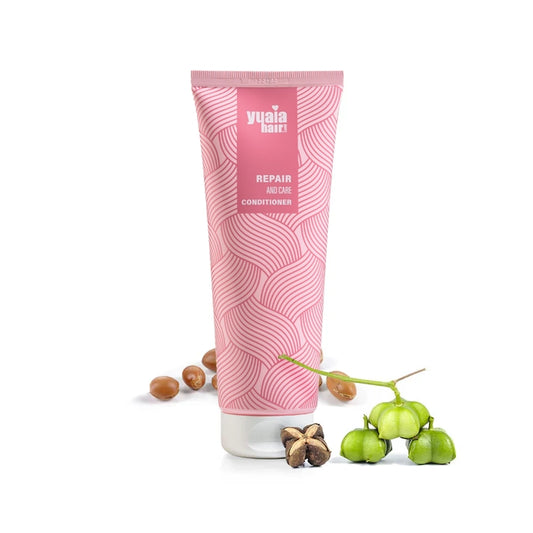
Apply conditioner to lengths and ends after washing. Start with a small amount on fine hair and targeted care on dry lengths. Follow the contact time and rinse well. Conditioner can improve softness and manageability; it does not renew your hair color by itself. Detangle gently from the ends upwards without pulling through knots.
Use a hair mask according to need
A mask can supplement care if lengths feel dry or need more suppleness. Follow that mask's directions for amount, placement and contact time instead of assuming every mask needs 10–15 minutes or a fixed weekly frequency. More product is not necessarily better. Assess dry hair and adjust if it feels heavy.

Care for your hair in the sun
A hat or scarf can be a simple step when your hair gets a lot of sun exposure. Follow the instructions if you choose a hair product with stated UV protection. Heat protection and UV protection are different properties; do not automatically assume a product offers both. Fit the whole routine to your day and color treatment.
Frequently asked questions
Can I use shampoo with sulfates on colored hair?
It may suit your hair depending on the complete formula and your treatment. Check its intended use, directions and results rather than just one ingredient.
Do I need purple shampoo every time?
Not necessarily. Use it for suitable tones and as directed; it is not a general care routine for every hair color.
Can shampoo alone repair bleached hair?
Shampoo cleans while conditioner and masks can supplement care. Adjust to your hair's condition and ask your stylist about very fragile lengths.


