 2-5 day delivery
 100.000+ satisfied customers
 Satisfaction Guarantee












Why does hair get greasy after one day?
Your scalp naturally produces sebum. How quickly it becomes visible varies, and fine or straight hair can soon look flat at the roots. Hormones can affect oil production. Product residue, too much conditioner near the scalp and incomplete rinsing can also leave hair feeling coated. Oiliness alone does not tell you which factor is involved.


Review your routine
Distinguish oily roots from a waxy feeling after washing. Check how much shampoo, conditioner and styling product you use, and change one thing at a time. If hair feels heavy immediately after a shower, start with thorough rinsing and keep rich care away from the roots. Avoid introducing several new products at once.


Wash the scalp and rinse thoroughly
Wet hair fully, distribute shampoo over the scalp and massage gently with your fingertips. Rinse all the hair well. Follow the product's directions rather than a fixed contact time. A second wash may help with obvious residue, but double shampooing is not required every time. Avoid harsh scrubbing, especially if your scalp is irritated.


£21.99

How often should you wash oily hair?
Adjust to how quickly your hair and scalp become oily or dirty. Some people with an oily scalp and straight hair need daily washing; others can wait longer. You do not need to stick to two or three washes a week if that does not suit you. Wash gently and adjust if dryness or irritation develops.


Can you train your hair to be less oily?
Hair training often means extending the time between washes to encourage the scalp to produce less sebum. You can adapt your washing routine, but you should not expect your scalp to learn to make less oil simply because you wash less often. A two-to-four-week schedule is not a guarantee of less greasy hair.
If a new routine leaves less residue or improves the lengths, better rinsing, different products or less conditioner near the roots may also explain the change. Try one adjustment at a time. Wash when your scalp needs it rather than putting up with oil, itching or discomfort to reach a certain number of days. Fine, straight hair with an oily scalp may need daily washing.
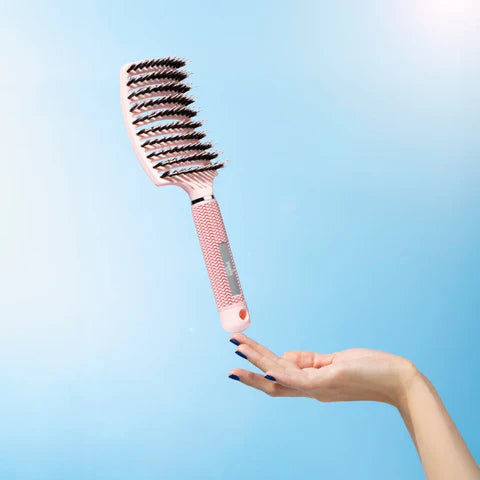
A brush can help with detangling and styling, but brushing is not a way to lower sebum production. Avoid excessive or vigorous brushing and clean the brush regularly. Dry shampoo can refresh the appearance between washes but does not replace shampoo and water. Hair oils, scalp massage and a particular pillowcase should not be presented as guarantees of reduced oil production either.
Read our guide to how often you should wash your hair.
Choose shampoo for your needs
Assess the whole formula and your own result. Sulfate-free does not automatically mean insufficient cleansing or a better fit. Start with a shampoo you tolerate, and avoid promises that one ingredient can stop oil production. Read our guide to shampoo for oily hair. The featured products are routine options rather than treatment for the cause of greasy hair.

Care for the lengths without weighing down roots
An oily scalp can coexist with dry ends. Apply conditioner to the lengths that need it and rinse as directed. Fine hair often benefits from a smaller amount near the ends. Gently press out moisture with a towel rather than rubbing. Brushes and towels are useful tools; they do not themselves change sebum production.

Refresh between washes
Dry shampoo can temporarily make roots look less oily. It does not remove sweat or replace shampoo and water. Apply a little to dry hair according to the label, and wash instead of layering it over residue. Read our dry shampoo guide. A loose updo can be a styling option when you want to refresh your look.

Hair oil and an itchy scalp
Hair oil is an optional care step, not a proven shortcut to regulating oily roots. Follow its directions and avoid scalp use if it adds coating or discomfort. Seek medical assessment for persistent itching, redness, pain or a marked change. A cosmetic washing routine cannot diagnose the cause.


