 2-5 day delivery
 100.000+ satisfied customers
 Satisfaction Guarantee














Benefits and drawbacks of brushing wet hair
Brushing hair while it is wet can make detangling easier, especially straight after washing. Knots and tangles tend to loosen more quickly when hair is damp, particularly when conditioner or a detangling product is present. This can reduce the need for excessive pulling compared to brushing completely dry hair. Wet brushing can also help distribute conditioner evenly through the lengths, ensuring better coverage and potentially leaving hair feeling smoother and more manageable once dry. For some hair types, it can support a more even product application and improve overall definition during styling.

The main drawback is that wet hair is in its weakest and most elastic state. When stretched too far, it is more likely to snap. Brushing too aggressively, using a brush that is not suited for wet hair, or repeatedly brushing while the hair is damp can lead to unnecessary breakage and split ends over time. Wet brushing should therefore be done gently, with minimal force, and primarily when it serves a clear purpose, such as careful detangling after washing.
Benefits and drawbacks of brushing dry hair
Brushing dry hair is widely regarded as a safer option for routine hair care, as hair is less elastic when it is dry, which lowers the risk of overstretching and snapping individual strands. Regular dry brushing can help distribute natural oils from the scalp through the lengths, supporting a healthier appearance and adding light shine. It can also be useful for smoothing the hair before styling and for removing surface tangles without exposing the hair to additional stress from moisture.
On the downside, brushing dry hair can increase frizz or static, particularly if the hair is already dry, damaged or naturally textured. Excessive brushing or using too much force can gradually wear down the hair cuticle, leading to dullness and breakage over time. Brushing dry hair without the right technique or tools may also disturb natural curl patterns. As with wet brushing, a gentle approach and moderation are important to maintain hair health.
When to brush wet or dry based on hair type
Hair type plays a major role in deciding whether hair should be brushed wet or dry.
Curly or coily hair
Curly or coily hair often benefits from being brushed or combed while wet, usually with conditioner. This helps detangle curls while preserving their natural pattern. A wide-toothed comb or flexible brush reduces breakage. Brushing dry curls can cause frizz and loss of definition, so refreshing with water or leave-in products is often a better option.
Straight or wavy hair
Straight or wavy hair is generally more tolerant of dry brushing, making it suitable for everyday maintenance. Brushing when dry helps keep the hair smooth and manageable. Wet brushing is usually only necessary after washing, especially if tangles are present, and should be done gently to avoid unnecessary stress on the hair.
Fine or fragile hair
Fine or fragile hair requires extra care in both wet and dry states. Brushing should be minimal and gentle to help reduce the risk of breakage.
Thick or coarse hair
Thick or coarse hair may handle wet detangling well, especially when the hair is sectioned properly. This can make brushing more manageable without excessive pulling.
Frequency: How often should hair be brushed?
How often hair is brushed is just as important as whether it is brushed wet or dry. Over-brushing can cause unnecessary stress to the hair, while brushing too rarely can lead to tangles that are harder to manage.
For many people, brushing once or twice a day is enough. This helps detangle hair and distribute natural oils without causing excessive wear. Straight hair often fits well into this pattern, with light brushing in the morning and possibly again later in the day.
Curly and coily hair usually benefits from less frequent brushing. Brushing may be limited to wash days or moments when hair needs detangling, rather than being part of a daily routine.
For fragile, dry, or damaged hair, brushing frequency should be reduced further. Brushing only when necessary helps prevent additional breakage and allows hair to retain its natural oils.
How frequency relates to wet and dry brushing
Wet brushing should generally happen less often than dry brushing. It is best reserved for detangling after washing or when hair is heavily knotted. Brushing wet hair daily is rarely necessary and may increase the risk of damage.
Dry brushing can be done more regularly, as long as it is gentle and not excessive. Paying attention to how hair responds over time helps determine the right balance.
When to brush hair after washing
Timing matters when brushing after a wash. Hair that is dripping wet is at its most fragile. Gently removing excess water with a towel and allowing hair to air-dry slightly before brushing can reduce stress on the strands. For those who need to detangle immediately, using a wide-toothed comb or detangling brush and working slowly from the ends upward is key.
Tools for brushing wet and dry hair
Using the right tool makes a noticeable difference in how the hair responds to brushing. Wide-toothed combs and brushes made specifically for detangling are often better suited for wet hair, as they allow knots to loosen gradually and reduce unnecessary pulling. Flexible bristles can also help minimize stress on damp strands. For dry hair, softer brushes that glide through the hair without snagging are a better option, as they help reduce friction and strain on the hair. Regardless of hair type, the goal is to reduce resistance and move through tangles gently rather than forcing the tool through the hair.


Brushing technique for healthier hair
Regardless of whether hair is wet or dry, technique plays an important role in maintaining hair health.taining its condition. Starting at the ends and gradually working upward helps prevent pulling knots through the length, which can put unnecessary stress on the strands. Using slow, gentle strokes allows the hair to loosen naturally instead of snapping under tension. Sectioning the hair can also make brushing more controlled, especially for thicker or longer hair, as it reduces resistance and tangling. Choosing a brush suited to the hair type further supports a smoother brushing process and helps minimize breakage over time.
Common brushing mistakes to avoid
Brushing plays an important role in everyday hair care, but small habits can make a big difference over time. Using the wrong technique or brushing at the wrong time can lead to unnecessary breakage, frizz, and damage. Understanding the most common brushing mistakes makes it easier to protect the hair and maintain healthier lengths.
Brushing wet hair too aggressively
Brushing wet hair requires extra care, as it is more fragile and prone to stretching. Using too much force or rushing through tangles can overstress the strands and lead to breakage. Detangling slowly from the ends with gentle pressure helps reduce strain and maintain healthier hair over time.
Over-brushing dry hair
Another frequent mistake is brushing dry hair too often in an attempt to make it look smoother or more polished. Excessive dry brushing can cause mechanical wear, especially if the hair is already dry or damaged. Over time, this may result in increased frizz, split ends, or weakened lengths.
Ignoring individual hair type
Following the same brushing routine as others without considering hair type is also a common issue. Hair differs in texture, density and strength, and what works well for one person may cause damage for another. Ignoring these differences can lead to unnecessary stress on the hair and less effective results overall.
Creating a brushing routine that fits hair type
There is no single rule that works for everyone. The best brushing routine depends on hair type, condition and lifestyle. Paying attention to how hair reacts to different methods and frequencies helps build a routine that supports hair health rather than working against it.
By understanding when to brush hair wet or dry, how often brushing should happen, and how technique and tools influence the outcome, it becomes easier to care for hair in a balanced and thoughtful way.
Brush, comb and products: Choose for the task
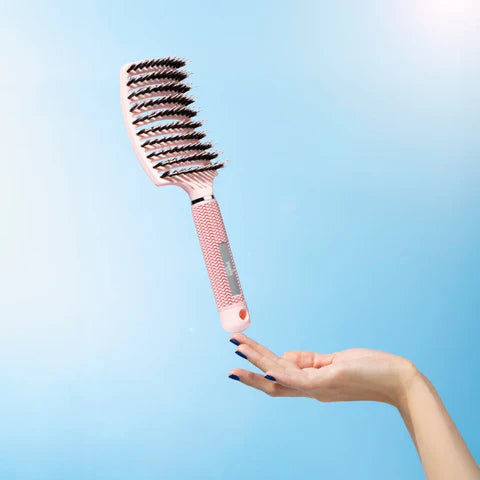
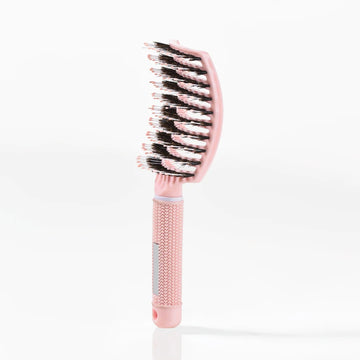
For wet detangling, choose a wide-toothed comb or a brush designed for the task. For smoothing dry hair and distributing natural oils, Curvy Brush is an option. Use conditioner or a detangling product when hair needs more slip; heat protection does not replace a detangling product.


