 2-5 day delivery
 100.000+ satisfied customers
 Free shipping over €99








Exploring the 12 hair types
The Andre Walker Hair Typing System offers a detailed framework for understanding the 12 distinct hair types, categorized into four primary groups: straight, wavy, curly, and coily/kinky. Each group is further divided into subtypes A, B, and C, based on texture and curl pattern. This classification not only helps in identifying your hair type but also in tailoring your haircare routine to suit its unique needs.
Type 1: Straight hair
Straight hair, known for its sleek appearance, is divided into three subtypes:
- 1A: Very fine and flat, often lacking volume.
- 1B: Features a bit more body with a medium texture.
- 1C: Coarse and thick, with a tendency to frizz.
Straight hair is generally resistant to curling and can become oily quickly. Using lightweight products that add volume without weighing the hair down is beneficial.
Type 2: Wavy hair
Wavy hair forms an S-shaped pattern and is more prone to frizz than straight hair:
- 2A: Fine and thin, with a slight wave.
- 2B: Wavy with a more defined S-pattern and some frizz.
- 2C: Thick and coarse, with well-defined waves and a tendency to frizz.
Wavy hair often benefits from products that enhance texture and reduce frizz, such as our rosemary hair oil, which helps to smooth and nourish the hair.

Type 3: Curly hair
Curly hair forms distinct spiral curls and is characterized by its volume and bounce:
- 3A: Loose, large curls with a shiny appearance.
- 3B: Tighter curls with a medium texture and more volume.
- 3C: Tight curls or corkscrews with a coarse texture.
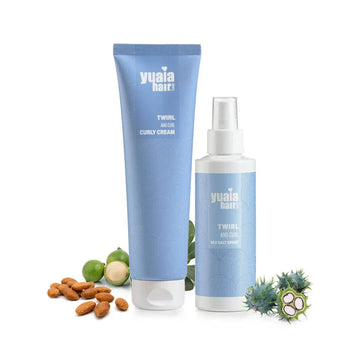
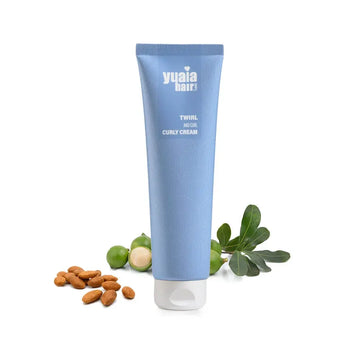
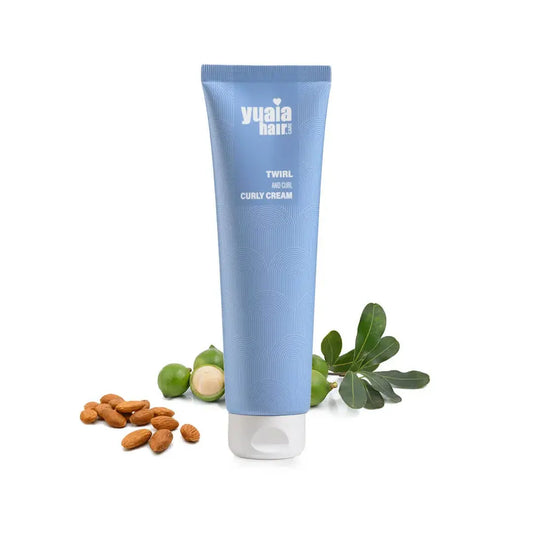
Managing frizz and maintaining curl definition are key for curly hair. Our Twirl and Curl curly cream can help define curls while providing much-needed hydration.
Type 4: Coily/Kinky hair
Coily or kinky hair is known for its tight curls and coils, which can be fragile:
- 4A: Soft, tightly coiled hair with a defined curl pattern.
- 4B: Z-shaped curls with less defined patterns and more shrinkage.
- 4C: Very tight curls with a soft texture, prone to shrinkage and dryness.
Coily hair requires intensive moisture and gentle handling to prevent breakage. It benefits from deep conditioning treatments and protective styles that reduce manipulation.
Tailoring haircare to your type
Understanding your specific hair type is essential for selecting the right products and developing an effective haircare routine. For instance, those with fine hair might opt for volumizing products, while individuals with curly hair could focus on moisture-rich formulas to enhance curl definition. Incorporating a wide-toothed comb can also aid in gentle detangling, reducing breakage and maintaining hair health.

A healthy diet supports hair health, but choosing the right products and techniques plays a significant role in maintaining and enhancing your hair's natural beauty. By aligning your haircare routine with your hair type, you can address specific challenges and embrace the unique characteristics of your hair.
Common haircare myths debunked
There are several misconceptions about hair types that can lead to ineffective haircare practices. One common myth is that all curly hair requires heavy oils for moisture, which can weigh down finer curls. Instead, using lightweight products that enhance natural curl patterns is often more effective. Another myth is that straight hair doesn't need conditioning, when in fact, it benefits from regular conditioning to maintain shine and prevent breakage.
What is the difference between hair type and hair texture?
Hair type refers to your hair's natural curl pattern, which ranges from straight to coily. This pattern is determined by the shape of your hair follicles and is commonly classified using the Andre Walker hair typing system.
Hair texture, on the other hand, describes the thickness or diameter of each individual strand. While hair type influences how your hair falls, hair texture affects its weight, volume and how it reacts to certain products.
Understanding the different hair textures
Hair texture plays a central role in how your hair behaves and responds to care. While often confused with hair type, texture specifically refers to the thickness of each individual strand and is typically categorized as fine, medium or coarse. Recognizing your hair texture helps you tailor your routine more precisely, particularly when choosing between lightweight and richer products.
Fine hair consists of very small-diameter strands that may feel silky but are more prone to oiliness and limpness. It tends to be delicate and can easily become weighed down by heavy products or over-conditioning. Volumizing shampoos, dry shampoos and lightweight styling foams are especially beneficial for adding body without buildup.
Medium hair has a strand diameter that falls between fine and coarse. It generally holds styles well and strikes a balance between strength and flexibility. Most hair products are formulated with medium texture in mind, so this group has the broadest range of care options.
Coarse hair features thick strands that may feel rougher to the touch and are more resilient. It often requires more moisture to remain soft and manageable. Rich conditioners, oil-based treatments and heat protection products are important for keeping coarse strands nourished and protected.
Because texture can vary across your head, many people find they have a mix, such as finer strands at the crown and coarser strands at the nape. This variation calls for targeted care across different sections of the hair, rather than a one-size-fits-all routine.
How to find out your hair type and texture at home
Let freshly washed hair dry without styling to see its natural pattern. Then feel one loose, dry strand: fine strands are hard to feel, while coarse strands feel more noticeable. This is only a rough guide, and texture can vary across your head. Strand thickness differs from hair density. Fine hair can also be dense or curly, so adjust product amounts to both characteristics.
Real-life routine examples
Understanding your hair type and texture allows for more effective product choices and care routines. For example:
A person with fine, straight (1A) hair may benefit from volumizing shampoos and lightweight conditioners to add lift without causing buildup or heaviness.
Someone with thick, curly (3C) hair often requires richer products such as heavy creams, leave-in conditioners and regular deep conditioning treatments to maintain moisture, reduce frizz and define curl shape.
Those with coily (4B or 4C) hair typically benefit from the LOC or LCO method (liquid, oil, cream) and protective styles, both of which help retain moisture and reduce breakage.
Common combinations and their care
Recognizing common combinations of hair type and texture can help tailor your hair care approach more effectively. Here are a few examples:
- Fine, curly hair: This combination benefits from lightweight products that enhance curls without weighing them down. Our Twirl and Curl curly cream is designed to define curls while providing a soft hold.
- Thick, straight hair: Thick hair can often handle heavier products that offer more moisture and control. Consider using a nourishing hair oil to maintain shine and manageability.
- Medium, wavy hair: This versatile combination can adapt to a variety of products but benefits from those that enhance natural wave patterns while providing hydration and frizz control.
Variability and evolution of hair
Hair can change over time due to age, hormonal shifts, medication, and environmental factors. It’s not unusual to notice more waves or curls appearing later in life, or for hair to become finer or coarser with time. You might also have multiple types or textures on different parts of your head, especially if you've chemically treated or heat-styled parts of your hair.
Building a routine that fits your hair's unique needs
Once you’ve identified your hair type, texture, porosity and density, you can tailor your hair care more effectively.
Low porosity
Hair with low porosity tends to resist moisture absorption. Using heat when applying hydrating products can help the moisture penetrate more deeply. Avoid heavy formulas that tend to sit on the surface rather than being absorbed.
High porosity
Hair with high porosity absorbs moisture easily but loses it just as quickly. A good approach is to layer your products: start with hydrating formulas and then seal in moisture with an oil.
Match products to your hair texture
Fine hair needs lightweight products that won't weigh it down, helping maintain volume and shape. In contrast, coarse hair benefits from rich creams and oils that add moisture, soften the strands and make daily styling and care more manageable.
General care advice
Regardless of hair type, include a deep conditioning treatment weekly or biweekly, clarify product buildup about once a month and protect your hair at night with silk or satin to preserve moisture and reduce friction.
Use hair types as a guide
The categories mainly describe hair patterns. They do not by themselves tell you strand thickness, density or how hair responds to care. You can have several patterns on one head. Use the overview alongside observations after washing and choose products according to your hair’s response rather than a letter or number alone.
Alternative hair typing systems
While the Andre Walker Hair Typing System is widely used, other systems like the LOIS and Fia’s Hair Typing Systems offer alternative perspectives. These systems consider factors such as physical patterns and moisture content, providing a more nuanced understanding of hair types. Recognizing the diversity in hair textures is essential for embracing and nurturing your unique hair characteristics.
For those seeking to improve their hair care routine, understanding these categories and subtypes is vital. A healthy diet supports hair health, and using the right products tailored to your hair type can make a significant difference. Whether you have straight, wavy, curly, or coily hair, knowing your hair type and its specific needs will guide you in choosing the most effective products and techniques.
Frequently asked questions
Can hair types change over time?
Yes, hair types can change due to various factors such as hormonal shifts, aging, and environmental damage. These changes can affect texture, curl pattern, and overall hair health.
What if my hair seems to fit multiple types?
It's possible to have a combination of hair types, which can make haircare more challenging. In such cases, it's important to address the needs of each type present. For example, you might use a lightweight conditioner for straighter sections and a richer moisturizer for curlier areas.
Is it necessary to use a boar bristle brush?
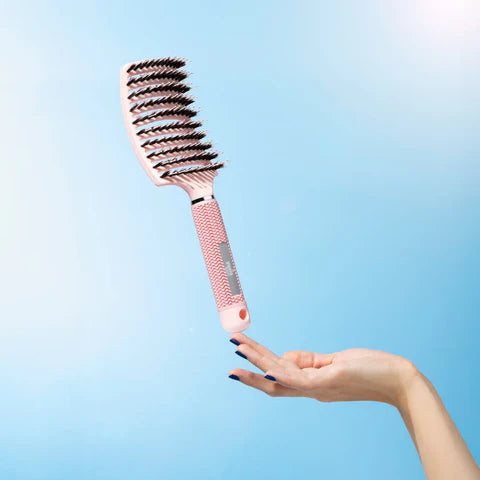
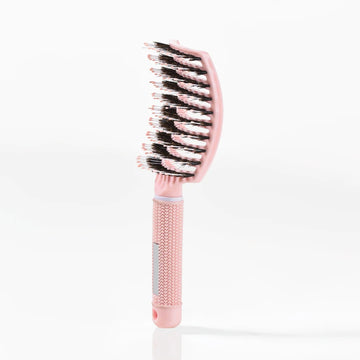
Using a boar bristle brush, like our Curvy Brush, can be beneficial for distributing natural oils from the scalp throughout the hair, enhancing shine and smoothing the cuticle. This can be especially helpful for those with straight or wavy hair.


