 2-5 day delivery
 100.000+ satisfied customers
 Free shipping over €99









Texture spray, sea salt spray, hairspray or dry shampoo?
| Product | Main purpose | When to choose it |
|---|---|---|
| Texturising spray | Grip, separation and a more lived-in finish | For clean or smooth hair that is difficult to shape; finish and hold depend on the formula. |
| Sea salt spray | Texture and a rougher, beachy finish | To emphasise movement or create a less polished look. |
| Hairspray | Fixing a hairstyle in place | When your finished style needs more hold; choose the strength to suit. |
| Dry shampoo | Absorbing excess oil | For greasy-looking roots. Some formulas also add grip, but do not replace washing. |
The effects can overlap, but the products are not interchangeable. A curl spray has a different focus: enhancing and defining existing waves and curls. It is not automatically the same as a dry texture spray and does not create permanent curls in straight hair.

Choose for your hair type and preferred finish
- Fine or flat hair: start with very little product in selected sections. Work it through with your fingers before deciding whether to add more. More product does not always mean more volume.
- Thick hair: section it so the product reaches more than the outer layer. Shape individual strands for a more separated look.
- Wavy or curly hair: decide between a rougher texture and more defined curls. Scrunch rather than brushing out the finished shape.
- Dry or bleached hair: test a small section first. A matte, rough finish can feel drier; use less or choose another formula if hair becomes stiff or difficult to detangle.
How to use texturising spray without overloading hair
- Read the label: whether to apply it to wet or dry hair, whether to shake it first and how far away to hold it all depend on the product. There is no single correct spraying distance for every formula.
- Divide hair into manageable sections. Start with a little where you want grip or movement instead of soaking the whole head.
- Distribute with your fingers. Gently lift at the roots for an airy look or scrunch the lengths to emphasise waves.
- Allow the product to settle as directed and assess the result before adding more. A little grip through the lengths may be enough for an updo.
- If you use heated styling tools, make sure both your hair and the product are suitable for heat styling. Texture spray is not automatically a heat protectant. Follow the product's safety warnings too.
Where should you apply texturising spray?
- Root lift: Lift individual sections and use a little near the roots if the product directions allow it. Assess the result before spraying more.
- Movement through the lengths: Work a little into selected sections and shape with your fingers. Avoid saturating ends that already feel dry.
- Grip for an updo: Apply a little where hair slips. If it feels stiff or sticky, use less next time or wash out the excess rather than adding more layers.
Three products, three different uses
Sea salt spray for texture and movement
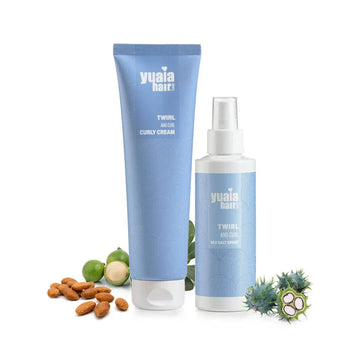
According to its instructions, Twirl and Curl Sea Salt Spray can be used in wet hair for fullness and dry hair for more texture. Shake before use, start with a small amount and shape with your hands. Read our sea salt spray guide for a closer look at beach-style texture.

Curl spray for definition
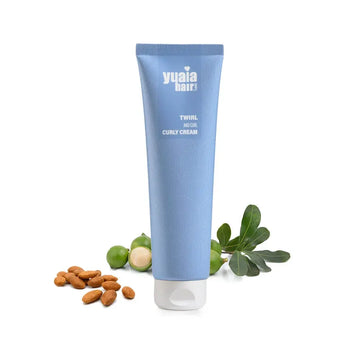
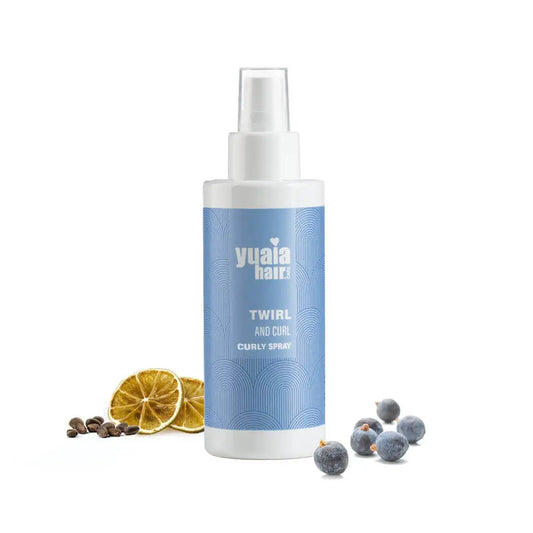
Use Twirl and Curl Curly Spray in damp or dry hair. Shake the bottle, distribute evenly and scrunch upwards. Allow hair to air-dry or use a diffuser as directed. Choose this approach when you want to enhance your curls rather than create a matte, rough finish.
Dry shampoo with texture for oily roots
Use Texture Dry Shampoo only on dry hair. Shake, spray from about 10 cm as directed, wait about 30 seconds and distribute with your fingers. Its main job is oil absorption; texture is an additional styling effect. See our dry shampoo guide for more detail.

Avoid stiff hair and product build-up
Do not automatically layer texture spray, dry shampoo and hairspray. Identify the function you need first and add only a small amount. If hair already feels coated or difficult to style, washing may help more than another layer. Avoid getting the spray in your eyes or breathing in the mist. Follow the container's warnings about ventilation, heat and flames.
Texturising spray questions
Does texturising spray go on wet or dry hair?
It depends on the product. Some are finishing sprays for dry hair; others can also be used on damp hair. Texture Dry Shampoo is for dry hair only. Do not apply a general rule from a different spray.
Can texture spray replace hairspray?
Not always. Texture spray mainly provides grip and separation, whereas hairspray is chosen for fixing a style. Check the specific product's hold if you need more staying power.
Can you use texturising spray every day?
No single routine suits every hair type and formula. Use only what you need and wash out residue as necessary. Stop using the product if it irritates your scalp.


