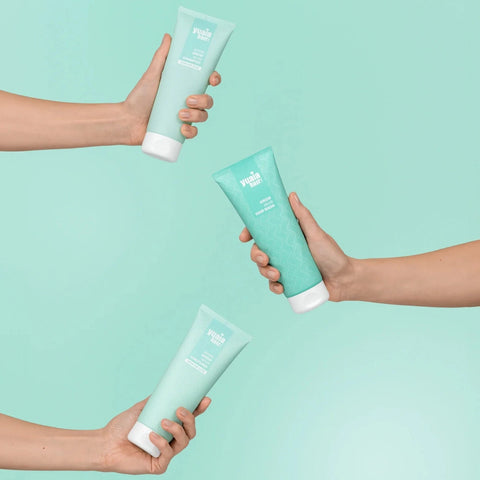
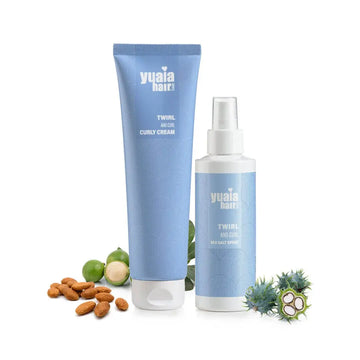
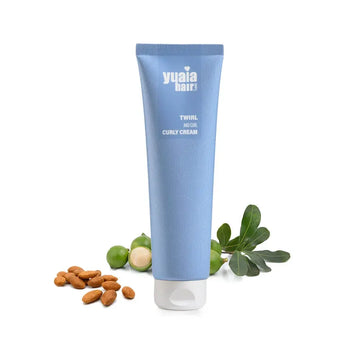
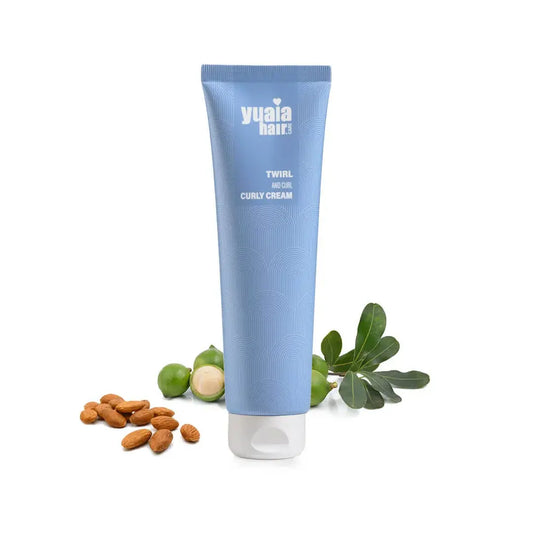
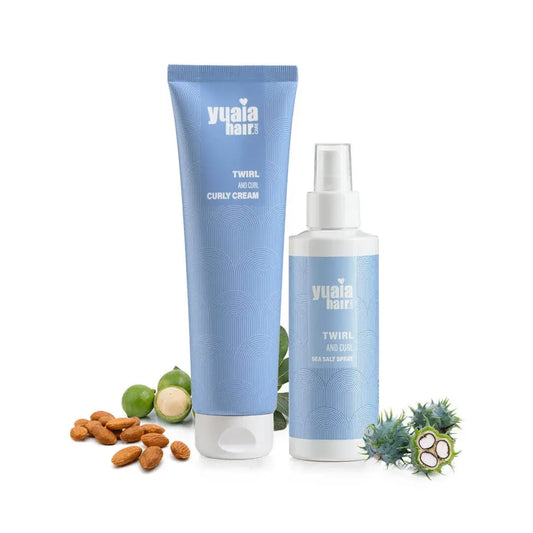
Curl cream helps define natural curls and waves while making the lengths feel softer. This guide explains how to choose a formula, apply it to damp hair and adjust your routine when curls feel heavy or frizzy. For a product example, see Twirl and Curl Curly Cream.
For your styling routine, compare the products in our Twirl and Curl range.
What is curl cream?
Curl cream is a leave-in styling product for defining curls and waves. Depending on the formula, it also conditions the lengths and provides a soft finish. It is not a rinse-out conditioner.
Curl cream can help curls form more defined clumps and reduce the appearance of frizz. The result depends on your hair, how much you apply and the hold of the formula.
Fine hair usually benefits from a small amount of a lighter cream. A richer formula may suit coarse or dry hair. Choose by how your hair feels after drying.
How to use curl cream
Start with the product's own instructions; the steps below describe a simple routine for damp hair.
Wash when needed, condition the lengths and gently detangle. Choose shampoo and conditioner to suit your scalp and hair; sulfate-free does not automatically mean gentler.
Squeeze out excess water without rubbing. Spread a small amount of cream between your palms and distribute through the lengths and ends.
Scrunch upwards with your hands. Let hair air dry or use a diffuser on low heat and airflow. Curl cream only provides heat protection if the product explicitly states it.
For more definition, shape a few damp sections around your fingers and leave them undisturbed as they dry.
If you follow the Curly Girl Method, check the formula against your preferred version of the method. It is a routine with different interpretations.
Try our hair test
The hair test gives you precise answers about which products are best for your hair type. Try it now 👇🏼
Choose according to hair thickness, the finish you want and how much hold you need.
Ingredients: Read the whole formula. Oils and conditioning ingredients can soften the lengths; natural or synthetic origin alone does not determine how well a cream works.
Texture: Try a lighter formula for fine hair or loose waves. A richer cream may suit thicker curls, but the amount still matters.
Styling goal: Cream usually focuses on softness and definition. If you need stronger hold, consider adding a compatible styling gel.
Fragrance: Check the current ingredient list. Twirl and Curl Curly Cream contains fragrance, so choose another formula if you specifically want a fragrance-free product.
Curl cream for different styling needs
Product names often describe overlapping benefits. A single curl cream can be both conditioning and defining.
Defining cream helps shape curl clumps as the hair dries. Apply evenly rather than adding thick patches of product.
Definition does not mean guaranteed all-day hold. Weather, hair texture and other styling products affect the result.
What is the most important factor for you when choosing a curl cream?
Ingredients
Consistency
Purpose
Scent
Anti-frizz cream can make flyaways less noticeable, but no cream guarantees frizz-free hair at all humidity levels.
For fine curls, avoid automatically choosing the richest formula. Heavy lengths can make the roots appear flatter.
Start with less product near the roots and concentrate on the lengths. Check the dried result before changing your routine.
A richer cream may help dry lengths feel softer. It does not permanently repair split ends or change your hair's natural texture.
If your hair feels coated after drying, reduce the amount or try a lighter formula.
For tighter curls, work in sections to distribute the cream evenly. Add hold separately if required. For loose waves, use a small amount and scrunch gently. Waves that become limp may need less cream. Choose the balance of softness, definition and hold that suits your hair.
If curls are soft but lose shape quickly, adjust the styling hold rather than continually adding more cream.
What curl cream can and cannot change
Curl cream works on the hair you already have: it conditions and styles the lengths.
It helps enhance an existing curl pattern rather than creating permanent curls in straight hair.
Judge the result by softness, definition and manageability after drying, rather than promises of a transformed hair structure.
Why curls need a tailored routine
Curly hair can need extra help with dryness, tangles and uneven product distribution.
Gently detangle damp, conditioned hair and use sections if the lengths are dense.
A consistent routine makes it easier to work out whether the cream, amount or drying technique needs changing.
How curl cream helps with frizz
Frizz control depends on the complete formula and your technique. Cream can smooth the appearance of the lengths, while extra hold may help keep the style together.
There is no universal ingredient or product that removes all frizz for every curl type.
Moisturising ingredients
Moisturising ingredients such as glycerin are often included in curl creams. Their effect depends on the complete formula.
Compare how your hair feels after drying, rather than choosing a cream based on a single ingredient.
Oils and other emollients can make the lengths feel softer. Richer formulas can also weigh down fine hair when too much is applied.
Conditioning ingredients
Conditioning ingredients can improve slip and manageability. Curl cream complements conditioner but does not replace cleansing or every step of your care routine.
How much hold does curl cream provide?
Hold varies between creams. If you want more lasting definition, a styling gel or mousse may be useful alongside cream. Avoid assuming a soft finish means strong hold.
Distribute cream evenly through the lengths
Spread a small amount between your palms, work through damp lengths in sections and scrunch upwards. Follow the label and adjust the amount to your length and thickness.
Refreshing curls between washes
Start a refresh by lightly dampening flattened sections and reshaping them with your hands.
Only add a little extra cream if the label allows it and your hair needs it; repeated layers can feel heavy.
If the lengths already feel coated, wait until washing rather than adding more product.
Get a 10% discount code sent to you
Receive the best tips and tricks for your hair from Lotte and Nanna 🥰
Frequently asked questions about curl cream
Can I use curl cream on straight hair?
You can use some formulas for softness, but cream will not create a permanent curl pattern in naturally straight hair. Choose styling products according to the finish you want.
How often should I use curl cream?
Use it when styling, usually after washing or when refreshing curls.
There is no fixed weekly schedule. Apply according to the product directions and how your hair responds.
If your hair becomes flat or coated, reduce the amount or frequency.
Does curl cream suit every hair type?
No single cream suits every head of hair. Fine waves and coarse curls can need different textures and amounts.
A natural ingredient list does not guarantee a better result. Look at the full formula and your own styling experience.
Can I use curl cream on coloured hair?
Many curl creams can be used on coloured hair; check the product directions for suitability.
A conditioning cream may soften dry lengths, but do not assume that it prevents colour fading unless that benefit is documented.
What if I prefer fragrance-free products?
Check the current ingredient list for fragrance rather than relying on older descriptions.
Twirl and Curl Curly Cream contains fragrance. A Curly Girl-compatible formula is not automatically fragrance-free.
Choose your cream by your hair's needs and the ingredients you want to include in your routine.
Get a 10% discount code sent to you
Receive the best tips and tricks for your hair from Lotte and Nanna 🥰
 2-5 day delivery
 100.000+ satisfied customers
 Satisfaction Guarantee