 2-5 day delivery
 25.000+ satisfied customers
 Satisfaction Guarantee










Hair loss women: Causes and effective treatments for hair loss

by Nanna Bundgaard | 14. June 2019 | Reading time: 22 minutes
Read more about the authorHow to prevent hair loss as a woman
Hair loss is a major problem for many women. It is not normal for women to have thinning hair in the same way as it is for men. It can be extremely frustrating for any woman when her hairbrush is full of hair and the bathroom floor needs vacuuming every time she has brushed her hair. Long hair is a major part of a woman’s identity and offers her a way to express who she is. That’s why it can be very frustrating to see your hair shedding and eventually leading to actual hair loss. However, hair loss in women can be either temporary or persistent. There can be a number of reasons why you’re losing your hair. These may include illness, stress, pregnancy, a poor diet or hairstyles that are too tight.
Fortunately, in many cases, there are steps you can take yourself if you start to lose your hair and notice it becoming a little thinner. These include, for example, adjusting your hair care routine, reducing how often you style your hair, and checking whether you’re getting enough vitamins and minerals.
In this blog post, you’ll find out the causes of hair loss and what you can do to restore your hair to its normal condition.
Hair loss in women is defined as a condition where the hair begins to fall out and becomes thinner in both body and length.
There are a number of different reasons why women lose their hair. In many cases, it may be triggered by a psychological or physical impact on the body. This could be, for example, if you are under a great deal of stress, are ill, are pregnant or have just given birth. For some women, however, hair loss is hereditary.
The biological structure of hair
Just like everything else that is alive, our hair also goes through a life cycle that is heavily dependent on our lifestyle. This can be caused by, amongst other things, a poor diet, stress or hormonal imbalances, which affect the whole body but also, to a significant extent, the hair. On average, there are around 100,000 hairs on the scalp that go through these phases.
Try our hair test
The hair test gives you precise answers about which products are best for your hair type. Try it now 👇🏼
Try it now!Anagen phase – The growth phase
What happens to your hair in relation to hair loss is that it begins in the first phase, the growth cycle, or the so-called anagen phase. During this period, your hair grows, but this phase is significantly shortened in the event of hair loss. Your hair remains in the anagen phase for between 2 and 7 years; the length of time your hair grows therefore varies considerably. Normally, 90 per cent of your hair strands are in this phase. It is therefore crucial for minimising hair loss that the hair remains in the anagen phase for as long as possible. Fortunately, you can achieve this through some good, healthy hair care routines, which we describe further down in this post.
Catagen phase
If the anagen phase has been shortened, this causes your hair strands to transition more quickly into the resting phase (catagen phase). As a result, the hair does not grow as long or as thick as it would have done under normal circumstances. The catagen phase is a short-lived phase in your hair’s life cycle, lasting between 4 and 6 weeks. During this phase, the hair shaft stops growing. It detaches from the scalp and, as a result, the blood supply that nourishes the hair is cut off.
Telogen phase
Around 4–6 weeks after the catagen phase, your hair will enter the telogen phase, or shedding phase, during which the hair will begin to fall out after approximately 2–3 months in this phase. It is often only at this stage that you will notice you are losing your hair. Hair loss therefore occurs with a time lag in relation to the cause that triggers it. For example, if you have been stressed for a period of time, you will only notice any hair loss after some time has passed. This is why preventative treatment is important in avoiding hair loss in women. It is the telogen phase that you should ideally shorten as much as possible if you want to grow healthy, strong hair.
Are you shedding more hair than usual?
As a woman, it is perfectly normal to shed between 50 and 100 hairs a day. The scalp has an average of 100,000 hairs, so there is plenty to spare. However, if you find that large tufts are falling out or your brush is full of hair every time you brush, you may well be losing between 150 and 250 strands a day. This constitutes definite hair loss, and you should investigate the cause, as this is not normal.
Because there are so many different reasons why you might be experiencing hair loss, it’s always a good idea to see a doctor if you suddenly start losing a lot of hair.
Am I suddenly losing my hair? – Sudden hair loss in women
Women can experience hair loss quite suddenly; this is known as telogen effluvium. This occurs when the body has been through a shock, which may include a period of serious illness, medical treatment, rapid weight loss or stress. What happens is that hairs in the growth phase (anagen phase) suddenly transition into the telogen phase, or resting phase; in fact, up to 70 per cent of the hairs in the growth phase may do this. This triggers sudden hair loss in women, for example due to stress or other shocks to the body’s systems.
What are the most common causes of hair loss in women?
To find the most effective treatment for hair loss, it is important to know the cause. It is easy to spend a great deal of money on various treatment methods that turn out not to work, because the cause of the hair loss was something entirely different. The reality behind hair loss is often that it is a complex process involving genetic, hormonal and environmental factors that trigger the loss. There are countless causes of hair loss, and hair loss in women in particular often varies greatly from person to person. It is therefore very important to identify the cause before starting any treatment.
Hereditary hair loss in women
Normally, women’s hair thins with age, and around 50 per cent of women feel, by the age of 50, that their hair has become too thin. However, there is a group for whom hair loss begins very early. These are often cases of hereditary hair loss.
In this group, hair loss begins as early as their 20s. Over the next 10 to 20 years, they will gradually lose more and more hair, primarily from the top and back of the head. The most common pattern is hair loss at the nape of the neck and on the top of the head, whilst hair growth remains normal at the sides of the head.
When you lose your hair due to an illness, it will typically grow back after a while. However, some conditions – such as skin conditions and fungal infections of the scalp – will usually require treatment. It is therefore important that you see a doctor if you suspect that your hair loss is caused by an illness.
Hair loss when stopping the contraceptive pill
Many women use the contraceptive pill, which is a hormonal contraceptive for women that prevents pregnancy. When women choose to stop taking the contraceptive pill, a hormonal imbalance can occur in the body, as the pill no longer supplies the hormones to which the body is accustomed. In some women, this can result in hair loss, but fortunately this type of hair loss is rarely long-lasting. Once the body has regained its natural hormonal balance, the hair will return to a normal growth cycle and you should no longer experience abnormal hair loss.
Hair loss due to psychological stress
We have heard from many people who have experienced hair loss due to psychological stress, whether caused by a demanding job or exams.
As our lifestyles become increasingly hectic, stress has become an ever-greater part of many people’s daily lives. Consequently, the side effects of stress are being seen more and more frequently; amongst these, stress-related hair loss has also become a major factor in hair loss among women. Stress interferes with the hormonal balance, specifically the production of the male sex hormone, testosterone. Stress causes the body to produce more testosterone, some of which is converted into a hormone called dihydrotestosterone, or DHT. This is a hormone that affects, amongst other things, men’s testicles, the adrenal glands and the hair follicles in both men and women. This hormone has a powerful effect and can ultimately result in hair loss.
DHT prevents proteins, vitamins and minerals from delivering the necessary nutrients to your hair follicles, thereby limiting the hair strands’ ability to produce hair. This will cause the hair to grow more slowly; at the same time, the hair’s life cycle is shortened, and your hair will therefore enter the shedding phase more quickly, at which point it falls out.
Stress is therefore not to be taken lightly and must be taken very seriously. It can, in fact, be the underlying cause of a host of other side effects as well. That’s why it’s always a good idea to contact your GP if you’re feeling stressed or are experiencing any of the symptoms that indicate stress. By nipping it in the bud, you can minimise the damage as much as possible. As for hair loss caused by stress, further down in this blog post we’ll provide plenty of useful advice on the best possible hair care if you happen to be affected.
Hair loss due to a poor diet
A poor diet is one of the main culprits when it comes to hair loss. This type of food doesn’t contain the nutrients your body needs – and therefore your hair needs too. It weakens the body’s ability to maintain itself when it doesn’t get the right vitamins and minerals. This affects your hair, which becomes significantly weaker and may ultimately lead to hair loss. A poor diet consisting mainly of fat, sugar and carbohydrates will quickly cause nutritional problems for your body, which can be severe enough to jeopardise the survival of vital organs.
It is therefore clear that your hair, amongst other things, will be deprioritised when it comes to receiving vitamins and minerals. Similarly, regular exercise is also extremely important for both your body and your hair. When you get your heart rate up and move around, you oxygenate your blood, and oxygen, blood, vitamins and minerals are transported more effectively around the body. This helps ensure that the body’s nutrients are transported more effectively and quickly to the hair follicles. Exercise is therefore incredibly important for maintaining healthy, strong hair.
Hair loss in women due to vitamin and mineral deficiencies
If your daily diet isn’t healthy and varied, and you’re therefore not getting the vitamins and minerals your body needs from your food, this can potentially affect the quality of your hair. Your hair simply isn’t getting the nourishment and energy it needs to grow normally, so it may be worth considering whether you might be lacking vitamins if you’re suffering from hair loss.
Hormonal hair loss in women
In women, hair loss is very often triggered by hormones. This can have many different causes, but fortunately there are plenty of options for addressing it if you are experiencing hormonal hair loss as a woman.
Androgenic alopecia
As a woman, your body will undergo many hormonal changes throughout your life. One of these changes is the menopause, during which women produce less and less oestrogen and progesterone as they get older. At the same time, most women’s production of the male sex hormone either increases, or they develop a particular sensitivity to it. This hormonal change is known as androgenic alopecia, a condition that causes hair loss and thinning hair in both women and men. In men, androgenic alopecia manifests as receding hairline, a crown or baldness. Women do not usually experience bald patches or receding hairlines, but may instead experience hair loss to varying degrees. Approximately 75 per cent of men and 20 per cent of women will be affected by androgenic alopecia, which is why we recommend that you look after your hair from an early age.
Hair loss during and after pregnancy and childbirth
Many women experience hair loss during pregnancy and childbirth. Some women have very poor skin and dry or oily hair at the start of pregnancy, during which time they also shed a lot of hair. This is because they have higher levels of male sex hormones during pregnancy. However, this will stabilise again after the birth.
Others have the most beautiful skin and hair during pregnancy, but then start to lose large amounts of hair three to eight months after the birth. This is because the body has delayed shedding hair during pregnancy and therefore only does so after the birth.
In both cases, it is important to ensure you eat a healthy and varied diet. Read our full blog post about post-pregnancy hair loss here.
Hormonal hair loss during the menopause in women
Hair loss is a very normal occurrence when women reach the menopause. It is something that happens to all women and can bring with it many other symptoms besides hair loss. Some of these symptoms may include hot flushes, spots, a loss of sex drive and increased sweating. We women really do have to put up with a lot. The reason why you lose your hair during the menopause is that levels of the female hormone oestrogen fall in the body; this hormone plays an active role in the body’s maintenance of hair, skin and bones. Consequently, you will find that your hair becomes thinner or even falls out because the hormonal balance is no longer the same as before. Another reason why many women experience hair loss during the menopause is that their activity levels and circulation are no longer as good as they used to be. This means that less oxygen and nutrients are transported to the hair roots, which need these to produce healthy strands of hair. Among other things, this shortens the hair’s growth phase and causes it to enter the shedding phase more quickly, at which point it falls out.
The best remedy for hair loss – Our advice for you
Hair loss is a tricky issue, as there isn’t just one remedy that can simply cure it. A more significant change is often needed to achieve good results. Of course, finding the best remedy for hair loss also depends very much on the underlying cause. However, we’d like to share some of our best advice and product recommendations here, which you can use in your fight against hair loss.
Hair loss caused by excessive use of hair products and tight hairstyles
If you’re experiencing hair loss and want to tackle it, there’s a very general place to start. Many women frequently dye their hair, use lots of hair products and regularly style it with straighteners or curling irons. Depending on which products you use and how often you apply heat to your hair, this can have significant consequences for the health of your hair. Incorrect hair care routines slowly damage the hair and scalp, and often you may not even realise it until it results in significant hair loss.
If you recognise a damaging hair care routine in yourself, we recommend you do the following: stop damaging your hair with hair colour,bleaching or perms; avoid products containing harmful chemicals; and use more neutral hair products that aren’t harmful to your hair. As far as possible, avoid exposing your hair to heat styling tools when styling it. You should also consider whether you frequently wear tight hairstyles, as this can also contribute to the onset of hair loss. Over time, your hairline can actually recede if your hair is constantly pulled back tightly. In that case, it’s therefore important that you find some gentler hairstyles. We’ve put together a guide to gentle hairstyles here.
As hair loss in women is often caused by everyday hair care routines, it’s therefore very important that we re-evaluate every step in our hair care routines and consider whether we can make some changes to ensure we’re giving our hair the best possible care.
If you’re looking for inspiration for your hair care routine, you can read our blog post on shampoo for hair loss here
Establish a healthy hair-washing routine
If you’re experiencing hair loss as a woman, one of the most important ways to combat it is to establish a good, healthy hair care routine. The products you use can have a major impact on your hair, but so too, and perhaps even more so, how often you wash your hair. We recommend washing your hair between 2 and 3 times a week for the best results. Especially if you’re experiencing hair loss, you might want to consider not washing your hair more than twice a week, as hair is at its most fragile when wet, which can lead to increased hair loss.
When choosing products, it’s important to establish a good hair care routine using high-quality products. We recommend the following hair care routine:
- Sulphate- and silicone-free shampoo, preferably containing hair-growth-promoting ingredients such as Capilia Longa. Use this 2–3 times a week, and remember to use it twice every time you shower to remove product build-up and dirt.
- A hair mask with strengthening and nourishing properties. Many people mistakenly believe that the hair mask should be applied after the conditioner, but this is a huge mistake. You should apply the hair mask after shampooing so that your hair can absorb the nutrients it provides. You should use a hair mask once a week.
- A sulphate- and silicone-free conditioner, to seal the hair cuticle so that the nutrients and care it receives remain in the hair. You should always use this as the final step in your hair-washing routine.
- You might consider a hair serum to combat hair loss if you’d like to give your hair an extra boost. Hair serums are often more effective than shampoo, as they are allowed to work on the scalp for longer and contain a higher concentration of growth-promoting ingredients.

Grow and Glow Hair Serum 100 ml
Boosts blood circulation in the scalp and strengthens hair growth252,00 kr 504,00 kr

Grow and Glow series
Complete hair care set that increases hair growth, reduces hair loss and gives fuller, stronger hair511,00 kr 622,00 kr
A useful tip for hair care
Avoid tying your hair up whilst it’s wet. This is because your hair is at its most fragile when damp. You can quickly damage the structure of some strands, thereby increasing hair loss. Another good tip is to avoid hair ties with metal fastenings. These can contribute to wear and tear, causing your hair to break. It’s therefore a good idea to use only rubber or plastic hair ties. Read more about hair ties here.
Vitamins and minerals
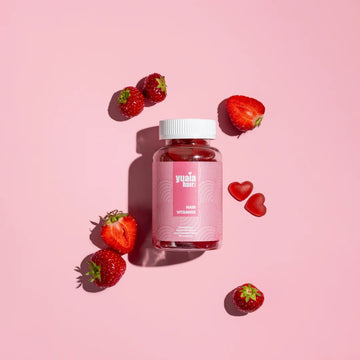
It can be very frustrating if you’re losing your hair and don’t know what to do about it. Fortunately, there are steps you can take yourself. First and foremost, you should ensure you eat a healthy diet and take a dietary supplement containing the vitamins and minerals that support normal hair cell regeneration. Internal care is often greatly underestimated when it comes to hair care. Here, it can be particularly important to focus on the vitamin biotin and the mineral zinc, as they are recognised for their role in maintaining healthy hair.
You should aim to eat as many fresh fruits and vegetables as possible, as these contain the most vitamins. One easy and tasty way to do this is by making a vegetable smoothie. This can help your hair restore the natural vitamin balance necessary for stable and normal hair growth. You might also consider a hair supplement that’s specifically formulated to support healthy hair. These often contain a combination of a wide range of vitamins that either have a direct effect on your hair or provide supportive benefits. This could be a good option for you if you want to be 100% sure you’re getting all the nutrients you need but perhaps don’t always manage to eat a healthy and varied diet.
Limit your use of hair styling products
You can do your hair a huge favour by limiting your use of hair styling products. This is one of the easiest and most effective pieces of advice to put into practice from day one, which is why it’s so essential. Hairspray, hairdryers, straighteners and curling irons damage your hair with the harsh chemicals they contain, which, with every use, help to dry out and slowly break down your hair’s structure, making it more brittle.
Among other things, it’s also a good idea to plan your showers so that your hair can be allowed to air-dry instead of blow-drying it. This is partly because your hair is particularly fragile when wet. It can therefore be damaging to dry it with a towel or a hairdryer. You’ll start to see a difference relatively quickly by using these little tricks.
Scalp massage to boost blood circulation
Scalp massage is an effective way to prevent hair loss in women, particularly because of its ability to improve blood circulation to the scalp. This increased circulation helps to transport oxygen and nutrients to the hair follicles, which can help to reduce thinning and promote healthier hair growth. In addition, scalp massage can help to reduce tension and stress in the scalp muscles, which can be a contributing factor to hair loss.
Regular scalp massage also increases sebum production, which is important for maintaining healthy skin and the scalp’s pH balance, allowing for better absorption of essential oils and other nutrients that support healthy hair.

130,00 kr
Avoid stress
There are a number of different ways in which women can reduce stress in their lives to prevent hair loss. Firstly, it is important to take regular breaks from work and activities throughout the day. Taking breaks helps to clear your mind and gives you time to relax. In addition, taking part in calming activities such as yoga, meditation or deep breathing exercises can help to reduce tension. Furthermore, getting enough sleep every night helps you maintain a healthy lifestyle. Finally, a balanced diet rich in fruit and vegetables provides essential nutrients for hair growth and health. By incorporating these tips into your daily routine, you can reduce your stress levels and minimise the risk of losing your hair due to stress-related factors.
Your path to longer, healthier hair
If you follow the advice we’ve given you above and supplement your diet with specialised hair vitamins, there’s a good chance you’ll start to see thicker hair. You’ll also be able to achieve good results relatively quickly if you implement all these tips from the start. This is because these positive measures create synergistic effects that reinforce one another.
Then you can finally say goodbye to your hair loss for good!
Get a 10% discount code sent to you
Receive the best tips and tricks for your hair from Lotte and Nanna 🥰
Product recommendations for hair loss in women
As described, there are many things you can do to reduce hair loss. Some may work, others may not. Of course, this often depends on the underlying cause of the hair loss. So, as mentioned earlier, it’s incredibly important to identify the exact cause, as this will enable you to receive the best treatment tailored specifically to your situation. However, we’ve put together a few product recommendations that we believe can provide a solid foundation, whether the damage has already occurred or as a preventative measure against hair loss.
Haircare for hair loss
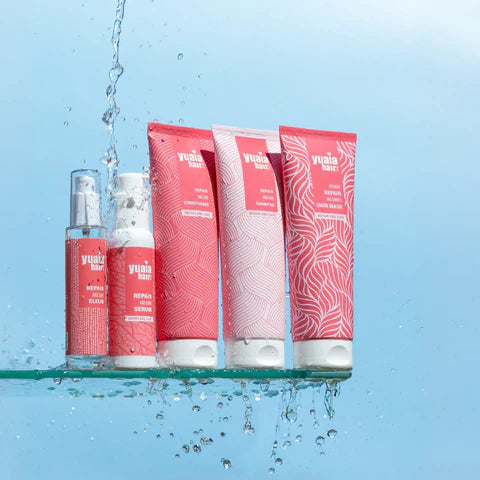
When it comes to haircare products, we have developed our own range called Grow and Glow. The range consists of a shampoo, conditioner, hair mask and hair serum, all formulated to combat hair loss and promote hair growth. The products contain well-known, award-winning ingredients such as Capilia Longa, which is renowned for its effectiveness against hair loss. Of course, these products aren’t a miracle cure that will make your hair grow overnight or cure all forms of hair loss. However, we’ve received so many positive reviews from our customers that we believe these products are well worth a try. The products are formulated with some of the best ingredients available, whilst being both sulphate- and silicone-free. You can find the range right here.
Grow and Glow Hair Serum 100 ml
Boosts blood circulation in the scalp and strengthens hair growth252,00 kr 504,00 kr
Grow and Glow series
Complete hair care set that increases hair growth, reduces hair loss and gives fuller, stronger hair511,00 kr 622,00 kr
Bamboo sleep cap
An often-underestimated way to tackle hair loss is to look after your hair whilst you sleep.
People often use a standard cotton pillowcase, which can become a bit worn after a few washes. The fibres in cotton are often coarser and can therefore cause more friction on your hair whilst you sleep. We’ve all experienced waking up with frizzy, tangled hair in the morning, haven’t we? That’s why we’ve developed a bamboo bonnet – or, more accurately, a sleep cap. It’s made from some of the best OEKO-TEX 100 certified bamboo materials available and ensures your hair doesn’t become frizzy or get damaged whilst you sleep. In fact, you can wake up with gorgeous hair in the morning – it’s made a huge difference to my hair care routine. Find the bamboo bonnet right here.

Bamboo bonnet
Made from 100% bamboo – soft, temperature-regulating and comfortable to sleep in.191,00 kr 252,00 kr


