 2-5 day delivery
 100.000+ satisfied customers
 Free shipping over €99










What does pool water do to hair?
Repeated exposure to chlorinated pool water can leave hair drier, rougher and more fragile, and can affect the colour of dyed hair. Wear depends partly on exposure and the condition of your hair. Coloured, bleached and already damaged hair may need gentler care.
1. Wet your hair before swimming
Rinse hair thoroughly with clean fresh water before entering the pool. This may limit how much pool water it absorbs. Secure long hair loosely with a soft hair tie to reduce tangling; avoid tight styles that pull on the scalp. Always follow the pool's rules on hair products and showering.
2. Choose a swim cap with enough room
A well-fitting swim cap can limit contact with pool water and keep hair contained. Choose a cap with enough room for all your hair without pulling on it, and put it on and take it off gently. Water can still enter around the edge: An ordinary cap does not guarantee completely dry hair or full protection from chlorine.
3. Rinse and wash after swimming
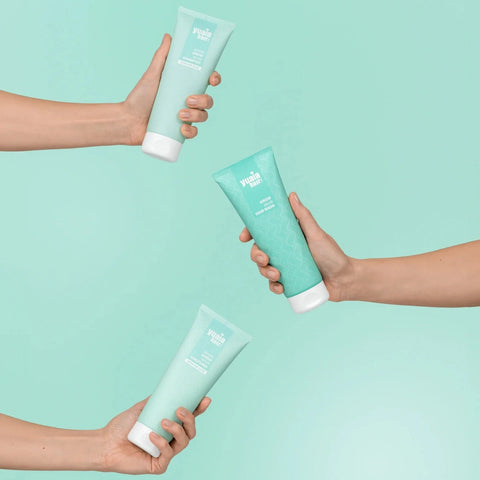
Rinse with fresh water as soon as you leave the pool. Then wash with shampoo suited to your hair and scalp. Frequent swimmers may benefit from a swimmer-specific shampoo used as directed. Ordinary shampoo is not automatically a mineral-removal treatment. The sets below are regular care options for washing and conditioning.
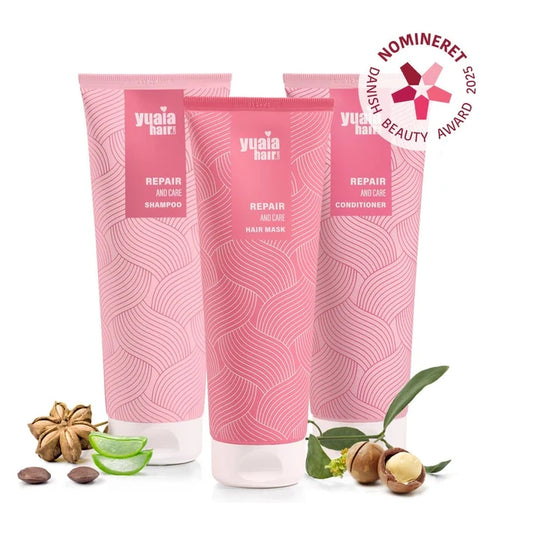
Healthy Hair Kit
Complete care package for damaged and dry hair – reduces damage by up to 80%€66,99 €80,00

Repair and Care Premium Set
Complete care package for damaged and dry hair – reduces damage by up to 80%€104,90 €125,49
4. Use conditioner and adjust your routine as needed
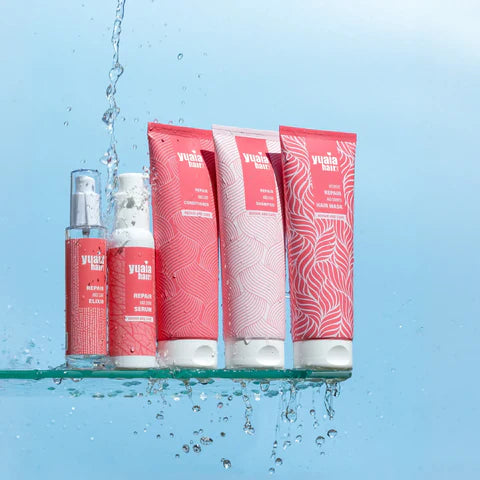
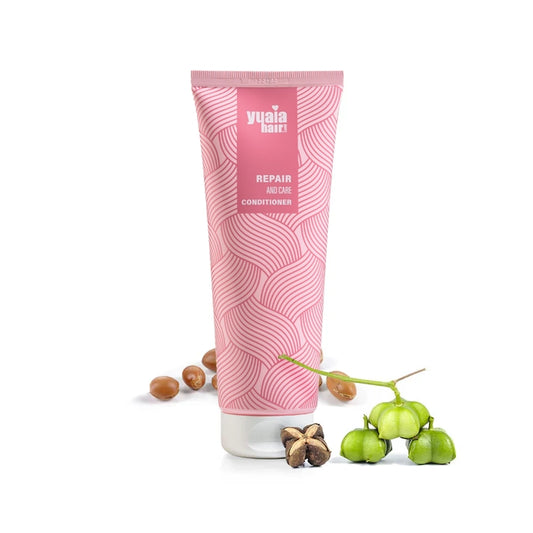
Work conditioner through the lengths and gently detangle from the ends. Repair & Care Conditioner and Anti-Frizz Elixir are options for cosmetic care after swimming; follow each product's instructions. Use a hair mask when needed rather than automatically after every swim. Conditioning can improve softness and manageability but cannot permanently rebuild destroyed hair fibres or split ends.


5. Coloured hair and green tones
A green cast in light hair usually comes from copper deposits in pool water, rather than chlorine alone colouring the hair green. Shampoo designed to remove metal and mineral deposits may help; follow its directions and consult a hairdresser if discolouration persists. Purple shampoo does not automatically replace this treatment. Avoid harsh homemade mixtures and limit extra heat and chemical processing on fragile hair.
6. Outdoor pools also call for sun protection
Chlorine care and UV protection serve different purposes. Ordinary hair oil, heat-protection spray or a swim cap is not automatically sunscreen for exposed scalp skin. Read the separate sun guide below for shade, hats and protection for skin and hair.
Questions about hair and swimming
Should I use oil or leave-in before swimming?
Oil or leave-in can provide a conditioning layer but does not make hair waterproof or guarantee chlorine protection. Use products as directed and only if pool rules allow them. Rinse-out conditioner should not be used as leave-in.
Do I need clarifying shampoo every day?
No, not as a fixed rule. Match cleansing to your needs and the product's instructions. Overusing clarifying shampoo can be drying, and not all clarifying shampoos remove metals. Follow with a suitable conditioner.
See also
Sources for the care advice: American Academy of Dermatology · University of Alabama at Birmingham.


