 2-5 day delivery
 100.000+ satisfied customers
 Satisfaction Guarantee














Air drying or blow drying: Compare the methods
Air drying suits days when you have time and want to keep your natural texture. The main drawback is the wait, especially with long or dense hair. Avoid rubbing, repeated brushing and tightly tying up wet hair while it dries.
Blow drying is practical when you need a quicker finish or more root lift. Excessive heat can damage hair, so use a low or medium setting, keep the dryer moving and avoid holding it close to one spot. Apply heat protection according to the product instructions.
Read our guide to heat protection

A combination can also work: gently remove excess water, let your hair partially air dry, then finish with controlled airflow. You can instead begin with gentle blow drying and let any remaining damp sections dry naturally. Choose the order that suits your texture and available time.
How to air dry hair with less frizz
- Blot excess water with a soft microfibre towel or cotton T-shirt. Squeeze gently instead of rubbing.
- Apply a small amount of leave-in conditioner or styling product suited to your hair. Distribute it evenly without saturating the roots.
- Detangle gently with a wide-tooth comb when appropriate for your texture. Straight hair can be left to dry a little first; curly hair is often easier to detangle with conditioner in it.
- Shape your waves or curls while damp, then reduce touching and brushing as the hair dries. Wait until it is dry before breaking a gel cast or adding a little finishing serum.


Choose the method for your hair type
Fine hair
Use lightweight products sparingly so the lengths do not feel weighed down. Air drying can give a soft finish; gentle blow drying at the roots may add volume. Keep dense creams and oils away from the roots if they make your hair flat.
Curly hair
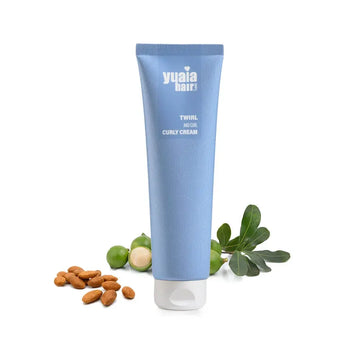
Apply curl cream or gel evenly and gently scrunch the lengths. Brief plopping can remove excess water, but leave your hair loose to dry afterwards. A diffuser on a gentle setting is an alternative when air drying takes too long.
Compare air drying and diffusing curly hair
Thick or coarse hair
Density and strand thickness are different, but either can affect your drying routine. Work in sections to distribute products and airflow. Adjust conditioning to how dry your lengths feel rather than assuming all thick hair needs heavy oil.

€24,99
Wavy hair
Try a light mousse or a small amount of leave-in conditioner, then scrunch gently. Avoid repeatedly brushing through the waves as they dry. Both air drying and a gentle diffuser can help preserve the pattern; use the method that gives you the finish you prefer.
How long does it take hair to dry naturally?
There is no single drying time. Length, density, porosity, styling products, humidity and airflow all affect it. Remove excess water first and avoid using more product than your hair needs. If the roots remain wet for a long time or you are short on time, finish with a dryer on a gentle setting.
A practical hybrid drying routine
Start with gentle towel blotting. Detangle as appropriate for your texture, apply your styling product and use heat protection before heated airflow. Let the hair partially dry naturally if you have time, then use low or medium heat in sections. Keep the dryer moving and stop when the hair is dry instead of continuing to heat it. There is no universal percentage of dryness that every hair type needs.
Frequently asked questions
Is air drying always healthier?
No. It avoids direct heat, but gentle handling still matters. A laboratory study found more surface damage with higher drying temperatures and different internal effects after prolonged natural drying. It does not prove that one method is healthier for everyone. Use it as a reason to pay attention to both heat and drying technique.
Can I go to bed with wet hair?
It is more practical to let your hair dry before bed. Wet hair is delicate, and rubbing it against a pillow or tying it tightly can increase tangling and friction. If time is limited, gently dry the roots and lengths before lying down.
Can cold air replace heat protection?
Cool airflow can help you avoid excessive heat, but it does not repair damage. If you switch to heated air, use heat protection and a gentle temperature. Heat protection does not make high temperatures harmless.


