 2-5 day delivery
 100.000+ satisfied customers
 Free shipping over €99












What is a mullet haircut?
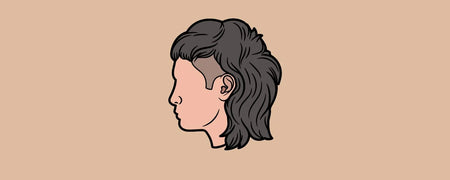
A mullet is defined by its proportions: shorter at the front and sides, longer at the back. Although often associated with the 1980s, it does not require shoulder-length hair or shaved sides. A modern mullet may have a textured top, a longer fringe or softly connected sides. The cut can be adapted for men and women; your hair density, natural texture and preferred finish matter more than a gender label.
Which type of mullet should you choose?
Modern mullet
Softer transitions and a moderate difference in length make this a less dramatic starting point. Leaving some hair at the temples gives your stylist room to connect the top and back. Bring a side-view reference: ‘modern’ alone does not describe the shape you want.
Short mullet
A short version still needs the back to look longer in relation to the sides. A closely cropped nape limits that contrast. Start with a compact shape and grow the back gradually if you want a more pronounced silhouette later.
Taper mullet or mullet fade
A taper typically shortens small areas around the temples and hairline, while a fade can cover a larger area with progressively shorter hair. The terms vary between barbers, so agree on height and how much skin should show. Shaved sides are optional.
Curly mullet
Natural waves and curls can emphasise the layers. Discuss how much your curls shrink when dry and how much weight to retain at the back. Very short crown layers or heavy thinning can produce a different outline from your reference photo.

Straight, fine or thick hair: what changes?
Straight hair shows the difference between lengths clearly and may need some styling to create movement. Fine strands and low hair density are not the same thing. If the back already looks sparse, retain weight around the outline rather than thinning it further. Thick hair needs balanced weight distribution, not simply less hair everywhere. Face shape is a starting point, not a rule: Adjust the fringe, height and width to your preferences and daily routine.
What to ask your barber or hairdresser
- Bring front, side and back references, preferably showing hair with a similar texture to yours.
- Agree on the back length and shortest crown layer before cutting starts.
- Specify how high the sides should be cut and whether any skin should show.
- Explain your cowlicks, natural parting and whether you prefer air-drying or blow-drying.
- Ask for a simple styling demonstration you can repeat at home.
How to style a mullet, step by step
- Gently squeeze out excess water with a towel instead of rubbing the longer back sections.
- Apply a small amount of texturising product to straight hair or a lightweight curl product to waves and curls. Start small to avoid weighing down the top.
- Shape the fringe and top first. Air-dry if your hair falls as desired, or blow-dry to lift the roots. Apply suitable heat protection before hot styling.
- Gently scrunch curls or use a diffuser on a low setting. Keep movement at the back rather than brushing every section smooth.
- Once dry, separate a few sections with your fingers. Add a little wax or paste only where you want extra definition.
For texture, explore sea salt spray. Use a wide-toothed comb to gently detangle longer sections, starting at the ends. Choose products for the finish you want, rather than the haircut name alone. Learn more about heat protection before using hot styling tools.


Maintaining or growing out your mullet
Wash according to your scalp and styling needs, and condition the lengths that need it. Arrange a shape adjustment when the sides lose their contrast or the fringe gets in your way; one haircut schedule will not suit everyone. To grow it out, let the shorter sections catch up with the back. Ask for small changes to the outline and nape instead of repeatedly cutting the crown short again.


Mullet versus wolf cut
A mullet emphasises the contrast between shorter sides and a longer back. A wolf cut usually combines that longer back with more shag-like layers and a softer connection around the head. The styles can overlap. Compare our wolf cut guide if you prefer a more connected, layered shape.
Mullet haircut FAQs
How long does hair need to be for a mullet?
There is no universal minimum. The back must look longer than the sides, with enough length to shape the intended top and fringe. Your stylist can assess whether particular sections need to grow first.
Can you get a mullet with straight hair?
Yes. Straight hair makes the contrast between lengths more visible. Softer transitions and light texture styling can make the outline less pronounced; the haircut itself will not create permanent curls.
Does a mullet need styling every day?
That depends on the cut, cowlicks and finish. A soft version in naturally wavy hair may need less effort than a high, sculpted top. Show your stylist how your hair falls without styling.
Can you have a mullet without a fade?
Yes. The sides can be scissor-cut with soft transitions. A longer back defines the haircut, not shaved sides.


