 2-5 day delivery
 100.000+ satisfied customers
 Satisfaction Guarantee













How often should you wash your hair? There is no single interval that suits everyone. Scalp oil, hair texture, sweat and styling products matter more than a fixed number of washes each week.
Find your own washing interval
Wash when your scalp and hair need it, for example when roots feel oily, sweat is uncomfortable or products have built up. Fine, straight hair with an oily scalp may need daily washing. Dry, coarse or curly hair can often be washed less frequently. Change one thing at a time and consider both your scalp and your lengths.


How often should you wash fine hair?
Fine hair describes the thickness of each strand, rather than how many strands you have. Fine hair can also be curly. In straight, fine hair, oil may be more noticeable through the lengths, and heavy products can leave hair looking flat. Try washing every other day as a starting point if that suits your scalp, but wash daily when needed. Apply an appropriate amount of shampoo to the scalp and conditioner to lengths and ends. Lightweight care and small amounts of styling product can help maintain fullness without skipping a wash your scalp needs.

An oily scalp and daily washing
Daily washing is not automatically wrong. Choose a shampoo that suits your scalp, rinse thoroughly and watch for dryness or irritation. You do not need to put up with oily roots to follow a calendar. Washing less often does not necessarily train your scalp to produce less oil.
Dry, curly and coloured hair
Dry lengths and coarse or curly hair may feel better with longer intervals. Still wash your scalp when needed and use conditioner after shampoo. Fine hair often needs conditioner mainly on the ends, while dry and curly hair may need care further up the lengths. Follow the instructions for masks and colour-care products.


How often should you wash your hair after exercise?
Exercising daily does not automatically mean everyone needs to wash their hair every day. Consider how much you sweat, whether your scalp feels dirty or uncomfortable and how many styling products you use. Fine, straight hair with oily roots may suit daily washing. Dry or curly lengths may need more conditioning even when the scalp needs cleaning. No fixed interval suits every hair type and exercise routine.
After light exercise, letting your hair dry and refreshing the style may be enough if your scalp still feels clean and comfortable. Rinsing with water can help with sweat but may not remove oil and product residue. With heavy sweating or buildup, shampoo and water may be the better choice. Massage gently with your fingertips, rinse thoroughly and apply conditioner where your lengths need it. Squeeze out water with a soft towel and use low or moderate heat when blow-drying.
Dry shampoo can refresh oily roots in dry hair, but it is not a wash and does not make sweaty hair clean. Follow the label, use a little at a time and wash rather than adding layers over residue. Avoid tight hairstyles during exercise and keep brushes and hair accessories clean. Persistent itching, redness or pain deserves a scalp assessment rather than simply extending the time between washes.


How to wash gently
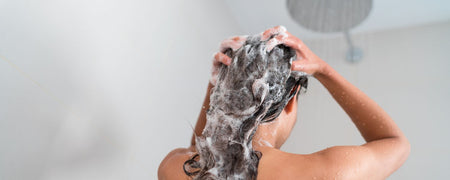
Wet your hair thoroughly with comfortably lukewarm water. Apply shampoo to the scalp, massage gently with your fingertips and rinse well. The shampoo running through the lengths is often enough for them. A second wash can help with heavy residue but is not needed every time. Use a scalp brush lightly and avoid scrubbing an irritated scalp.
Conditioner, masks and drying
Use conditioner after shampoo and follow the directions for any mask: order and leave-on time depend on the product. Cold water is not needed for clean hair. Gently squeeze out water with a soft towel, avoid vigorous rubbing and use moderate heat when blow-drying.
When to adjust your routine
If roots become oily quickly, consider more frequent washing or fewer heavy products near the scalp. If lengths feel dry, focus shampoo on the scalp and give lengths more conditioning. Persistent itching, pain, sores or clear irritation deserve a scalp assessment rather than simply changing your washing interval.
Read more
Explore our guides for more help with washing technique and using dry shampoo.


