 2-5 day delivery
 100.000+ satisfied customers
 Satisfaction Guarantee













Factors influencing washing frequency
Determining how often to wash fine hair can be influenced by several factors, including age, hair length, and texture. Each of these elements plays a role in how oil is distributed along the hair, affecting the frequency of washing needed to maintain a healthy appearance.
Age and hair length
Age can be a significant factor in adjusting your washing routine. As we age, the scalp's oil production can change, which might require a shift in how often you wash your hair. For those under 40, washing fine hair daily to every other day may be beneficial, while individuals over 60 might find that washing every third day is sufficient. Additionally, the length of your hair can impact oil distribution. Shorter fine hair often requires more frequent washing as it tends to get oily faster, whereas longer fine hair might allow for slightly less frequent washes due to better oil distribution along the hair.
Hair texture variations
Texture also plays a crucial role in determining the optimal washing frequency. Fine hair can vary from straight to wavy or curly, each requiring different care. Wavy or curly fine hair generally benefits from washing every other day to every third day, as the natural bends and curves can help distribute oils more effectively than straight fine hair. This variation in texture means that your hair care routine should be tailored to your specific hair type to avoid issues like dryness or excessive oiliness.
Practical hair care routine adjustments
Beyond washing frequency, there are several practical adjustments you can make to your hair care routine to support the health and appearance of fine hair. These include brushing techniques and scalp care tips that can enhance the overall condition of your hair.
Brushing techniques for fine hair
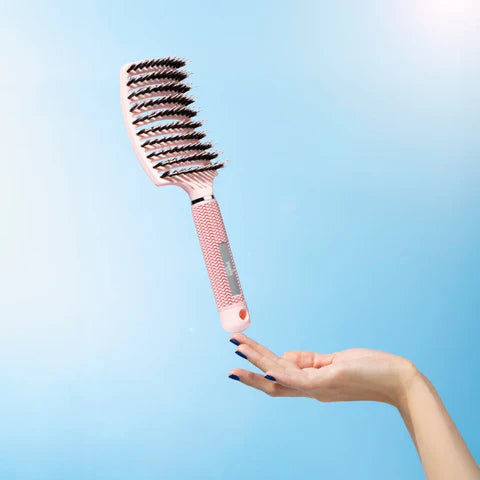
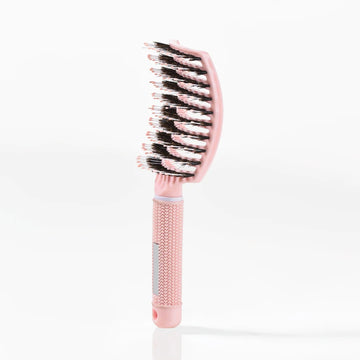
Using the right brush can make a significant difference in maintaining the health of fine hair. A boar bristle brush, such as our Curvy Brush, is ideal for fine hair as it helps distribute natural oils from the scalp along the hair, reducing the need for frequent washing. This type of brush can also add volume and shine, making your hair look fuller and more vibrant.

€24,99
Scalp care tips
Incorporating gentle scalp massages into your routine can promote healthy oil distribution and stimulate hair growth. Massaging the scalp increases blood circulation, which can lead to healthier hair follicles and improved hair health. This practice, combined with a suitable washing schedule, can help maintain the balance of oils on your scalp and hair, ensuring that your fine hair remains healthy and manageable.

Tips for maintaining volume and freshness between washes
Maintaining the volume and freshness of fine hair between washes can be achieved through strategic use of hair care products and techniques. Opting for lightweight, volumizing shampoos and conditioners can prevent your hair from becoming weighed down. For instance, using products that are specifically made for fine hair can enhance its fullness and bounce without adding unnecessary heaviness.

On non-wash days, dry shampoo can be an excellent ally. It absorbs excess oils and adds texture, helping to extend the time between washes. This approach not only keeps your hair looking fresh but also minimizes the potential for overwashing, which can strip your hair of its natural oils.

Another effective strategy is to use a microfiber towel for drying your hair. This type of towel is gentle on fine hair and helps reduce frizz, allowing your hair to dry with more natural volume and smoothness.

Frequently asked questions
How can I tell if I'm overwashing or underwashing my fine hair?
Signs of overwashing include a dry scalp and brittle hair, while underwashing may result in greasy roots and a flat appearance. Monitoring your hair's response and adjusting your washing frequency accordingly can help find the right balance.
Is it okay to wash fine hair daily if needed?
Daily washing can be suitable for fine hair if you use a mild, sulfate-free shampoo. This approach helps prevent damage while maintaining scalp health. However, it is important to assess if your hair truly requires daily washing or if alternative methods, such as using dry shampoo, can suffice.
What are some signs that I need to adjust my washing frequency?
If you notice that your hair becomes oily quickly after washing or if your scalp feels dry and itchy, it may be time to adjust your washing frequency. Experimenting with different schedules can help you find what works best for your hair type and lifestyle.


