 2-5 day delivery
 25.000+ satisfied customers
 Satisfaction Guarantee










The structure of the hair
A strand of hair generally consists of different layers.
Cuticle
The cuticle is the outermost layer of the hair and consists of overlapping scales.
The outermost layer influences, amongst other things, the hair’s surface, shine and texture.
Cortex
The cortex makes up a large part of the hair shaft and influences, amongst other things, the hair’s structure, strength and natural colour.
Medulla
The medulla is the innermost part of the hair shaft and is not necessarily clearly visible in all hair types.
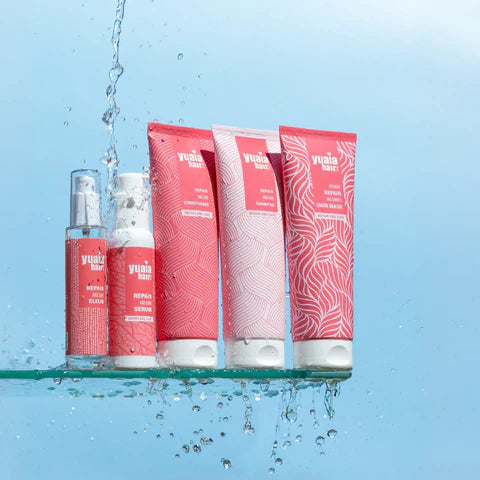
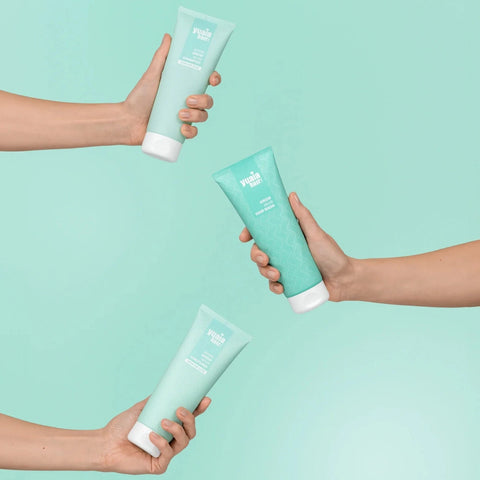
Hair care products cannot alter all of the hair’s biological properties, but shampoo, conditioner, hair masks and styling products can be used for various cosmetic purposes such as cleansing, moisturising, adding shine and providing protection.
Chemical treatments and the hair
Colouring, perms and bleaching can affect the structure of the hair shaft.
If your hair has been chemically treated, it may therefore be beneficial to focus on a gentler hair care routine and products suitable for treated hair.
Conditioners and hair masks can, amongst other things, help to make the hair softer, more manageable and easier to comb through.
How do you care for your scalp?
A simple scalp care routine doesn’t have to be complicated.
Start by choosing a shampoo that suits your hair type and scalp, and gently massage the shampoo in with your fingertips.
Avoid scrubbing too vigorously or using your nails directly on the skin.
You can also use a Deep Scalp Brush as part of your washing routine, if you prefer.

Use a shampoo that suits you
The choice of shampoo depends, amongst other things, on your hair type, scalp and the styling products you use.
If your scalp feels dry or sensitive, a mild shampoo may be suitable.
Conversely, if you use a lot of styling products, it may be important to ensure your hair is thoroughly cleansed.
You can read our guide to sulphate-free shampoo here.
After shampooing, you can apply conditioner, particularly to the lengths and ends, to make your hair softer and easier to comb.

Massage your scalp
A scalp massage can be a pleasant part of your hair care routine.
Use your fingertips to gently massage your scalp in circular motions.
You can massage your scalp whilst washing your hair or at other times, if you find it pleasant.
Scalp massage should not be regarded as a proven treatment for hair loss or as a guarantee of increased hair growth.
Read more in our guide to scalp massage.

Limit very high temperatures
Frequent heat styling at high temperatures can put a strain on the hair shaft.
If you use a hairdryer, straighteners or curling tongs, it may therefore be beneficial to:
- use a suitable temperature
- avoid heat-styling the same section of hair unnecessarily many times
- use a heat-protective product
- let your hair air-dry completely or partially, whenever it fits into your routine
Read more about heat protection for hair here.
Diet and healthy hair
A varied and balanced diet is part of a healthy lifestyle and provides vitamins, minerals, proteins, fats and other nutrients.
When discussing vitamins and minerals specifically in relation to hair, it is important to focus on the functions that have been documented and approved.
Biotin
Biotin helps maintain normal hair.
Biotin is a B vitamin and is found naturally in various foods.
Zinc
Zinc helps maintain normal hair.
Zinc also has a number of other functions in the body.
Selenium
Selenium helps maintain normal hair.
It is important to distinguish between maintaining normal hair and claims regarding, for example, increased hair growth, reduced hair loss or thicker hair.
Other vitamins may have various important functions in the body, but this does not automatically mean that they can be said to have a direct effect on the hair.
What about protein?
The hair shaft consists mainly of keratin, which is a protein.
Protein is found in many different foods, such as:
- fish
- meat
- eggs
- dairy products
- pulses
- nuts and seeds
Protein is a common part of a varied diet.
However, it should not, on that basis, be marketed as an ingredient that, on its own, makes hair grow faster.
Hair Vitamins as dietary supplements
If you are looking for a dietary supplement to complement your regular diet, there are various options available.
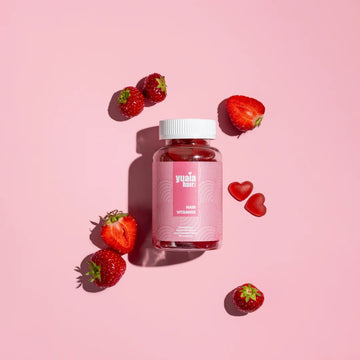
Our Yuaia Hair Vitamins contain, amongst other things, biotin and zinc.
Biotin helps maintain normal hair.
Zinc helps maintain normal hair.
Dietary supplements should not be used as a substitute for a varied and balanced diet and a healthy lifestyle.
Always follow the recommended daily dose.
If you suspect a vitamin or mineral deficiency, you should speak to your doctor rather than trying to diagnose a deficiency yourself based on the appearance of your hair.

How can you make your hair look healthy and well-cared-for?
The appearance of your hair is influenced, amongst other things, by your hair type, previous treatments and your daily hair care routine.
A gentle routine might, for example, consist of:
- shampoo as needed
- conditioner after washing
- hair mask as needed
- heat protection before heat styling
- gentle brushing
- products suited to your hair type
How often should you wash your hair?
There is no single ‘right’ frequency for washing hair that applies to everyone.
Some people wash their hair daily, whilst others wash it a few times a week.
It depends, amongst other things, on:
- hair type
- scalp
- activity level
- use of styling products
- personal preferences
If your scalp feels clean and comfortable, and your hair is coping well with your routine, there’s no need to stick to a specific washing frequency.
Read more in our guide to how often you should wash your hair.
Dry shampoo between washes
Dry shampoo can be used to absorb excess oil at the roots and give your hair a fresher look between washes.
However, it is no substitute for a proper wash in the long term, as shampoo and water are used to thoroughly cleanse the hair and scalp.
What about natural ingredients?
Just because an ingredient is natural does not automatically mean it is better or gentler for everyone.
Ingredients should be assessed based on their specific function within the product and the product’s overall formulation.
If you experience irritation from a product, you should stop using it.
Products containing, for example, aloe vera or various plant oils can form part of a hair care routine, but they should not automatically be linked to hair growth simply because they are natural.
Cut down on heat styling if your hair is damaged
If your hair is dry, chemically treated or otherwise damaged, it may be beneficial to reduce the use of very high temperatures.
Consider using heat protection and choose the lowest temperature that works for your hair and the desired style.
Use styling products as needed
Styling products serve different purposes.
Some provide hold, others shine, volume or definition.
There’s not necessarily a reason to generally avoid specific ingredients such as alcohol or silicone. It depends on the product type, formulation and what you want from the product.
You should therefore choose products based on your hair type and your preferences.
Use a hairbrush that suits your hair
Different types of brushes work differently depending on hair type and purpose.
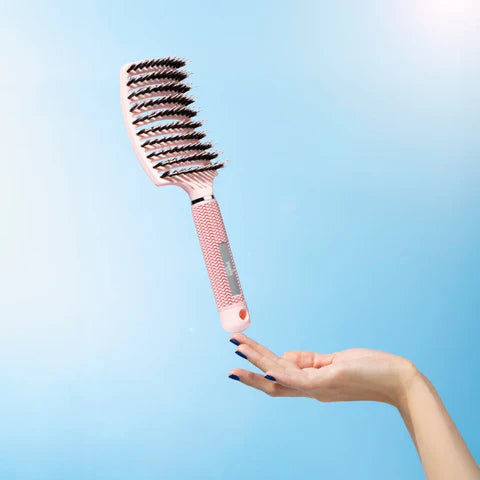
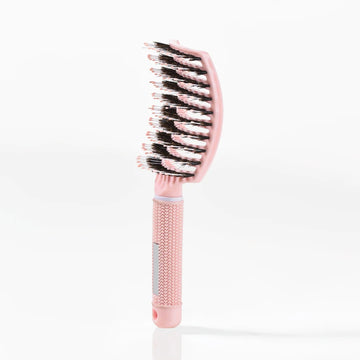
A boar bristle brush, for example, can help distribute the hair’s natural oils along the lengths and may be suitable for certain hair types.
The most important thing is to brush gently and avoid unnecessary tugging at the hair.
Read more in our guide to boar bristle hairbrushes.
At the same time, clean your hairbrush regularly to remove loose hair, product residue and dirt.
Vitamins and minerals: The most important things to know
If you read about vitamins for hair, you’ll often come across very broad claims.
It’s therefore useful to know the difference between various nutrients.
When we’re specifically talking about approved health claims relating to normal hair, the following, amongst others, may be used:
Biotin contributes to the maintenance of normal hair.
Zinc contributes to the maintenance of normal hair.
Selenium contributes to the maintenance of normal hair.
Other vitamins may have important functions in the body without having a specific authorised claim regarding hair.
Therefore, a function such as energy metabolism or cell division should not automatically be interpreted as a claim of improved hair growth.
Can vitamin deficiency cause hair loss?
Hair loss can have many different causes.
It is therefore not possible to determine, based on the appearance of your hair alone, whether you are deficient in a particular vitamin or mineral.
If you experience sudden, significant or persistent hair loss, you should contact your doctor to have the cause assessed.
Dietary supplements should not be used as a treatment for unexplained hair loss.
Scalp massage as part of your routine
If you enjoy scalp massage, it can easily be incorporated into your regular hair care routine.
Massage gently with your fingertips or a scalp brush.
Scalp massage can, amongst other things, help to loosen product residue whilst washing your hair and feels pleasant, but should not be marketed as a treatment that has been proven to increase hair growth or reduce hair loss.
Product recommendations for a good hair care routine
There are many different ways to put together a hair care routine.
Here are some products you might want to include, depending on your needs.
Hair Vitamins
Yuaia Hair Vitamins is a dietary supplement containing, amongst other things, biotin and zinc.
Biotin and zinc help to maintain healthy hair.
The hair vitamins are vegan and free from gluten, lactose and gelatine.
They are designed to be easily incorporated into your daily routine.
Always follow the recommended daily dose.
Bamboo pillowcase
A pillowcase comes into contact with your hair for many hours every night.
Our bamboo pillowcase has a smooth and soft surface and can be a good alternative if you’re looking for a pillowcase with a comfortable feel against your hair and skin.
Heat protection for your hair
If you frequently use heat-styling tools, a heat-protection product can be an important part of your routine.
Our Style & Shine Heat Protection Spray is designed to protect your hair during heat styling up to 220 °C.
Always follow the product’s instructions for use.
Brief summary
A good hair and scalp routine doesn’t have to be complicated.
Focus on the following, amongst other things:
- regular and appropriate hair washing
- conditioner and care as needed
- gentle brushing
- limiting the use of very high temperatures
- products suited to your hair type
- a varied and balanced diet
When it comes to vitamins and minerals, it is important to stick to the relevant authorised health claims:
Biotin, zinc and selenium help maintain normal hair.
This is not the same as promising faster hair growth, reduced hair loss or thicker hair.


