What are sulphates?
You’ll find sulphates in shampoo, soap, facial cleansers and even toothpaste. They’re a foaming agent that makes the product lather when you use it. If your shampoo or conditioner lathers a lot in your hair, this may therefore be a sign that the product contains sulphates.
The main job of sulphates is to cleanse your hair of oil and dirt.
You could say that’s quite a good thing. But some sulphates are so strong that they strip away the natural oils from your hair and scalp. Depending on your hair type, this can have negative consequences for the health of your hair. If, for example, you have dry hair, this could lead to breakage or cause unnecessary damage to the structure of the hair strands. It is possible to find mild sulphates that are good for your hair, such as sodium coco sulphate.
Sulphates are synthetic substances produced in laboratories, most often from vegetable-derived fatty alcohols. In this context, ‘vegetable’ isn’t necessarily a good thing. This is evident, amongst other things, from the growing range of sulphate-free shampoos on the shelves, which suggests that these substances aren’t good for your hair.
Are you unsure whether your shampoo or conditioner contains sulphates? Get the bottle out and check the list of ingredients. Look out for, amongst others:
- Sodium Laureth Sulphate (SLES)
- Sodium Lauryl Sulphate (SLS)
- Sodium Lauryl Ether Sulphate
- ATEA Lauryl Sulphate
- TEA dodecylbenzenesulphonate
- Sodium Alkylbenzenesulphonate
- Ammonium or Sodium Xylenesulphonate
You should avoid the sulphates listed above, as they are among the strongest. The most common sulphates in shampoos and soaps are known as SLS and SLES sulphates and are the most widely used types of sulphate. As a rule, you’ll find them quite high up on the list of ingredients, as there’s usually a high sulphate content in shampoo. And if they’re present, the product isn’t sulphate-free.
Preserve your hair’s natural oils
One of the most notable benefits of using a sulphate-free shampoo is its ability to preserve and protect your hair’s natural oils. Traditional sulphate-containing shampoos are known to remove not only dirt and product build-up, but also the natural oils produced by our scalp to protect and nourish the hair. This can lead to excessive dryness and damaged hair.
Sulphate-free shampoos are formulated with mild and gentle cleansing agents that are not as harsh as sulphates. This means they cleanse the hair effectively without stripping away all the essential natural oils. As a result, your hair remains better protected against dryness and damage, whilst looking healthier and shinier.
When the hair’s natural oils are preserved, this helps to maintain the natural moisture balance in the hair and scalp. This is particularly important for people with dry hair or a tendency to develop dandruff or itchiness. By switching to a sulphate-free shampoo, you may find that your hair becomes more hydrated and less prone to damage from external factors such as heat and the weather.
Are sulphates dangerous?
Sulphates are not dangerous to you or your health. However, they can be irritating to the hair and skin. This is because sulphates work hard to remove dirt, sebum and product build-up, amongst other things.
However, some sulphates cleanse your hair more thoroughly than is beneficial. In doing so, they strip away the natural oils from the scalp and skin, which are needed to keep them healthy and strong. This can often lead to dry and damaged hair, but also to greasy hair, because the scalp overproduces oil.
If this sounds familiar, you should consider a sulphate-free shampoo as a gentler and less drying alternative.
You may also be lucky enough to currently be using hair products containing sulphates without this having had any effect on your hair yet, and it’s not certain that it will have a negative impact on your hair in the future. However, you’ll find that more and more manufacturers have removed sulphates from their products because they can damage your hair.
By choosing a sulphate-free shampoo the next time you go shopping, you can prevent an itchy scalp and dry, brittle locks in the future.
That’s why you should choose a silicone-free shampoo
Another ingredient to watch out for is silicone. Silicone isn’t harmful to you or your health, but it can irritate both your skin and your hair. In shampoos and conditioners, silicone gives a temporary effect of healthy, smooth and shiny hair. However, as silicone is chemically engineered to be water-repellent and durable, it coats every single strand of hair. This can make it difficult to wash out of your hair. Over time, the silicone can build up on the hair strands, making your hair heavier and greasier.
Silicone can also affect the hair’s ability to absorb moisture and nourishing ingredients, which can lead to split ends and dry hair that breaks easily.
Silicone in hair products can also have the negative effect of causing dirt and dust to settle in the hair and on the scalp, disrupting the natural balance. This can result in oily hair and an itchy scalp. The oily and ‘dirty’ hair causes the hair follicles to become irritated or suffocated. Ultimately, this can lead to thinner hair.
Some people therefore recommend a shampoo containing sulphates, as sulphates are very effective at removing all dirt and oil. Unfortunately, they also strip away the beneficial, healthy oils that protect the hair and scalp. We would therefore recommend that you find a silicone-free shampoo that is also sulphate-free.
Silicone is a polymer that can be chemically produced in many different forms, so it can be a challenge to work out whether your shampoo or conditioner contains silicone. When checking the list of ingredients, look out for words ending in ‘cone’ or ‘oxane’.
Below is a list of the most common types of silicone in shampoo and conditioner:
- Dimethicone
- Cyclomethicone
- Amodimethicone
- Pheryl Trimethicone
- Cetearyl Methicone
- Dimethiconol
- Stearyl Dimethicone
If you follow the Curly Girl method, it’s always recommended to use a sulphate- and silicone-free shampoo. You can read more about the Curly Girl method here.
5 reasons to switch to silicone- and sulphate-free shampoo and conditioner
If you’re struggling with your hair in one way or another, silicone- and sulphate-free shampoo and conditioner could be the way forward. Find out when it might be a good idea to opt for sulphate- and silicone-free hair products.
1. You’re struggling with damaged hair that breaks easily
Do you often find that your hair tangles, forms knots and consequently breaks? This is a clear sign that your hair is damaged. And it can be incredibly frustrating.
Not only does it make your hair look dull and lifeless, but it also makes it harder to tie back with a hair tie and brush through from root to tip. Instead of a lovely, glossy ponytail, you end up with a big, tangled mess. And this is where a shampoo free from SLS (Sodium Lauryl Sulphate) can make a huge difference.
Fine hair, in particular, tends to become weighed down more quickly, and the strands are more prone to splitting. And using a shampoo containing SLS (sodium lauryl sulphate) doesn’t help. The sulphate ingredients contribute to weighing your hair down, and over time the product will build up on your scalp.
By choosing a silicone- and sulphate-free shampoo, you’ll avoid sulphate build-up. Your hairstyle will no longer look flat and lifeless. Instead, it’ll be revitalised with more body and shine. You might also want to try a hair mask containing proteins to help rebuild your hair.
2. You have curls or frizzy hair
Does your hair frizz easily? Or does it always look static-ridden and unruly after a shower? And do you often use straighteners to achieve a neater style? These hair challenges are all signs that you might have beautiful, hidden curls.
There are loads of women who have wavy or curly hair without even realising it. Because if you use the wrong beauty products, your curls will never come through. Instead, you’ll end up with frizzy or straightened strands, and that’s not a flattering look.
SLS shampoo weighs your hair down and dries out your curls. Sulphates strip away the natural oils from your scalp and make your hair completely unmanageable.
Fortunately, you can remedy the problem by switching to silicone- and sulphate-free shampoo, conditioner and other hair products. What’s more, it’s a good idea to give your scalp plenty of moisture by using both a moisturising conditioner and a hair mask. If you do this, you’ll soon find that you have lovely curls or a beautiful wavy hairstyle.
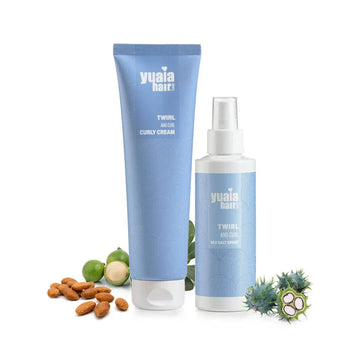
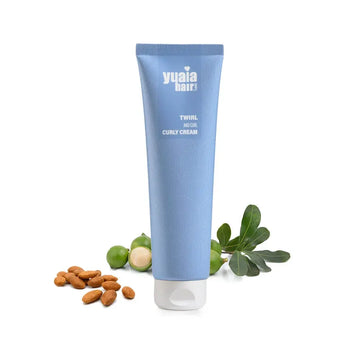
Here, you can buy hair care products for curly hair that are free from both silicones and sulphates. Our sea salt spray and curl cream both comply with the Curly Girl Method.
The Curly Girl Method is based on using hair care products and techniques that give your curls shine and new life. A key part of the method is avoiding high heat, mineral oil, alcohol, silicone and sulphates in your hair products.
Instead, you should use conditioner when washing your hair. Make sure to prioritise natural ingredients when selecting products to include in your haircare routine to enhance your natural curls.
Silicone- and sulphate-free shampoo and conditioner
3. You love colouring your hair
Do you also love welcoming summer with bold highlights? Or do you often dye your hair a different colour? If so, your hair needs extra care and attention. Colour treatments can be harsh on both your scalp and your hair strands if you’re not careful. And sulphates don’t help here.
When your hair is coloured, it’s extra sensitive. And if you use the wrong products, the colour won’t last long, and you might even risk discolouration.
By choosing a sulphate-free shampoo, your lovely colour will last much longer. A sulphate-free shampoo is gentle and nourishing, so you get clean hair without damaging your locks with too many ingredients.
4. Your hair feels dry and coarse
Are your strands rough and frizzy when you run your hands through them? Or do you feel your hair lacks shine and volume? Then you may be struggling with dry hair.
If your hair is dry and coarse, sulphates won’t help – quite the opposite! Sulphates cleanse your hair. But they often do so so thoroughly that they also strip away natural and essential oils. This makes it difficult for your hair to retain moisture.
By switching to SLS- and silicone-free hair care, you retain those beneficial oils whilst still cleansing your hair. And by choosing just the right products, you can also add extra moisture to keep your hair looking glossy.
5. Your scalp is dry and irritated
Do you also struggle with annoying white dandruff? Is your scalp constantly itchy? And is it dry and irritated? It’s frustrating if your scalp isn’t healthy and comfortable. But here, too, there’s a solution. And that’s to avoid SLS ingredients.
In some ways, your scalp is like a self-cleaning oven. It takes care of most of its own maintenance and only needs a bit of help now and then. That’s why constantly trying to cleanse it with sulphates – a couple of times a week – often has the opposite effect.
Instead of leaving your scalp clean and balanced, sulphates strip away the oils that keep it healthy. So if you have a sensitive scalp, this will quickly lead to irritation and dryness. And in the worst case, it can also contribute to dandruff.
With sulphate- and silicone-free hair care, you can cleanse your scalp without stripping away its natural oils. This way, you’ll avoid an itchy, red scalp. At the same time, you’ll reduce the risk of dandruff.
Who should use sulphate- and silicone-free shampoo and conditioner?
Everyone can benefit from switching to a sulphate- and silicone-free shampoo and conditioner. Whether you have healthy, well-cared-for hair or dry, irritated hair and scalp, a sulphate- and silicone-free shampoo and conditioner can effectively remove old product build-up. Furthermore, it provides plenty of moisture and nourishment that previously struggled to penetrate the hair strands.
Is your scalp sore due to dandruff or eczema? In this case, a sulphate- and silicone-free shampoo can also work wonders for your scalp, as it helps to relieve dryness. You can read much more about dry scalp here.
How do you choose good sulphate-free hair products?
If you search for ‘shampoo’ online, you’ll be met with a vast array of different results. The beauty industry is enormous, and every manufacturer claims to have the very best products. That’s why it can be a bit of a jungle trying to find the best products for your specific needs.
Are you looking for a sulphate-free shampoo? Then, first and foremost, you should avoid these four ingredients. They are, in fact, the worst types of sulphates on the market when it comes to irritating the hair and scalp:
- Sodium Lauryl Sulphate
- Sodium Laureth Sulphate
- Sodium Lauryl Ether Sulphate
- Ammonium Laureth Sulphate
The madness doesn’t stop there. Unfortunately, there are several other variants you should avoid if you want to take extra good care of your hair. To be sure you’re ordering a sulphate-free shampoo, choose a bottle labelled as 100% sulphate-free.
Choose a sulphate-free shampoo that contains these cleansing agents (which are not sulphates):
- Coco Glucoside
- Lauryl Glucoside
- Disodium Cocoyl Glutamate
- Sodium Cocoyl Glutamate
- Sodium Lauroyl Glutamate
- Sodium Cocoamphoacetate
- Cocamidopropyl Betaine
- Disodium Laureth Sulfosuccinate
- Sodium Methyl Cocoyl Taurate
- Sodium Cocoyl Isethionate
- Ammonium Cocoyl Isethionate
- Sodium Lauryl Glucose Carboxylate
Look after your hair by considering and choosing products that suit your hair type and your needs. Among other things, you can look for varieties containing plant extracts and essential oils. For a bit of extra pampering, you might also want to add a lovely conditioner or hair mask to your basket.
Can there be any negative side effects from using a silicone- and sulphate-free shampoo?
No.
Some people may find it difficult to get used to the fact that the shampoo doesn’t lather as it usually does. There’s no need to use more product, even though you might be tempted to use more to make sure you’ve massaged the shampoo right into your entire scalp.
We recommend our Deep Scalp scalp brush to get the most out of your shampoo whilst you’re in the shower. You’ll feel the product lathering, whilst at the same time ensuring the product penetrates right into the hair follicles and the skin on your scalp.
Our scalp brush isn’t just for one thing. It can also promote hair growth, just like our other hair products. It can also help relieve tension. This could be tension in the scalp and neck, which may stem from work, stress, not getting enough sleep, too much coffee and not enough water during the day.
When you use the circular technique on your scalp, your tension will be released, which will help relieve your headache.
How to use your new sulphate-free shampoo
You’ve now read about how to find the perfect sulphate-free shampoo. But what’s the next step once you’ve bought it and are standing in the shower with it? It does matter how you wash your hair. On the contrary, it can have a major impact on the final result
1. Wash your hair the right way
You’ve probably never given much thought to how you wash your hair in the shower. Most people just do it automatically without giving much thought to technique or method. But that’s a mistake! Doing it wrong can actually have negative consequences for your hair.
The techniques below require patience and time. But does it really matter that it takes time if your hair becomes more manageable? More beautiful and healthier. We know that when the daily grind sets in, your routines – including your hair care routine – can take a back seat. But try to focus on the result rather than the process, to motivate yourself to look after your hair properly.
So now that you’ve invested in a lovely sulphate-free shampoo, you need to use it properly. Here’s a step-by-step guide for your time in the shower:
- Wet your hair with warm water. The warm temperature opens up the hair cuticles, preparing them to absorb the nourishing ingredients from your hair products. It also makes it easier to wash away all the dirt and grime.
- Massage the shampoo thoroughly into your scalp for 1 to 2 minutes. Take a generous dollop and spread it around your head, but not right down to the ends. When you rinse your hair, the shampoo will automatically cleanse the rest of the hair shafts and the ends.
- Use conditioner, especially if you have long hair. Sulphate-free conditioner gives your hair extra moisture and nourishment. And it makes your life much easier when you’re styling your wet hair. Curly hair is one of the hair types that really comes to life when the conditioner is sulphate-free, as curls need extra moisture.
- Make sure you rinse all the products out completely. The worst thing you can do is be careless with the final rinse. If any product residue remains, your hair will quickly become heavy and greasy.
You should bear in mind that a sulphate-free shampoo doesn’t always lather as much as a normal shampoo. However, you’ll soon realise that it doesn’t always need to lather up like crazy before your hair is clean.
If you follow this advice, you’re sure to benefit from your sulphate-free hair care products. And both your hair and your scalp will thank you for the pampering!
2. Don’t wash your hair every day
Do you find that your hair feels greasy in the evening? And do you feel the urge to jump in the shower if you don’t wash it every day? Then it’s time to make a change and change your routine.
All leading hair experts agree: you shouldn’t wash your hair too often. Although it sounds strange, the more often you wash it, the greasier your hair will become. This happens because you’re stripping your scalp of its natural oils. Your scalp then goes into overdrive and produces even more oil to compensate.
That’s why you should wash your hair every other day at most, and ideally only 1 to 3 times a week. Instead, try using a dry shampoo on the days when you don’t pop in the shower.
A dry shampoo absorbs excess oil, so your hair looks less greasy. This means you can skip a wash with a clear conscience. Dry shampoo is effective on days when you don’t get round to washing your hair.
Just as you style your hair with hairspray, sea salt spray, curl spray and so on, you can style your hair with dry shampoo to make it look fresh and voluminous.
If you’ve been washing your hair daily for many years, it can be difficult to change this routine. At first, you’ll feel as though your hair is very dirty and greasy. But once your scalp gets used to it, you’ll notice a marked improvement. So grit your teeth and change your hair-washing routine. Your hair and scalp will thank you!
Sulphate-free products
3. Dry your hair properly
Another important aspect of hair care is how you dry it after a shower. Towels and hairdryers can damage your hair if you don’t use them correctly.
Do you use towels to dry your hair? If so, it’s important to do so carefully and gently. If you rub the towel vigorously, it will damage your hair strands. They’ll break and split more quickly as a result. And then you’ll suddenly have to spend money on an extra trip to the hairdresser.
Also, avoid wrapping your hair in a turban with the towel. And if you do, keep it brief. This is because the turban pulls on the hair follicles. Not only does this damage the hair strands, but it can also lead to hair loss. You might also consider using a gentler material, such as an old T-shirt or a microfibre towel. We have super-soft microfibre towels that are perfect for your hair!
Do you like air-drying your hair? It’s generally a good way to dry your hair after a shower. You just need to bear a few things in mind.
First and foremost, avoid brushing your hair before it’s completely dry. Otherwise, it’ll quickly become frizzy and unmanageable.
Secondly, don’t go outside in the cold. When your hair is wet, the cold can actually freeze it. And this can cause the hair strands to snap or break. So make sure it’s completely dry before you head out into the winter weather.
Do you use a hairdryer? It’s an effective and quick way to dry your hair, especially if you’re in a hurry. But you need to be careful with the heat. If you’re drying your hair with a hairdryer, never use the hottest setting. And always make sure to keep the nozzle 5 to 10 cm away from your scalp. That way, your hair will dry without suffering heat damage.
Do you need to get used to using sulphate-free shampoo?
When it comes to switching from a sulphate-containing shampoo to a sulphate-free one, you should expect an adjustment period. Your hair may have become accustomed to sulphates and silicones, and it may react differently to the natural ingredients in a sulphate-free shampoo. It’s important to give your hair a chance to adapt to the new routine.
At first, you may notice that your hair feels a little different. It can take time to get used to the sensory experience that comes with natural products rather than synthetic alternatives. Some people find that their hair feels heavier or even a little greasy at first, whilst others may notice that their hair feels drier or more frizzy. This may be because a sulphate-free shampoo does not strip away natural oils in the same way as products containing sulphates.
It’s important to be patient and give your hair time to adjust to the new formula. It’s recommended that you use a sulphate-free shampoo for at least two weeks before drawing any conclusions about its effectiveness. During this period, it may also be a good idea to experiment with different brands and formulas of sulphate-free shampoos to find the one that best suits your specific needs. Remember that everyone’s hair is unique, and the adjustment period may vary from person to person.
Tips for switching to a sulphate-free shampoo
Changing your shampoo routine from sulphate-based to sulphate-free may require a bit of adjustment, but it can be a good choice if you’re looking for a gentler hair care routine. Here are some useful tips for a smooth transition:
Read the labels: Check the ingredients list on a sulphate-free shampoo carefully to ensure it doesn’t contain any other ingredients you wish to avoid.
Adjust the amount: You may not need as much sulphate-free shampoo as you’re used to with sulphate-containing shampoo. Start with a small amount and increase as needed.
Use a sulphate-free conditioner: Consider using a matching sulphate-free conditioner to give your hair extra care and moisture.
Avoid over-washing: Avoid washing your hair every day, as this can strip away its natural oils. Try washing it every other day or as needed.
Be patient: Your hair may take a little time to get used to the new routine, so be patient and give it time to adjust.
Consult a professional: If you have specific hair problems or concerns, it may be a good idea to consult a hairdresser or hair care expert for advice.
Try different brands: Experiment with various sulphate-free shampoo brands and varieties to find the one that best suits your needs and preferences.
Switching to a sulphate-free shampoo can be a great option if you’re looking for a gentler hair care routine, so follow these tips to make the transition as smooth as possible.
Get a 10% discount code sent to you
Receive the best tips and tricks for your hair from Lotte and Nanna 🥰
The best sulphate-free shampoo: Lotte’s product recommendation for you
Hair care is very close to our hearts. That’s why we’ve developed a truly lovely sulphate-free shampoo, Grow and Glow Shampoo. The shampoo is free from harmful sulphates (SLS and SLES) and is therefore a gentler alternative for washing your hair. With its unique nourishing and growth-promoting properties, it ensures a balanced scalp and healthy hair growth.
Furthermore, it has fantastic restorative properties for dry, damaged and brittle hair. Thanks to its Curcuma Longa and Amaranthus seed extract content, studies have shown a reduction in hair loss of up to 89 per cent after 150 days’ use and an increase in hair shaft diameter of 11.3 per cent. In other words, you’re giving your hair the care it needs, which both nourishes and strengthens it, whilst leaving your hair looking glossy. If you’d like to read more about the ingredient Curcuma Longa and its results, read here.
Sulphate-free shampoos are a popular trend in the haircare industry, and they do have their benefits. But before you switch to a sulphate-free shampoo, it’s important to do your research to see if it’s right for your hair type. If you have any questions or concerns about switching to a sulphate-free shampoo, you can always ask us for advice.
 2-5 day delivery
 100.000+ satisfied customers
 Free shipping over €99