2-5 day delivery
 100.000+ satisfied customers
 Free shipping over €99
 Customer service








Shine and smoothness
Many gels add shine and help curls appear smoother and more polished. By smoothing the hair surface, gel helps reduce frizz and enhance natural curl definition. This makes curls look healthier, more uniform and well-defined, while still maintaining a soft, flexible feel when the gel is applied in the right amount.

Is mousse or gel better for curly hair?
Whether mousse or gel is better for curly hair depends on the desired result and hair type. Mousse has a lighter texture and gives soft hold with added volume, making it ideal for fine hair, looser curls, or anyone who wants bounce and movement. Gel provides stronger hold and more control, helping define curls, reduce frizz, and maintain shape for longer, especially in thicker hair or tighter curl patterns. Many curly hair routines combine both products, using mousse for volume and gel on top to lock in definition while keeping curls full and controlled.
How much gel should you use on curly hair?
Knowing how much gel to use is essential for achieving good results. Using too little gel may leave curls without enough hold, while using too much can lead to stiffness or product buildup.

As a general starting point, the amount of gel often depends on hair length and density:
- Short or fine curly hair usually needs about a dime-sized amount
- Medium-length or thicker hair may require a quarter-sized amount or slightly more
- Very long, dense, or tightly coiled hair often benefits from using more gel, applied in sections for even coverage
The ideal amount also depends on curl type and hair porosity. Looser curls typically need less gel, while tighter curl patterns can handle and often benefit from a larger amount. Starting with a small amount and gradually adding more makes it easier to find the right balance without weighing the hair down.
How to apply gel to curly hair
- Start with freshly washed hair that is wet or very damp. Gel spreads more evenly on damp hair and helps support the natural curl pattern as the hair dries.
- Dispense a small amount of gel into your palms and rub your hands together to distribute the product evenly before applying it to your hair.
- Apply the gel using the “praying hands” technique, smoothing it over sections of hair from mid-lengths to ends to coat the curls without disrupting their shape.
- Gently scrunch the hair upward toward the scalp to encourage curl definition and add natural volume.
- For thicker or longer hair, divide the hair into sections and repeat the process to ensure even coverage throughout.
- Allow the hair to air-dry for a softer finish, or use a diffuser to enhance volume and definition while reducing drying time.
Common mistakes and how to avoid them
Using too much gel
Using too much gel at once can make curls feel crunchy, heavy, or stiff. Excess product prevents natural movement and can weigh the hair down. Starting with a small amount and adding more as needed allows better control, more even distribution, and softer, more natural-looking curl definition.
Uneven application
Uneven application is a common mistake that leads to inconsistent curl results. When gel is not distributed properly, some curls may appear defined while others look frizzy or undefined. Applying gel in sections and working it through the lengths helps ensure even coverage and more consistent, polished curls.
Ignoring product buildup
Product buildup can gradually interfere with how gel performs and how curls respond to styling. Residue from repeated use of gels, creams, and leave-in products can coat the hair, making curls appear dull, heavy, or less defined over time. When buildup is present, gel may sit on the surface instead of supporting the curl pattern, leading to uneven results. Incorporating a clarifying wash occasionally helps remove this residue and refresh both the hair and scalp. Starting with clean strands allows gel to spread more evenly, improve definition, and deliver more consistent, long-lasting results.
Using gel with other products
Gel is often most effective when combined with other products in a curl routine. Many people use a leave-in conditioner or curl cream before gel to add moisture and softness. The gel then seals in hydration and provides hold.
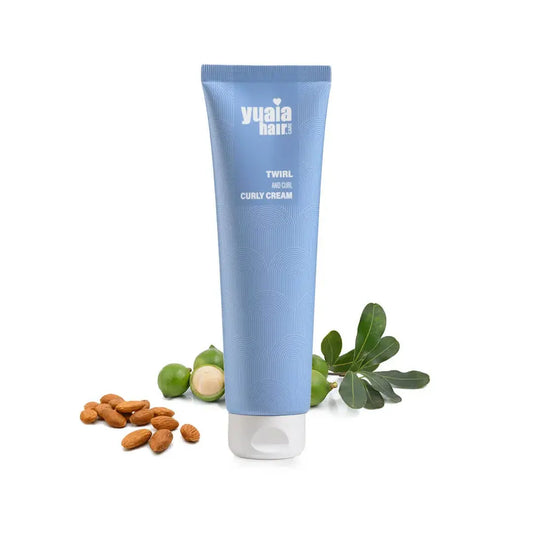
For those who want both volume and definition, using mousse before gel can be effective. The mousse adds lift and light structure, while the gel ensures curls stay defined and frizz-free.

Making curly hair gel work for your routine
Curly hair gel is an effective styling product when used correctly. It defines curls, controls frizz and helps hairstyles last longer. By understanding what gel does, how much to use, and how it compares to mousse, it becomes easier to tailor a routine that works for individual curl types and preferences. Experimenting with different techniques and amounts is often the key to finding the best results.
How to create a gel cast for curly hair
- Start with clean, well-conditioned hair. Leave the hair very wet or damp, as moisture helps the gel form a proper cast.
- Apply a leave-in conditioner if needed to ensure the hair is well hydrated before styling.
- Distribute the gel evenly through the hair using your hands, focusing on coating each curl.
- Use a curl-enhancing technique, such as scrunching, to encourage the natural curl pattern without disturbing it.
- Let the hair air dry or use a diffuser, and avoid touching it until it is completely dry to prevent frizz and preserve the gel cast.
Breaking the gel cast: Scrunch out the crunch
Once the hair is completely dry, the gel cast can be softened. This step is often called scrunching out the crunch. Gently scrunch the curls with your hands to break the hard shell and release the softness underneath.
Some people use a small amount of lightweight oil or serum to help reduce friction and add shine while breaking the cast. The key is to be gentle. The goal is to soften the cast without breaking apart the curl structure that was created during drying.
A firm gel cast or product buildup?
A cast can feel stiff during drying without indicating dry or damaged hair. Wait until hair is completely dry, then gently scrunch the lengths with clean hands. If hair remains sticky, coated or flaky, review quantity, product combinations and rinsing at the next wash. More cream or oil is not automatically the answer. Gels do not all form the same cast, and maximum stiffness is not a goal in itself.
Frequently asked questions about gel casts
Can you sleep in a gel cast?
Yes, as long as the hair is completely dry. Sleeping in a cast can even help preserve curl definition overnight.
Does mousse create a cast?
Mousse can create a lighter cast, but it is usually less crunchy than a gel cast and provides a different type of hold.