 2-5 day delivery
 100.000+ satisfied customers
 Free delivery over £49









Shampoo for dry scalp: how to choose and use it

by Nanna Bundgaard | 19. March 2022 | Reading time: 5 minutes
Read more about the authorA shampoo for dry scalp should fit both your scalp and your hair. A long ingredient list or a label saying natural does not tell you how it will feel after washing. This guide helps you compare formulas, avoid common misunderstandings and build a simple washing routine.
Dry scalp or dandruff: start with the right question
Dryness, flakes and itching can overlap, but dry skin and dandruff are not the same condition. A gentle cosmetic shampoo may suit ordinary dryness; dandruff may need a different approach. If you are unsure, ask a pharmacist or a healthcare professional rather than repeatedly switching products. See our guide to dry scalp for more on possible causes.
Read our comparison of dandruff and dry scalp.
If itching is your main concern, read more about an itchy scalp.
How to choose shampoo for a dry and itchy scalp
Compare the intended use, directions and how your scalp responds. Consider these six points:
- Cleansing: Does your scalp feel clean and comfortable after rinsing?
- Hair type: Fine hair and thick or curly hair may need different conditioning.
- Fragrance: If a product irritates you, stop using it. Fragrance-free options may be worth considering.
- Routine: Match cleansing to styling products, exercise and your washing needs.
- Directions: Use the stated amount and contact time.
- Expectations: A cosmetic shampoo is for cleansing and care; it does not automatically treat a scalp disease.
Change one product at a time to judge what works for you. Reviews can describe someone's experience but cannot guarantee the same result for your scalp.
Scalp & Relief in your scalp care routine
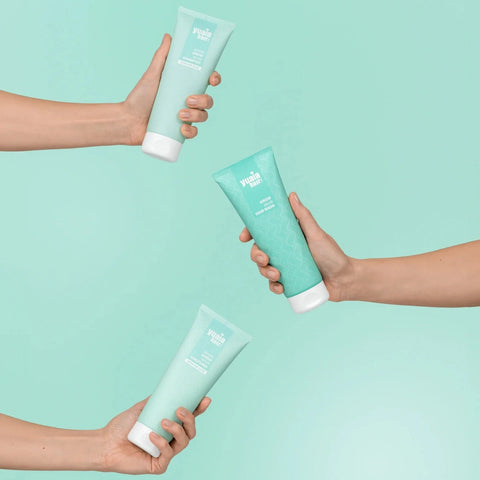
For ordinary dryness, you can consider Scalp Relief Shampoo, a fragrance-free shampoo for cleansing the hair and scalp. Choose for your needs and follow the product’s directions.
Scalp Relief Serum is a fragrance-free leave-in serum for a dry or sensitive scalp. Apply to a clean scalp after washing, massage gently with your fingertips and leave it in without rinsing.
Scalp Relief Conditioner can complement the routine by conditioning the lengths and ends. Leave on for 2–3 minutes and rinse thoroughly.
Explore the Scalp & Relief range.
You do not need to start with the whole range. Choose products for your needs and introduce one change at a time.


What should you look for when choosing shampoo?
Start with the product’s intended use and directions. If you prefer to avoid fragrance, choose a fragrance-free formula. Consider whether you want a lightweight routine or more conditioning for the lengths. A single plant ingredient or the label “sulphate-free” cannot tell you on its own whether a shampoo will suit you.
Should you avoid sulphates, silicones and parabens?
These groups have different functions. Sulphates can be cleansing ingredients, silicones can be used for conditioning, and preservatives help protect products against microbial contamination. It is misleading to describe them all as harmful or to say that silicones always block moisture. Sulphate-free also does not automatically mean a shampoo is gentler. Judge the whole formula and your own response, especially if you know you react to a particular ingredient.
How to wash a dry scalp gently
- Wet your scalp and hair with comfortably warm water.
- Apply the amount recommended on the product.
- Massage gently with your fingertips, avoiding your nails.
- Follow the stated contact time; do not assume every shampoo needs several minutes.
- Rinse thoroughly.
- Apply conditioner according to its instructions, often to the lengths and ends.
Pat or squeeze water out gently. Avoid scrubbing a sore scalp or directing very hot air at it.

How often should you wash your hair?
There is no schedule that suits everyone. Consider your scalp, hair type and styling habits. If washing consistently leaves your scalp tight, look at the shampoo, amount and water temperature. Simply washing less often is not a universal answer to flakes. Dry shampoo absorbs oil between washes and does not replace washing with water.
Read our guide to how often to wash your hair if you would like to adjust your washing routine.
When shampoo alone is not enough
Seek professional advice for severe or persistent itching, pain, sores, marked redness or patchy hair loss. Stop using a product that causes a reaction. Avoid stacking scrubs, oils and new shampoos on an already irritated scalp.
Frequently asked questions about shampoo for dry scalp
What is the best shampoo for dry scalp?
There is no single best choice for everyone. Start with a formula suited to your scalp, assess comfort after washing and follow the directions.
Can I use ordinary shampoo?
Yes, a suitable gentle cosmetic shampoo can be an option for ordinary dryness. If you have dandruff or a skin condition, ask about an appropriate treatment.
Does a shampoo for dry scalp need to be sulphate-free?
No. The entire formula matters. A sulphate-free label alone cannot predict how your scalp will respond.
Can I wash daily?
Some people need frequent washing. Adjust to your needs and the product's directions; daily washing is not automatically required or automatically harmful.
What is the difference between shampoo and scalp serum?
Shampoo cleanses and is rinsed out. A leave-in serum stays on the scalp after application. The products have different purposes; choose for your needs and follow the directions for each one.
Get a 10% discount code sent to you
Receive the best tips and tricks for your hair from Lotte and Nanna 🥰


